Home Computer Magazine (August 1984)
Home Computer Magazine started life as a magazine dedicated to the TI-99/4A under a different name. As it became clear that the TI-99/4A was not going to maintain its success, the magazine branched out to cover other popular systems as well, in particular the Commodore 64, IBM PC and Apple II. The August 1984 issue includes:
Features
Snap-Calc - Creating this mighty math matrix is a snap.
Bars and Plots - Colorful graphs can chart your figures.
Elementary Addition and Subtraction - An educational program for the preschool crowd.
Spider Graphics - Ah, what a tangled (and colorful) web we can weave.
Convertible for Comfort - Automatic conversion of machine language programs to DATA statements.
Programming: The Name of the Game - Pick a game, any game...and design it.
Colorfun - Match the color swatch to its name.
Product Reviews
Personal Editor - Ease of use makes this an outstanding text editor.
EasyWriter II - A powerful word processor for the PC...and Junior.
PFS: File, PFS: Report - Database management without intimidation.
Home Accountant - Financial management comes home.
Count-Sil - A Spreadsheet program for home use.
Doublestuff - Double the Apple's normal color and resolution.
Chivalry - Knights and Ladies abound in this board/video game.
Burgertime - Burger-building in a chaotic kitchen.
Alpha-Pak - Learning the alphabet is as easy as A-B-C.
In Search of the Most Amazing Thing - A nonviolent, educational, fantasy adventure.
Murder by the Dozen - Use your wits to track down "who 'dun' it."
Necromancer - Chasing zombies was never like this.
Microsurgeon - A "fantastic voyage" through your patient's bloodstream.
Trickster Coyote - Don't let the wily coyote cry wolf.
EasyScript - An inexpensive word processor for the C-64.
Companion - A helpful companion can esy writing's burdens.
Home Budget Jr. - A valuable program that's easy on your budget.
Logo Times
Binary Forest - 'Branching Out' with Smokey the Bear.
LOGO Flakes - Creative explorations with snowflake desings.
Gameware Buffet
Robochase - Pits you against rampaging robots.
Cyber-Cipher - Break the top-secret computer access code.
Wild Kingdom - Trapping tigers in a jungle maze.
Speeder - A game to make your own.
Boolean Brain - Wander down logic paths inside your computer.
Missile Math - Launching interest in multiplication.
I had the opportunity to pick up a huge batch of slides a while back. These are pictures span from as early as the late 1940s to as late as the early 1990s. These came to me second hand but the original source was a combination of estate sales and Goodwill. There are several thousand...maybe as many as 10,000. I will be scanning some from time to time and posting them here for posterity.
Getting your pictures processed as slides used to be a fairly common thing but it was a phenomenon I missed out on. However, my Grandfather had a few dozen slides (circa late 1950s) that we found after he died. That along with having some negatives I wanted to scan is what prompted me to buy a somewhat decent flatbed scanner that could handle slides and negatives, an Epson V600. It can scan up to four slides at a time with various post-processing options and does a decent enough job.
This set continues a rather large batch of slides that originally came from an estate sale and appear to have belonged to a locally well known photographer (or perhaps a close family member) from the Spokane Washington area and later Northern Idaho named Leo Oestreicher. He was known for his portrait and landscape photography and especially for post cards. His career started in the 1930s and he died in 1990. These slides contain a lot of landscape and portrait photos but also a lot of photos from day to day life and various vacations around the world. Here's an article on him from 1997 which is the only info I have found on him: http://www.spokesman.com/stories/1997/jan/04/photos-of-a-lifetime-museum-acquisition-of-leo/
Many of these slides had the date they were processed (presumably) stamped or printed on them. I've found that in cases where I could verify the date, either because a more specific date was hand written or there was something to specifically date the photo in the photo itself, that this date has typically been the same month the photos were taken. In other words, I expect that in MOST cases these photos were taken relatively near the processing date.
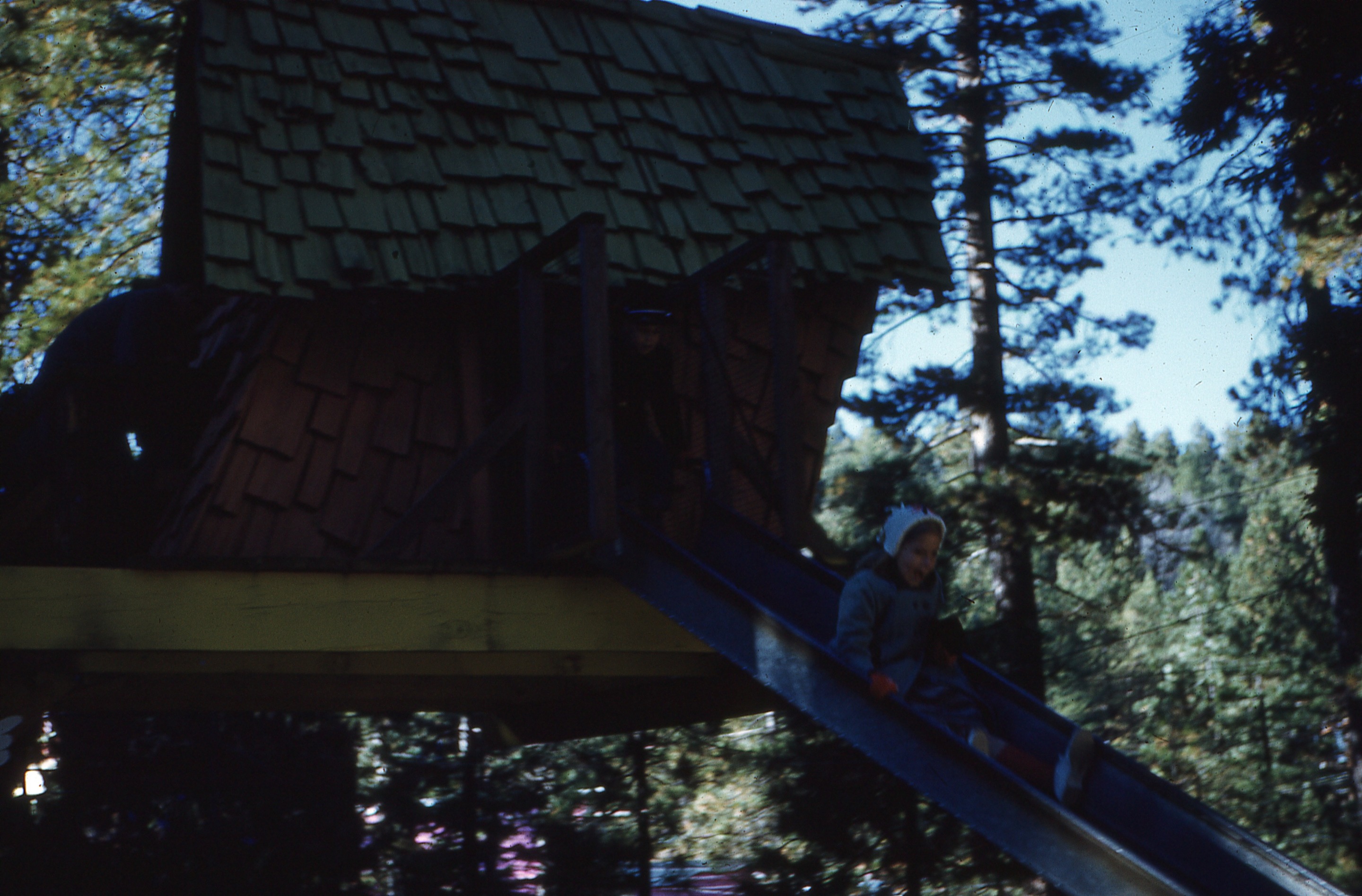
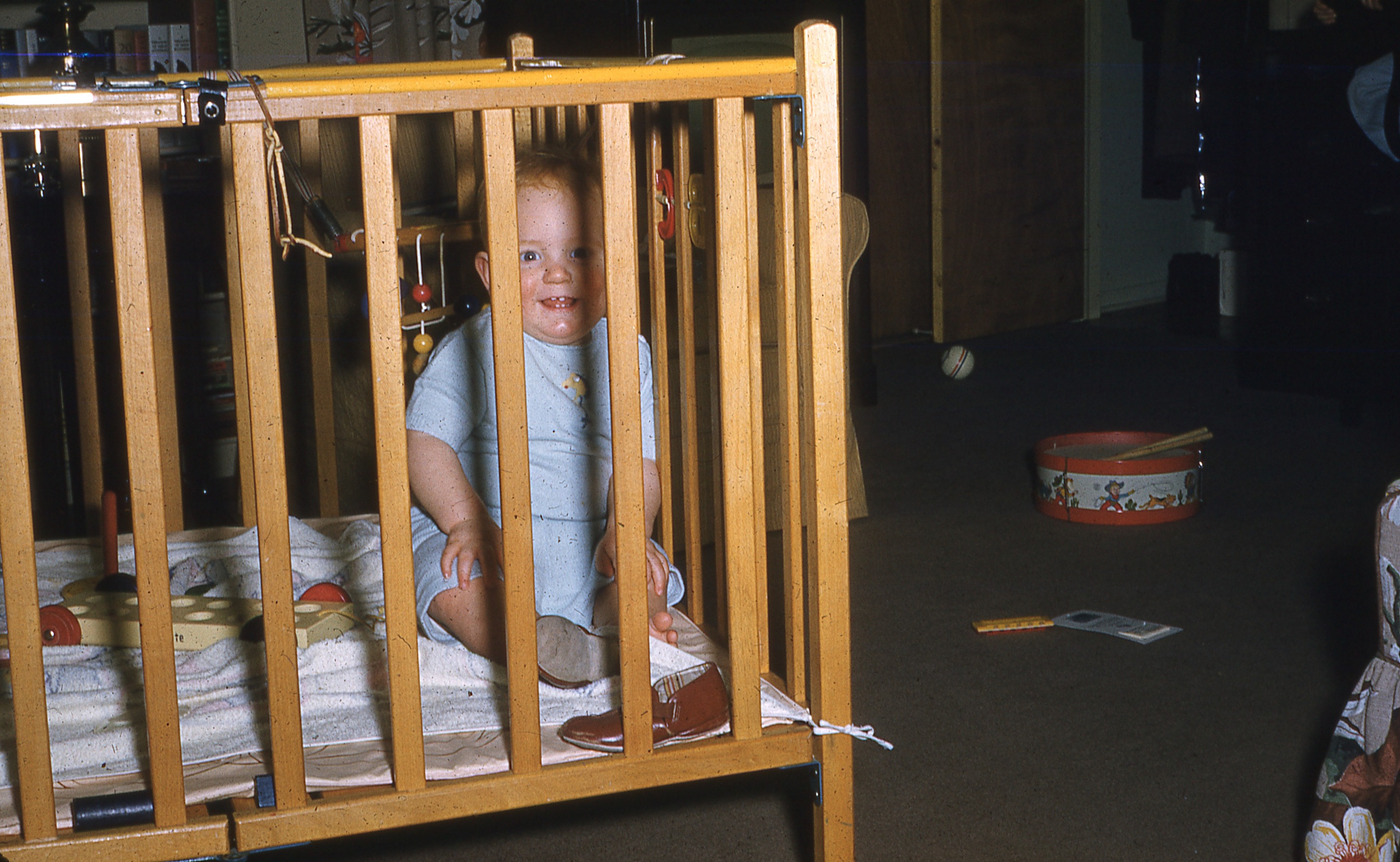
The first photo is labeled "Santa's Village" and like the other photos in this set was probably taken in the late 1950s. The second photo (of a baby) is the only one with any kind of date and it was processed in March 1958. The last two photos are nature shots with one of them featuring a porcupine.
Santa's Village
Processed March 1958
Porcupine in tree at Farragut
The entire collection that has been scanned and uploaded so far can be found here.
Violent riots broke out in Minneapolis again on Wednesday night. This time, chaos rocked the city after misinformation falsely suggesting the police had killed an unarmed black man went viral. The violent outbreak sadly came as no shock, because by now, Minneapolis is no stranger to destructive riots.
After all, Minneapolis is where the tragic police killing of George Floyd took place in May, sparking nationwide unrest. During the aftermath of that incident, violent riots consumed the city. Countless businesses were looted, vandalized, or burned to the ground, and multiple people were killed. In a jarring example of how deadly this chaos was, police found a charred body in a Minneapolis pawnshop days after the riots died down. Arsonists had murdered a man, possibly without even realizing it.
Yet even in the face of wanton destruction and violence, city ordinances are preventing Minneapolis business owners from protecting themselves and their property. As reported by the Minneapolis Star Tribune, the city currently bans exterior security shutters. These are the type of shutters they pull down over a mall storefront when it closes, that would make it much harder to break in and loot it. They also prevent windows from being broken, which can cost tens of thousands of dollars to replace.
Why are security shutters banned in Minneapolis? Because city officials say they “cause visual blight,” and “create the impression that an area is ‘unsafe’ and ‘troublesome.’”
Now, many business owners are running up against this regulation as they seek to protect their reopened stores from future flare-ups of violence. (The earlier riots destroyed at least 1,500 Minneapolis businesses.) Liquor store owner John Wolf saw his store looted after rioters broke in through his windows and stole more than $1 million in alcohol. He’s fuming at the city regulations that stop him from protecting his property.
“Times have changed," Wolf told the Star-Tribune. "I am going to spend millions of dollars to bring my business back, and I don't want to buy 20 window panes and have them broken the first day. Property owners should have options on how to protect themselves."
Technically, business owners can apply for an exception to this rule. But it is incredibly difficult to get such a variance approved.
A city spokeswoman acknowledged as much, reportedly saying that “while someone is authorized to file a variance, it is challenging to meet the legal findings that are necessary to grant a variance from this type of provision.” The city says it has only ever received one request—which it rejected.
"I have never felt so vulnerable,” car repair shop owner Mark Brandow told the paper. He wanted to install security shutters on his property in July but was told by city officials he was ineligible to even apply for an exemption. They are only now letting him appeal. In the meantime, his storefront remains boarded up.
"People in the neighborhood have asked me to take the boards off because it is ugly," Brandow said. “But I don't need to be pretty. I'm going to leave it ugly until I get some satisfaction.”
This predictable consequence is part of the irony of the law's justification. The city’s anti-blight measure created more blight.
Join us in preserving the principles of economic freedom and individual liberty for the rising generation
Well-intentioned Minneapolis officials banned security shutters, because they wanted their streets to be more visually appealing. Yet they failed to consider that store owners would only seek to install security shutters for a good reason—that is, if they were necessary.
We now see the results of this folly. Boarded-up stores, shattered windows, and permanent “closed” signs are far more likely to “cause visual blight” than security measures. The results of rioting run unchecked surely do far more to make an area seem “unsafe” and “troublesome” than metal security shutters.
KB Balla’s destroyed sports bar, Minneapolis. Image credit: GoFundMe.
So once again, we see sweeping regulation backfire and have unintended consequences that achieve the exact opposite of their original goals. This is what FEE’s James Harrigan and Antony Davies dubbed the “Cobra Effect.”
They told the comical yet revealing tale of how an Indian city placed a bounty on cobras to try and solve their infestation problem, yet achieved the opposite result. Why?
At first, more people hunted cobras to get the bounty, and the cobra population decreased. Yet then individuals started breeding and raising cobras at home in order to get the bounty again. When the government cancelled the bounty because the population had seemingly declined, citizens released all the cobras they had been raising in their homes into the wild.
The end result was a worse infestation of cobras than the city had to begin with.
“Human beings react to every rule, regulation, and order governments impose, and their reactions result in outcomes that can be quite different than the outcomes lawmakers intended,” Harrigan and Davies wrote in explaining why the regulation failed.
So, it’s no surprise that preventing business owners from protecting their own property hasn’t beautified the streets of Minneapolis—it has left them in shambles.