I had the opportunity to pick up a huge batch of slides a while back. These pictures span from as early as the late 1940s to as late as the early 1990s. These came to me second hand but the original source was a combination of estate sales and Goodwill. There are many thousands of these slides. I will be scanning some from time to time and posting them here for posterity.
Getting your pictures processed as slides used to be a fairly common thing but it was a phenomenon I missed out on. However, my Grandfather had a few dozen slides from the late 1950s that I acquired after he died. That along with having some negatives I wanted to scan is what prompted me to buy a somewhat decent flatbed scanner that could handle slides and negatives, an Epson V600. It can scan up to four slides at a time with various post-processing options and does a decent enough job.
This set continues a rather large batch of slides that originally came from an estate sale and appear to have belonged to a locally well known photographer (or perhaps a friend or family member) from the Spokane Washington area and later Northern Idaho named Leo Oestreicher. He was known for his portrait and landscape photography and especially for post cards. His career started in the 1930s and he died in 1990. These slides contain a lot of landscape and portrait photos but also a lot of photos from day to day life and various vacations around the world. Here's an article on him from 1997 which is the only info I have found on him: http://www.spokesman.com/stories/1997/jan/04/photos-of-a-lifetime-museum-acquisition-of-leo/
Many of these slides had the date they were processed stamped or printed on them. I've found that in cases where I could verify the date, either because a more specific date was hand written or there was something to specifically date the photo in the photo itself, that this date has typically been the same month the photos were taken. In other words, I expect that in MOST cases these photos were taken relatively near the processing date.
Click the link below to also see versions processed with color restoration and Digital ICE which is a hardware based dust and scratch remover, a feature of the Epson V600 scanner I am using. There are also versions processed with the simpler dust removal option along with color restoration.
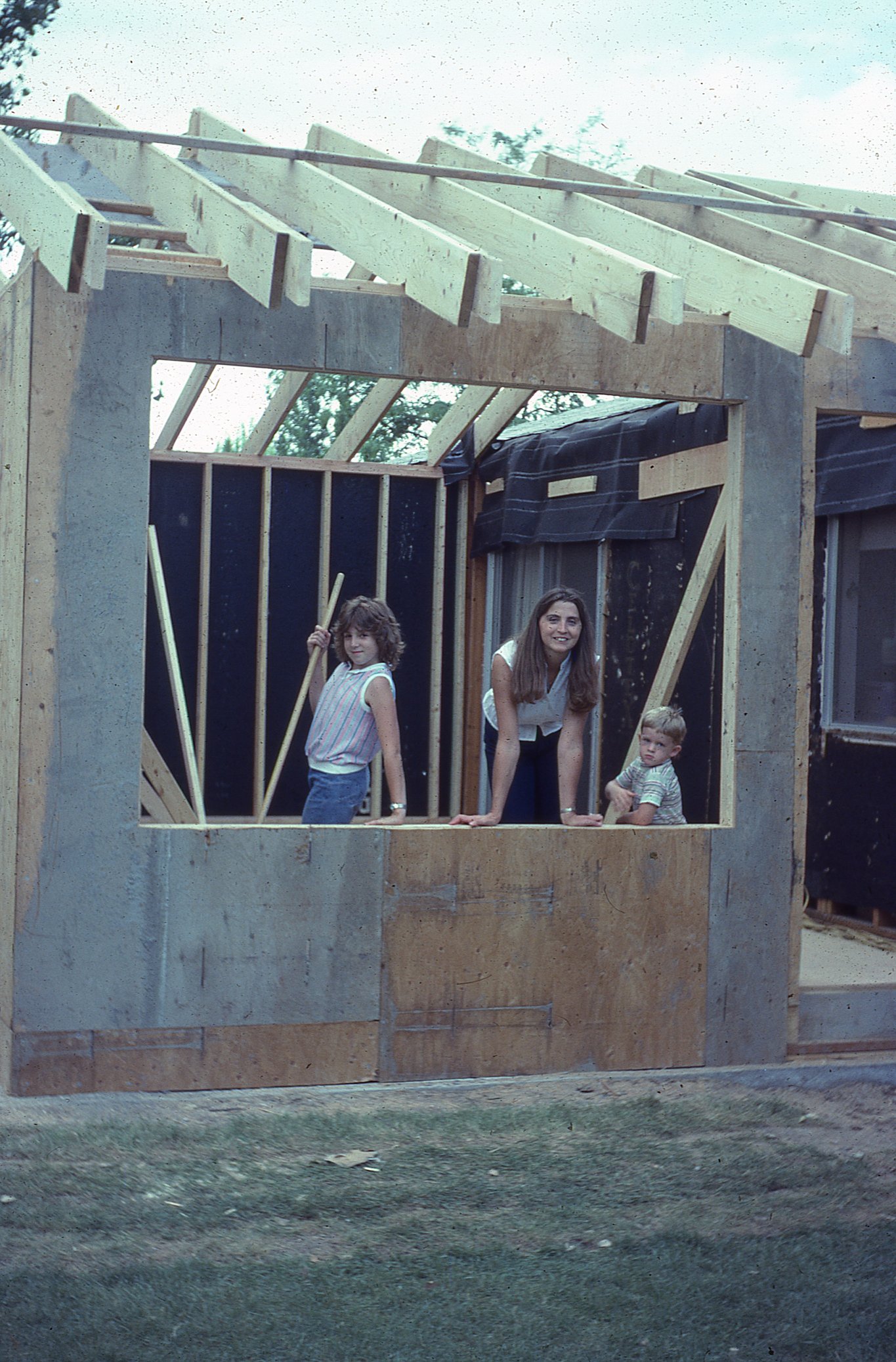
The first photo shows a family in what is probably their future new home while under construction.
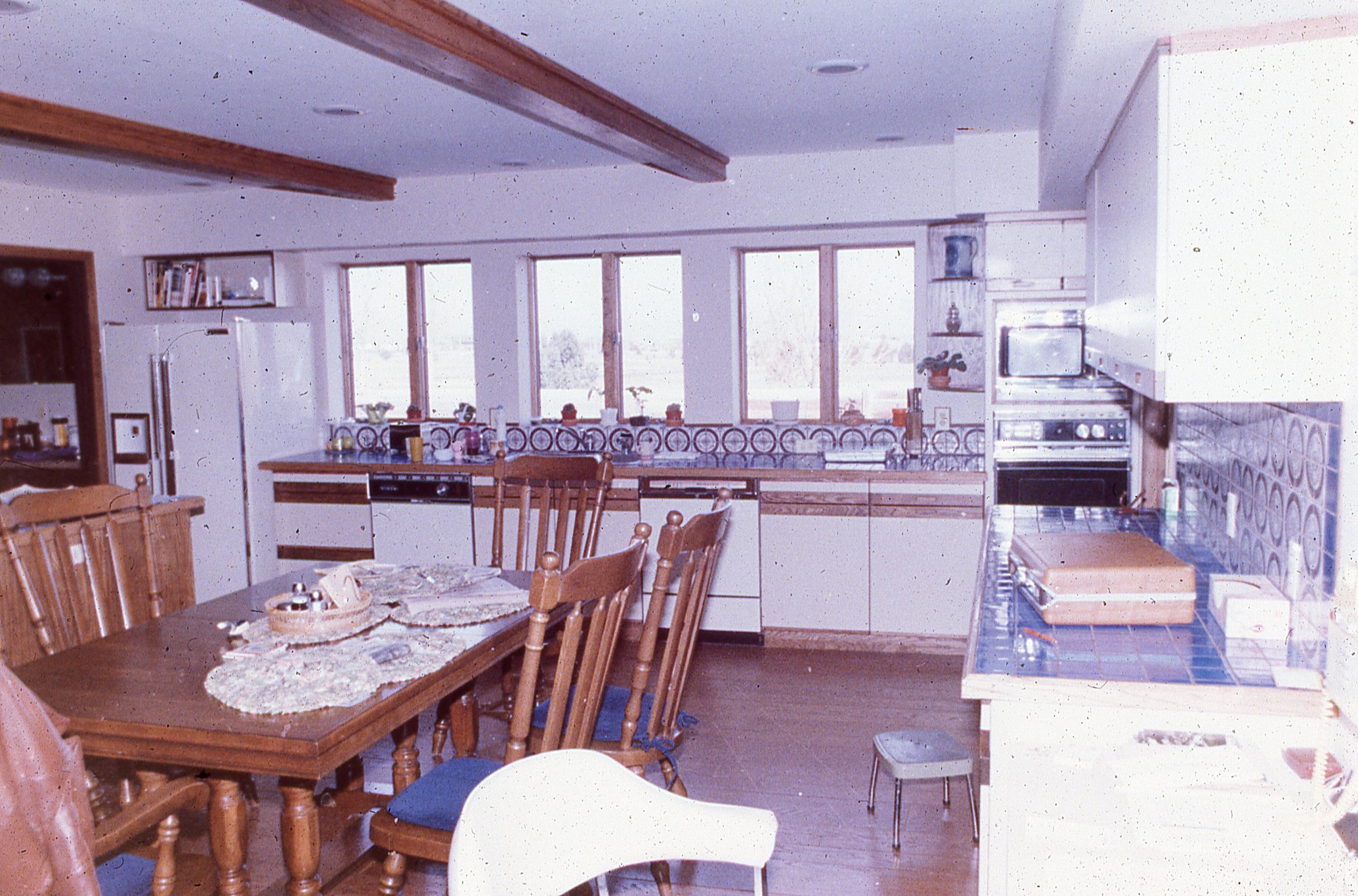
The second photo shows a kitchen in what is possible a new home. Neither this nor the previous photo is dated or labeled but they appear to be to be from the late 1970s or very early 1980s. I guess they could be from earlier in the 1970s.
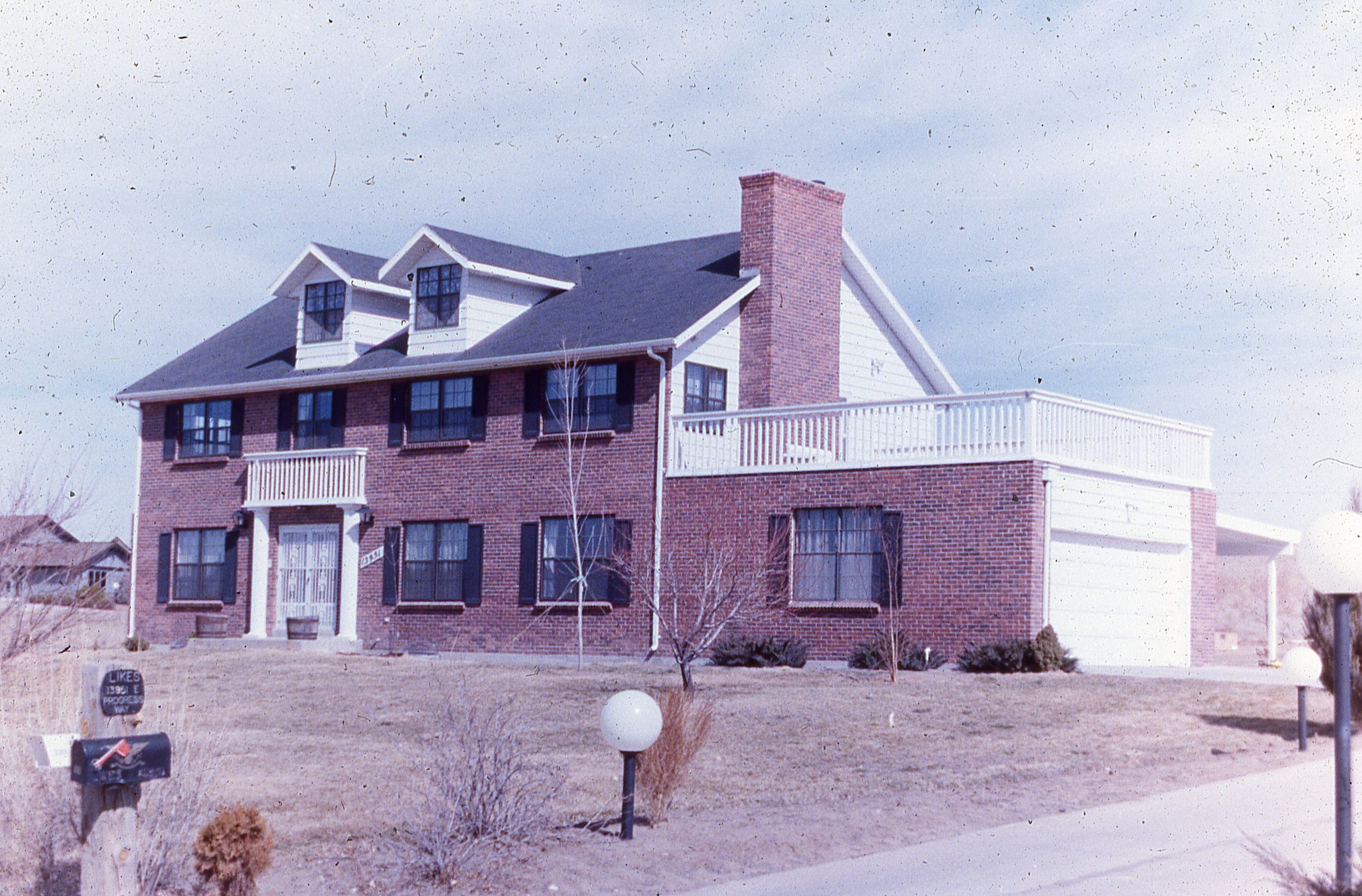
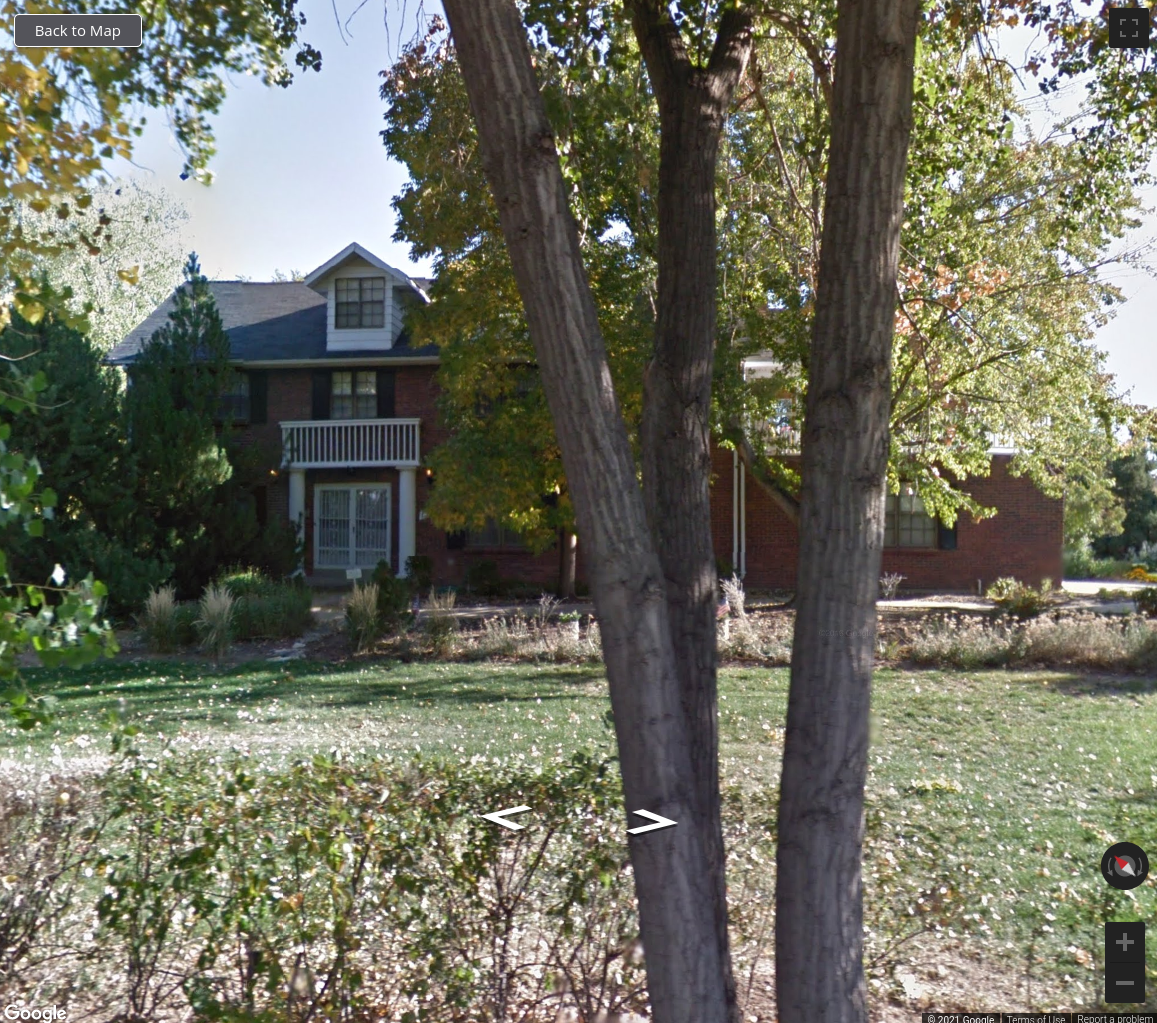
The third photo shows a house and while not terribly interesting on its own I found it interesting because I found the house in Google Maps. You can clearly see the address on the mailbox and it is a unique enough address that this was the first hit. It is in Aurora, Colorado and according to Zillow, the house was built in 1972. Based on the fact that there appear to be newly planted trees, I'm guessing this photo was taken when the house was fairly new.
~1972
The same house "today" (latest Google Maps has anyway)
The final photos was processed in June 1966 and shows a river bank.
processed June 1966
The entire collection that has been scanned and uploaded so far can also be found here.
Exta! Extra! Write All About It! - A guide to desktop publishing on the Commodore 64 and 128 including an overview of some of the software available, including The Newsroom, geoPublish, Personal Newsletter, and Paperclip Publisher.
Putting It to Work - Some examples of how Commodore user groups are using various desktop publishing software to create newsletters.
Reviews
Deja Vu - A mystery themed text/graphics adventure by Mindscape that was originally written for the Mac.
Ticket to Washington D.C. - An educational game in the same vein as Carmen Sandiego but with a focus on Washington D.C.
X-15 Alpha Mission - A 3D arcade style shooter in which you are in the cockpit of an X-15 space craft (not to be confused with the research aircraft).
Games
Lincoln Green - A type-in arcade style game in which you play a Robin Hood like character running through the forest protecting your treasure and dodging arrows.
Boom and Bust - This type-in game combines Hangman with Circus Atari. Launch your clown to hit the balloon with the letter that you want to guess...
Table of Contents from the September 1988 issue of Compute!'s Gazette
Programming
BASIC for Beginners: The Pigeonhole Analogy - This BASIC tutorial teaches you all about arrays.
The Programmer's Page: Did You Know That... - Various programming hints and tips, including PEEKing strings, undimensioned arrays, abbreviating BASIC, and more.
Machine Language Programming: Debugging - Some tips on debugging machine language programming, including making the RUN/STOP key work and a specific debugging example.
Pattern Fill - A type-in graphics utility that will fill areas with any rectangular pattern.
Multicolor Graphics Dump - A type-in program for sending full screen graphics to a MPS-801, MPS-803, Commodore 1525 or compatible printer.
Multicolor Graphics and Video Storage - A detailed article on how graphics are stored and accessed on the Commodore 64, including a programming example and instructions for how to print.
Departments
The Editor's Note - An overview of some of what was shown at the Summer Consumer Electronics Show.
Letters to the Editor - Some readers complain about defective Commodore 128Ds, a question about the Commodore PC10-1, and another about page numbering.
Feedback - Questions about converting a 1702 monitor to a color TV, alphabetizing in SpeedScript, printing machine language listings, formatting and using double-side vs. single-sided disks on the 1571, and more.
D'Iversions: Murder at Palenque - A look at a interactive videodisc software and the future of multimedia software.
Back cover of the September 1988 issue of Compute!'s Gazette
In March 2019, The New York Times ran a shocking story exploring why many prominent US cities were abandoning their recycling programs.
“Philadelphia is now burning about half of its 1.5 million residents’ recycling material in an incinerator that converts waste to energy,” Times business writer Michael Corkery reported. “In Memphis, the international airport still has recycling bins around the terminals, but every collected can, bottle and newspaper is sent to a landfill.”
Philadelphia and Memphis were not outliers. They, along with Deltona, Florida, which had suspended its recycling program the previous month, were just a few examples of hundreds of cities across the country that had scrapped recycling programs or scaled back operations.
Since that time, cities across the country have continued to scrap recycling programs, citing high costs.
By relying on government coercion, we ended up with a recycling system that made no sense—economically or environmentally.
“The cost of recycling was going to double, and the town wasn't going to be able to absorb that cost,” said Dencia Raish, the town clerk administrator for Akron, Colorado, which ended its program in 2021 and now sends “recyclables” to a landfill.
While many Americans likely are distraught about America’s failed recycling experiment, a new video produced by Kite & Key Media reveals that abandoning recycling—at least in its current form—is likely to benefit both Americans and the environment.
A Brief History of Recycling
Like many problems in American history, recycling began as a moral panic.
The frenzy began in the spring of 1987 when a massive barge carrying more than 3,000 tons of garbage—the Mobro 4000—was turned away from a North Carolina port because rumor had it the barge was carrying toxic waste. (It wasn’t.)
“Thus began one of the biggest garbage sagas in modern history,” Vice Newsreported in a feature published a quarter-century later, “a picaresque journey of a small boat overflowing with stuff no one wanted, a flotilla of waste, a trashier version of the Flying Dutchman, that ghost ship doomed to never make port.”
The Mobro was simply seeking a landfill to dumb the garbage, but everywhere the barge went it was turned away. After North Carolina, the captain tried Louisiana. Nope. Then the Mobro tried Belize, then Mexico, then the Bahamas. No dice.
“The Mobro ended up spending six months at sea trying to find a place that would take its trash,” Kite & Key Media notes.
America became obsessed with the story. In 1987 there was no Netflix, smartphones, or Twitter, so apparently everyone just decided to watch this barge carrying tons of trash for entertainment. The Mobro became, in the words of Vice, “the most watched load of garbage in the memory of man.”
The Mobro also became perhaps the most consequential load of garbage in history.
Putting government in charge of recycling was a big mistake.
“The Mobro had two big and related effects,” Kite & Key Media explains. “First, the media reporting around it convinced Americans that we were running out of landfill space to dispose of our trash. Second, it convinced them the solution was recycling.”
Neither claim, however, was true.
The idea that the US was running out of landfill space is a myth. The urban legend likely stems from the consolidation of landfills in the 1980s, which saw many waste depots retired because they were small and inefficient, not because of a national shortage. In fact, researchers estimate that if you take just the land the US uses for grazing in the Great Plains region, and use one-tenth of one percent of it, you’d have enough space for America's garbage for the next thousand years. (This is not to say that regional problems do not exist, Slate points out..
Mandated recycling efforts, meanwhile, have proven fraught.
The Economics of Recycling
During moral panics, it’s not uncommon for lawmakers to get involved. Recycling was no exception.
Within just a handful of years of the Mobro panic, a recycling revolution spread across the continent. In a single year, more than 140 recycling laws were enacted in 38 states—in most cases mandating recycling and/or requiring citizens to pay for it. Within just a few years 6,000 curbside programs serving some 70 million Americans were created.
Some people saw problems early on in this approach.
“The fact is that sometimes recycling makes sense and sometimes it doesn’t. In the legislative rush to pass recycling mandates, state and local governments should pause to consider the science and the economics of every proposition,” economist Lawrence Reed wrote in 1995. “Often, bad ideas are worse than none at all and can produce lasting damage if they are enshrined in law. Simply demanding that something be recycled can be disruptive of markets and it does not guarantee that recycling that makes either economic or environmental sense will even occur.”
The reality is recycling is incredibly complicated—something Discover magazine pointed out more than a decade ago. While it makes sense to recycle some products, there’s also circumstances where recycling makes no sense at all.
Take plastic. For various reasons, plastic is not conducive to recycling. A Columbia University study published in 2010 found that a mere 16.5 percent of plastic collected by New York’s Department of Sanitation was actually “recyclable.” That might not sound like much, but it’s actually much higher than the percentage of plastic that is recycled globally, according to other studies.
Physics has a lot to do with this. In most cases, it’s less expensive to simply make new plastic than to recycle old plastic. But the costs of recycling are not just economic.
The Environmental Costs of Recycling
Proponents of recycling often acknowledge its economic costs. These costs can run high and recently got even higher (more on that later), but they say those costs are necessary to protect the environment.
The argument ignores, however, that recycling—especially recycling done badly—also comes with severe environmental costs. It doesn’t just take dollars to recycle plastic but also energy and water (think about how much water you spend rinsing your recyclables for a moment).
For plastic in particular, the environmental costs are even more staggering than the economic costs.
“The newest, high tech methods of recycling [plastic] generate carbon emission 55 times higher than just putting it into a landfill,” Kite & Key Media says.
But greenhouse gas emissions aren’t the only environmental cost. Did you ever wonder how we got a patch of plastic in the ocean that is twice the size of Texas?
The Great Pacific garbage patch is a mass of debris in the Pacific Ocean that weighs about 3 million tons. How it got there is not exactly a mystery. It’s a collection of trash that came from countries in Asia, South America, and North America that researchers believe has increased “10-fold each decade" since the conclusion of World War II.
Americans who’ve spent the last few decades recycling might think their hands are clean. Alas, they are not. As the Sierra Club noted in 2019, for decades Americans’ recycling bins have held “a dirty secret.”
“Half the plastic and much of the paper you put into it did not go to your local recycling center. Instead, it was stuffed onto giant container ships and sold to China,” journalist Edward Humes wrote. “There, the dirty bales of mixed paper and plastic were processed under the laxest of environmental controls. Much of it was simply dumped, washing down rivers to feed the crisis of ocean plastic pollution.”
If Americans are serious about recycling to create a better future for humans, they’d get government out of the recycling business
It’s almost too hard to believe. We paid China to take our recycled trash. China used some and dumped the rest. All that washing, rinsing, and packaging of recyclables Americans were doing for decades—and much of it was simply being thrown into the water instead of into the ground.
The gig was up in 2017 when China announced they were done taking the world’s garbage through its oddly-named program, Operation National Sword. This made recycling much more expensive, which is why hundreds of cities began to scrap and scale back operations.
China’s decision provoked anger in the United States, but in reality the decision was a first (and necessary) step toward improving the environment and coming to grips with a failed paradigm.
Means and Ends
Americans meant well with their recycling efforts. We thought by recycling trash instead of burying it in a landfill, we were doing some good. Instead, tons of it (literally thousands and thousands of tons) was thrown into rivers and other waterways, contributing to the ocean plastic pollution problem.
How did this happen?
There are several answers to this question. NPR says Big Oil—always a convenient scapegoat—is to blame for letting people believe that recycling plastic made sense. But I think basic economics and moral philosophy are a better place to start.
There was a reason Larry Reed, who today is president emeritus of FEE, sniffed out the false promise of recycling nearly 30 years ago.
“Market economists—by nature, philosophy, and experience—are skeptical of schemes to supplant the free choices of consumers with the dictates of central planners,” Reed explained at the time.
The idea that mountains of refuse can just be turned into something of value with the right local mandates never smelled right, largely because we have centuries of evidence that show markets are smarter than government bureaucrats because markets use infinitely more knowledge.
The ends desired from recycling—a cleaner planet— were pure. The means we chose to pursue those ends—dictates of central planners—were not.
This might sound simple, but the Nobel Prize winning economist Milton Friedman correctly observed it’s not.
“The hardest thing in the world to understand is that people operating separately, through their joint relations with one another, through market transactions, can achieve a greater degree of efficiency and of output than can a single central planner,” Friedman noted in a 2001 interview.
This is not to say recycling can never work. It can.
Items like cardboard, paper, and metals (think aluminum) account for as much as 90 percent of greenhouse gas reduction from recycling, research shows, and they also make the most sense economically, since they are less expensive to recycle and offer more value.
The problem isn’t recycling, but the means we use to recycle. The author Leonard Read, the founder of FEE, was fond of a Ralph Waldo Emerson poem that touched on ends and means.
“Cause and effect, means and ends, seed and fruit, cannot be severed;” Emerson wrote, “for the effect already blooms in the cause, the end pre-exists in the means, the fruit in the seed.”
What Emerson and Read understood was that noble ends are not enough. If the means we use to achieve a desired result are rotten, the fruit itself is likely to be rotten as well.
The ends desired from recycling—a cleaner planet— were pure. The means we chose to pursue those ends—dictates of central planners—were not.
By relying on government coercion, we ended up with a recycling system that made no sense—economically or environmentally. And that’s why we ended up with tens of thousands of tons of recycled items dumped into the ocean. Putting government in charge of recycling was a big mistake.
If Americans are serious about recycling to create a better future for humans, they’d get government out of the recycling business and make way for entrepreneurs armed with local knowledge and the profit motive.
Instead of seeing recyclables dumped into our rivers and oceans, we’d see them creating value. That’s a win for humans and the planet.
Jonathan Miltimore is the Managing Editor of FEE.org. His writing/reporting has been the subject of articles in TIME magazine, The Wall Street Journal, CNN, Forbes, Fox News, and the Star Tribune.
Bylines: Newsweek, The Washington Times, MSN.com, The Washington Examiner, The Daily Caller, The Federalist, the Epoch Times.
This article was originally published on FEE.org. Read the original article.
I had the opportunity to pick up a huge batch of slides a while back. These pictures span from as early as the late 1940s to as late as the early 1990s. These came to me second hand but the original source was a combination of estate sales and Goodwill. There are many thousands of these slides. I will be scanning some from time to time and posting them here for posterity.
Getting your pictures processed as slides used to be a fairly common thing but it was a phenomenon I missed out on. However, my Grandfather had a few dozen slides from the late 1950s that I acquired after he died. That along with having some negatives I wanted to scan is what prompted me to buy a somewhat decent flatbed scanner that could handle slides and negatives, an Epson V600. It can scan up to four slides at a time with various post-processing options and does a decent enough job.
This set continues a rather large batch of slides that originally came from an estate sale and appear to have belonged to a locally well known photographer (or perhaps a friend or family member) from the Spokane Washington area and later Northern Idaho named Leo Oestreicher. He was known for his portrait and landscape photography and especially for post cards. His career started in the 1930s and he died in 1990. These slides contain a lot of landscape and portrait photos but also a lot of photos from day to day life and various vacations around the world. Here's an article on him from 1997 which is the only info I have found on him: http://www.spokesman.com/stories/1997/jan/04/photos-of-a-lifetime-museum-acquisition-of-leo/
Many of these slides had the date they were processed stamped or printed on them. I've found that in cases where I could verify the date, either because a more specific date was hand written or there was something to specifically date the photo in the photo itself, that this date has typically been the same month the photos were taken. In other words, I expect that in MOST cases these photos were taken relatively near the processing date.
Click the link below to also see versions processed with color restoration and Digital ICE which is a hardware based dust and scratch remover, a feature of the Epson V600 scanner I am using. There are also versions processed with the simpler dust removal option along with color restoration.
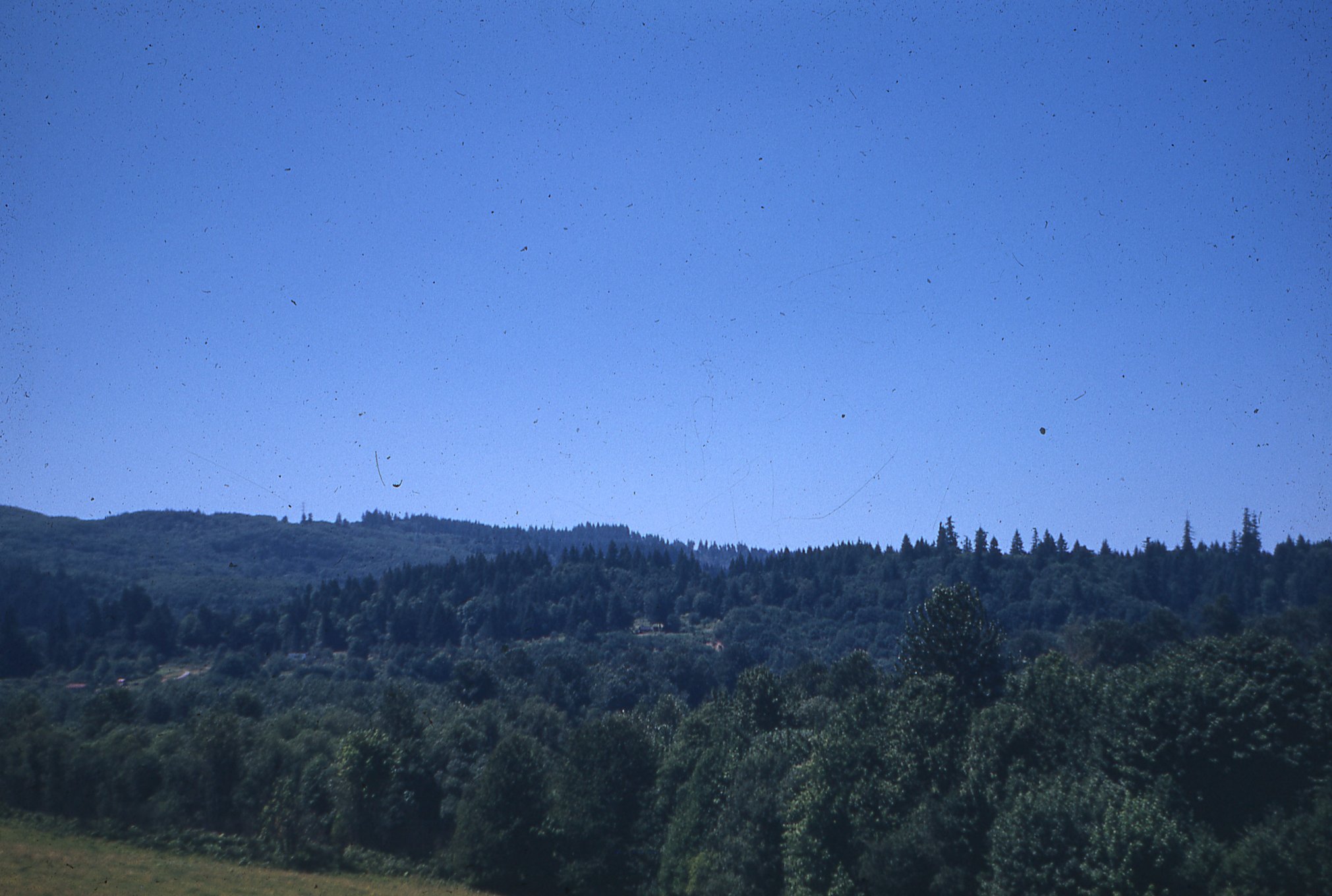
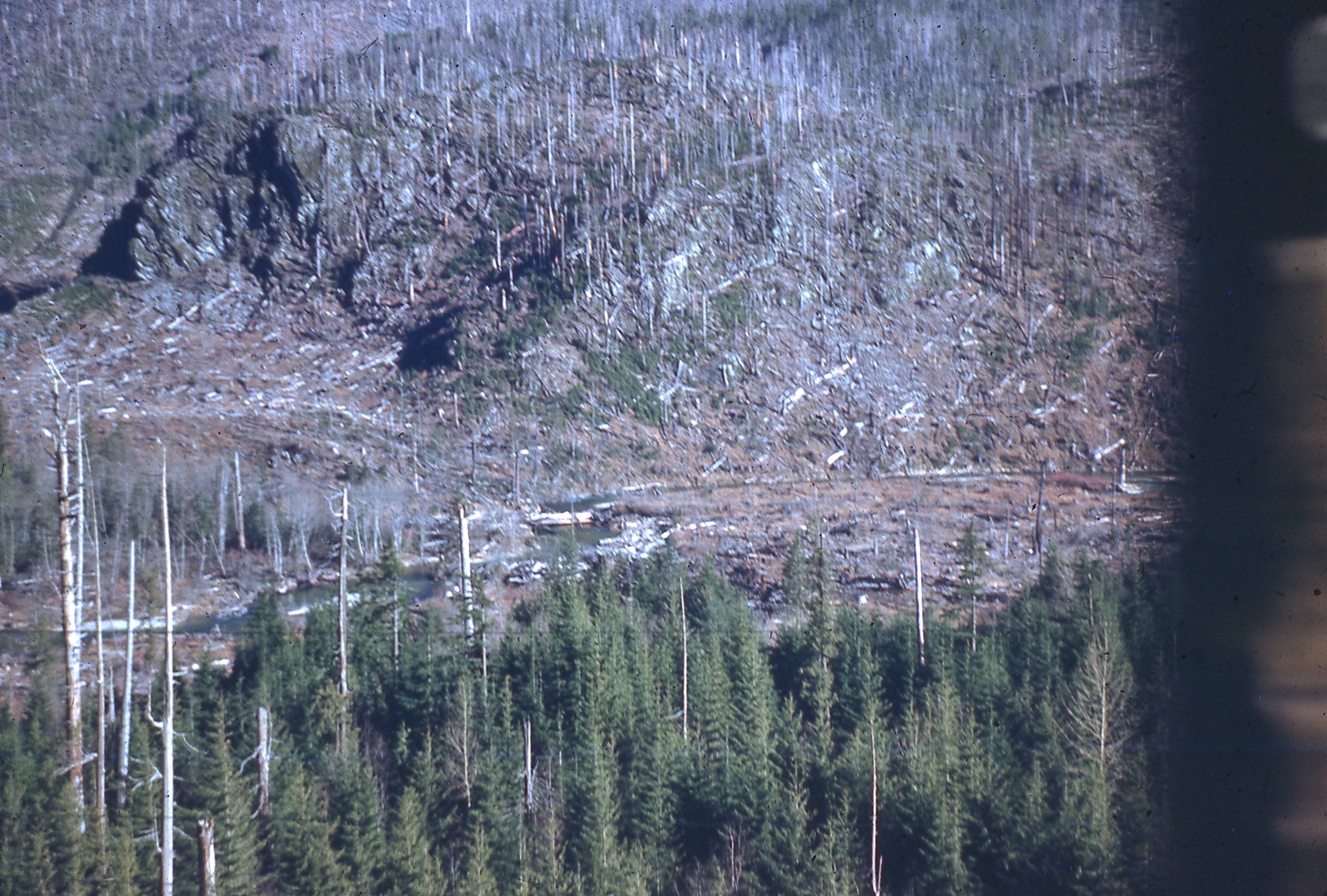
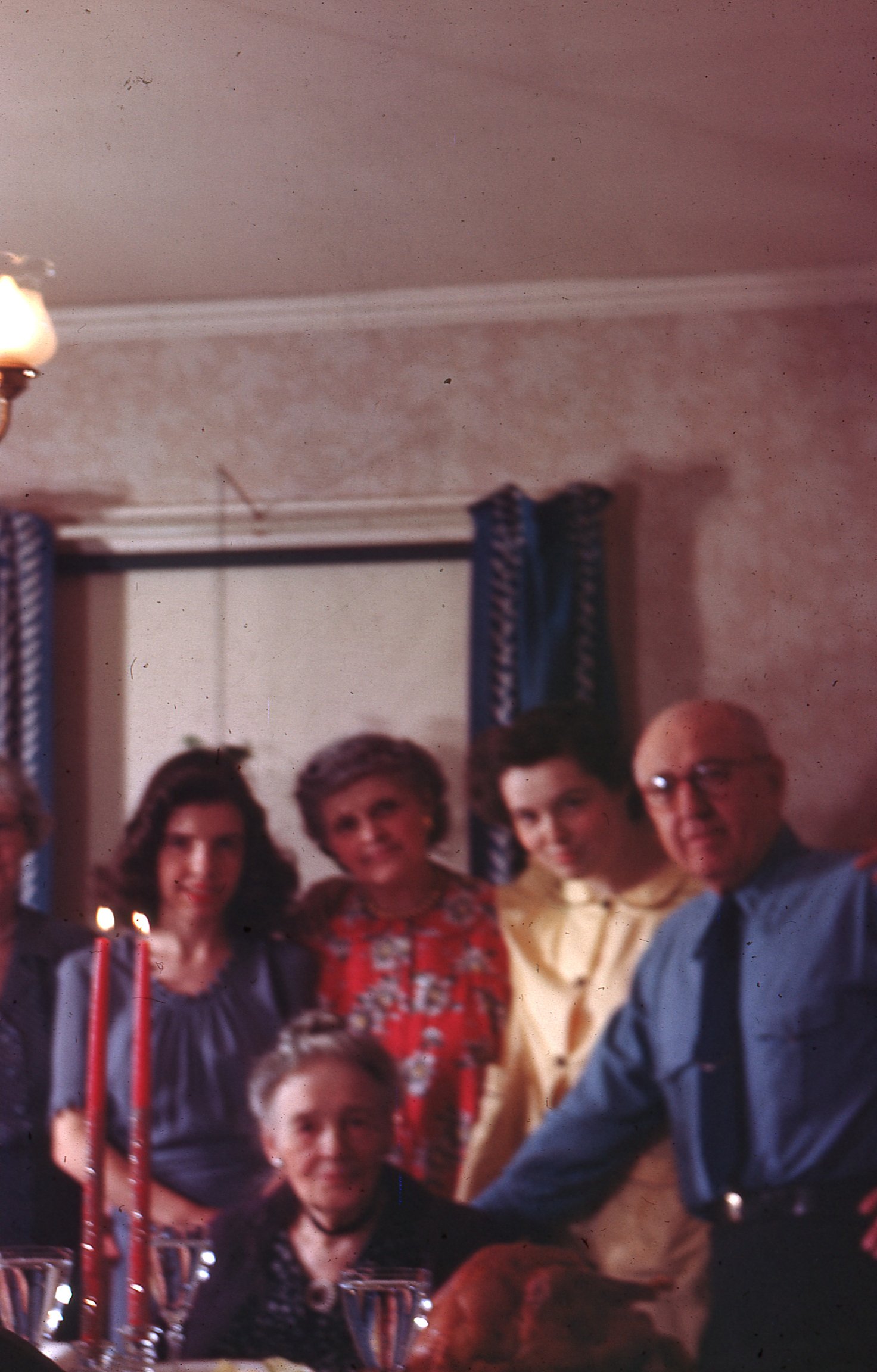
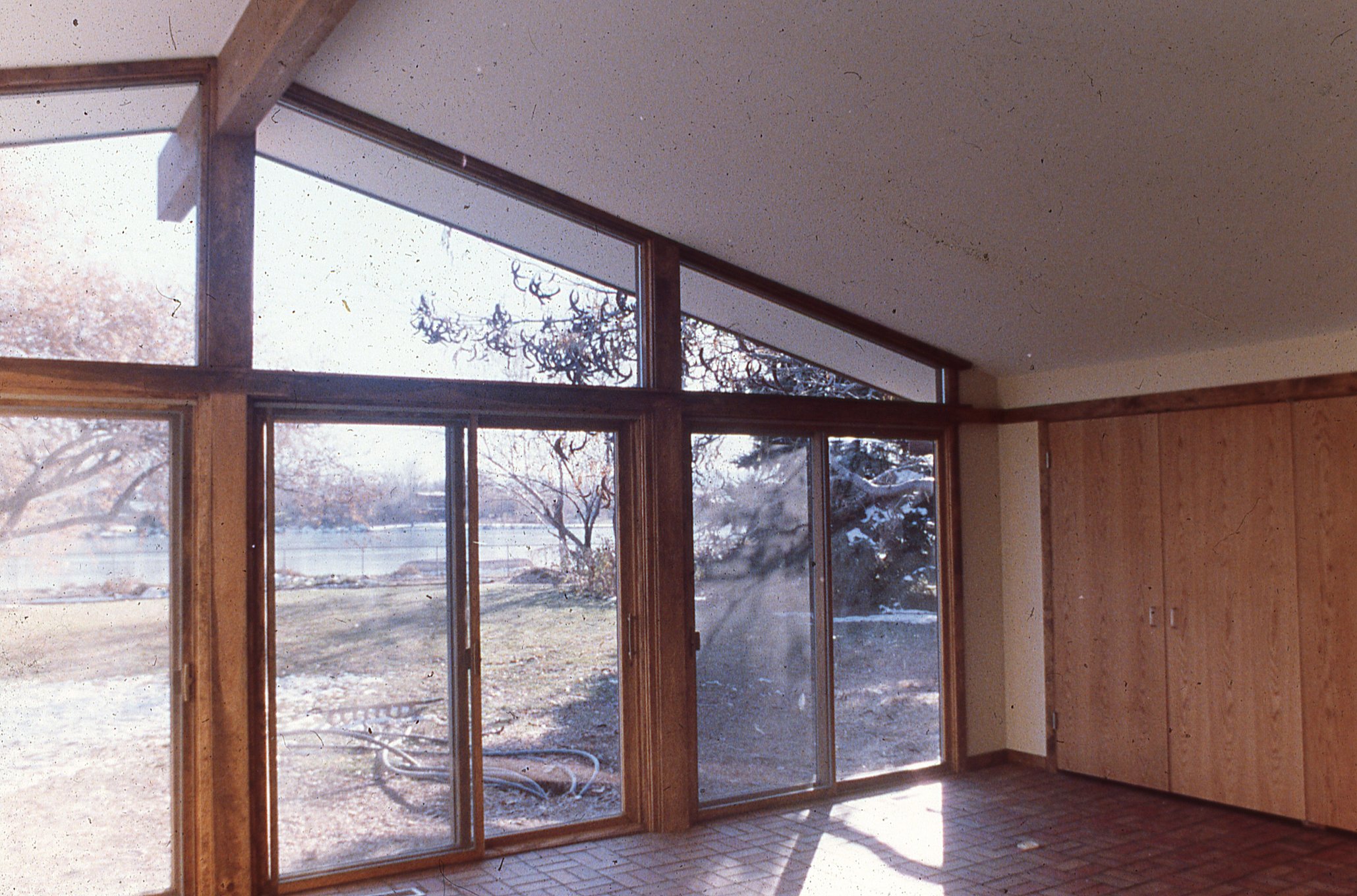
None of the photos in this set are labeled are dated in anyway. My guess is that they are from circa the late 1960s. The first two feature landscape shots, the second shows a family around a roast turkey so this was probably taken on Thanksgiving or Christmas. The last one was taken in a house looking out out a lake or maybe river.
The entire collection that has been scanned and uploaded so far can also be found here.