steem

Tuesday, November 22, 2022

GamePro (December 1997)

GamePro (December 1997)

While I always preferred Electronic Gaming Monthly, GamePro was almost as popular though it seemed to be aimed at a slightly younger audience. At about 250 pages, the December 1997 issue had to be pretty much at its peak. It includes:

Features

  • Star Wars: The Masters of Teras Kasi - An exclusive, hands-on look at this new Star Wars themed fighting game.

  • GamePro's Holiday Shopper's Guide - A list of the best games, peripherals and other gaming items for the holiday season according to GamePro.

Spotlight On!

  • Messiah: Rising Shiny - A visit to Shiny Entertainment to look at the upcoming Messiah for the PlayStation and PC.

  • SEAL Squad 2040: A Special Force To Be Reckoned With - A preview of SEAL Squad 2040 for the PlayStation, described here as Wave Race 64 with guns.
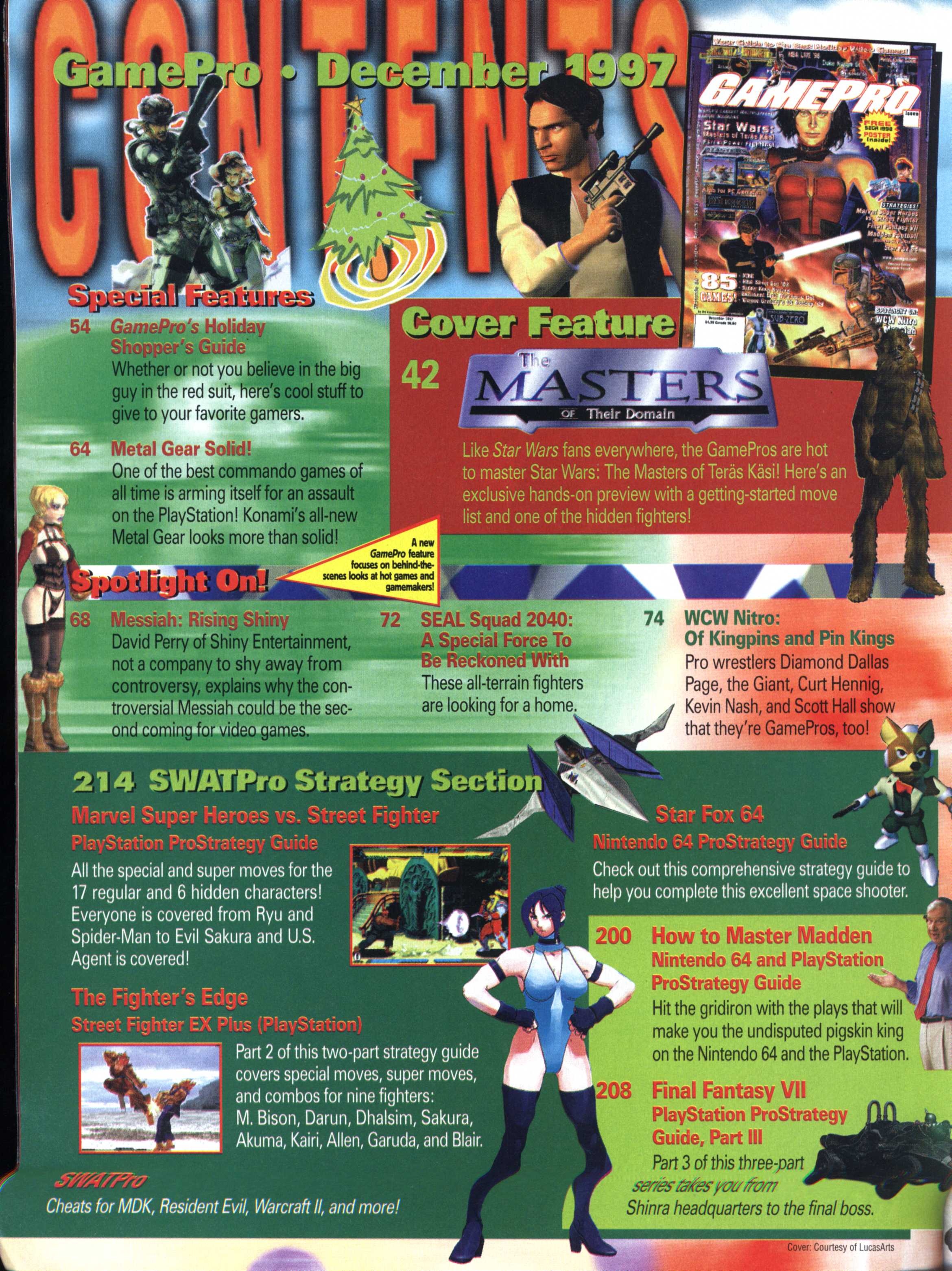
Table of Contents from the December 1997 issue of GamePro

SWATPro Strategy Section

  • Marvel Super Heroes vs. Street Fighter - A detailed strategy guide for this classic arcade fighter, featuring basic strategies, special movies, and more.

  • Star Fox 64 - A strategy guide for Star Fox 64 on the Nintendo 64 featuring secret areas, alternate skill routes, how to defeat the bosses and much more.

  • The Fighter's Edge: Street Fighter EX Plus - Combos and strategies for Street fighter EX Plus for the PlayStation.

Table of Contents from the December 1997 issue of GamePro (continued)

ProReviews

  • PC GamePro - Reviews of Jedi Knight, Hexen II, Star Trek: Starfleet Academy, Dark Reign, Total Annihilation, Take No Prisoners, Half-Life, and Wing Commander: Prophecy.

  • Nintendo 64 - Reviews of Diddy Kong Racing, WCW vs. NWO World Tour, Duke Nukem 64, San Francisco Rush, Bomberman 64, and Extreme G.

  • PlayStation - Reviews of MDK, Mortal Kombat Mythologies: Sub-Zero, Resident Evil Director's Cut, Moto Racer, Test Drive 4, Shipwreckers, Marvel Super Heroes, Dragon Ball GT Final Bout, Jet Moto 2, Pandemonium 2, Red Asphalt, Vs., Frogger, Rampage, Mass Destruction, and Reel Fishing.

  • Saturn - Reviews of Duke Nukem 3D, Resident Evil, Last Bronx, The Lost World: Jurassic Park, Mega Man X4, Bust-A-Move 3, and Ten Pin Alley.

Departments

  • Head-2-Head - Video games, violence and ESRB ratings.

  • Buyers Beware - OEM vs. 3rd party RF adapters for the Nintendo 64, missing animation in Saturn version of Mortal Kombat Trilogy, and Rumble Pak battery life.

  • ProNews - Microsoft and Sega in 128-bit console discussions (this would become the Dreamcast), Blasto for Nintendo 64 delayed until early '98, console game sales exceed PC game sales, and much more.

  • NetPro - A look at Saturn's NetLink and the games that support it.
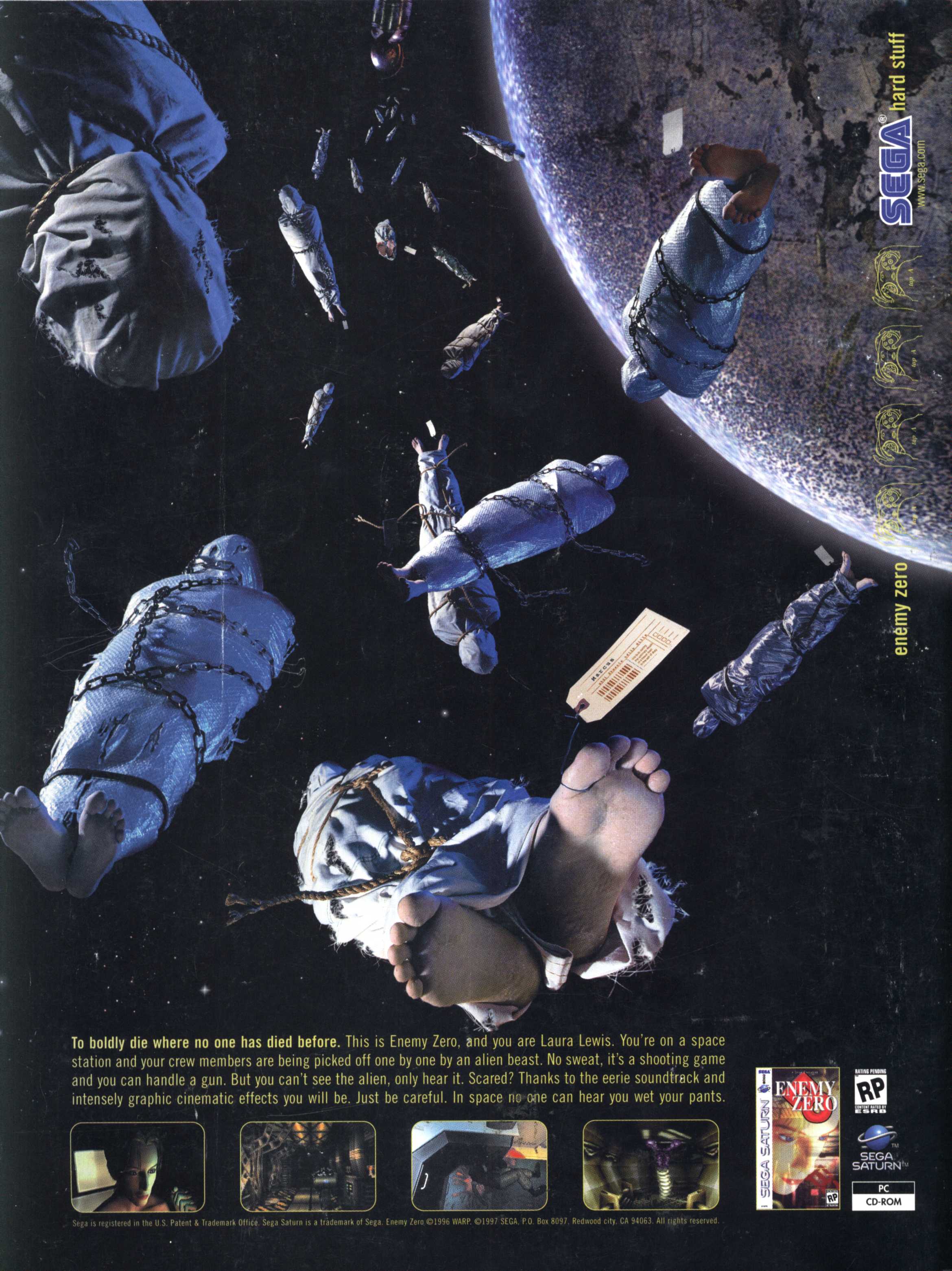
Back cover of the December 1997 issue of GamePro

Read more: https://www.megalextoria.com/wordpress/index.php/2022/11/22/gamepro-december-1997/

Monday, November 21, 2022

What Are Rights? This Is What the American Founders Believed

In 1776, the Declaration of Independence proclaimed that everyone is endowed with “unalienable Rights.” Years later, the Bill of Rights elaborated on those rights.

Subsequently, the rights of many (although not all, tragically and atrociously) Americans were secured to a greater degree than in any polity in human history. The results were spectacular and gave “rights” a luster that has endured to this day.

But the word “rights” has long since been hijacked by enemies of the original idea of rights. To steal the prestige earned by that idea, they have hitched the word to their favorite government-granted entitlements. They champion “rights” to welfare, health care, education, internet access, etc.

But, this is far removed from what the American founders meant by rights. They meant what their philosophical hero John Locke meant. So, let’s explore what Locke meant by rights.

In his Two Treatises of Government, Locke wrote that, “every man has a property in his own person: this no body has any right to but himself.”

In modern usage, “property” refers to external possessions. But in Locke’s time, the word encompassed anything that is “properly” owned by someone, including one’s own body. For every human being, the exclusive use of his own “person” or body is “properly his,” as Locke wrote. This later became known as the doctrine of “self-ownership.”

Locke then posited that when an individual works on previously un-owned natural resources, he appropriates those resources: i.e., makes them his property. Locke referred to such property in external goods as an individual’s “possessions” or “estate.” An individual can transfer ownership of any of his possessions to anyone else, either in exchange or as a gift.

All of the other rights that Locke posited in his Two Treatises (the right of self-defense, the right of revolution, etc.) are extrapolations of these two fundamental rights: the right of self-ownership and the right to own external possessions, either through original appropriation (or “homesteading”) or through being the recipient in a voluntary transfer of ownership.

Thus, for Locke, and by extension for the American founders, “rights” are ultimately a matter of ownership or “property” in the original broader sense. Individuals have rights to their “lives, liberties and estates, which I call by the general name, property,” as Locke wrote.

This means that “no one ought to harm another in his life, health, liberty, or possessions…” To deprive someone of life by murder, health by assault, or liberty by coercion would violate that victim’s “property in his own person.” And to deprive someone of possessions by theft would violate the victim’s “estate,” i.e., property in those possessions.

This is what the authors of the Declaration of Independence were referring to when they proclaimed the “unalienable Rights” to “Life, Liberty, and the pursuit of Happiness.” And this is what the framers of the Bill of Rights were elaborating upon when they drafted the first ten amendments of the US Constitution.

By “rights,” they did not mean government-granted entitlements. Indeed they would have rejected such entitlements as incompatible with true rights. Government can only enforce someone’s phony “right” to welfare, health care, education, or internet access by depriving someone else of their genuine rights: either by seizing their earnings or commandeering their labor.

And such rights violations only serve to hamper much more effective—and rights-respecting—private efforts to abundantly provide goods and services like material security, health care, education, and internet access.

It was respect for genuine rights, not the provision of government-granted entitlements, that made the American experiment the wonder of the world. And only a re-embrace of rights will make America exemplary again.

This essay was originally published on Dan Sanchez’s Substack publication “Letters on Liberty.”

Dan Sanchez
Dan Sanchez

Dan Sanchez is the Director of Content at the Foundation for Economic Education (FEE) and the editor-in chief of FEE.org.

This article was originally published on FEE.org. Read the original article.

What Are Rights? This Is What the American Founders Believed

Vintage Photos - Oestreicher (1137-1140)

See the previous post in this series here.

I had the opportunity to pick up a huge batch of slides a while back. These pictures span from as early as the late 1940s to as late as the early 1990s. These came to me second hand but the original source was a combination of estate sales and Goodwill. There are many thousands of these slides. I will be scanning some from time to time and posting them here for posterity.

Getting your pictures processed as slides used to be a fairly common thing but it was a phenomenon I missed out on. However, my Grandfather had a few dozen slides from the late 1950s that I acquired after he died. That along with having some negatives I wanted to scan is what prompted me to buy a somewhat decent flatbed scanner that could handle slides and negatives, an Epson V600. It can scan up to four slides at a time with various post-processing options and does a decent enough job.

This set continues a rather large batch of slides that originally came from an estate sale and appear to have belonged to a locally well known photographer (or perhaps a friend or family member) from the Spokane Washington area and later Northern Idaho named Leo Oestreicher. He was known for his portrait and landscape photography and especially for post cards. His career started in the 1930s and he died in 1990. These slides contain a lot of landscape and portrait photos but also a lot of photos from day to day life and various vacations around the world. Here's an article on him from 1997 which is the only info I have found on him: http://www.spokesman.com/stories/1997/jan/04/photos-of-a-lifetime-museum-acquisition-of-leo/

Many of these slides had the date they were processed stamped or printed on them. I've found that in cases where I could verify the date, either because a more specific date was hand written or there was something to specifically date the photo in the photo itself, that this date has typically been the same month the photos were taken. In other words, I expect that in MOST cases these photos were taken relatively near the processing date.

Click the link below to also see versions processed with color restoration and Digital ICE which is a hardware based dust and scratch remover, a feature of the Epson V600 scanner I am using. There are also versions processed with the simpler dust removal option along with color restoration.

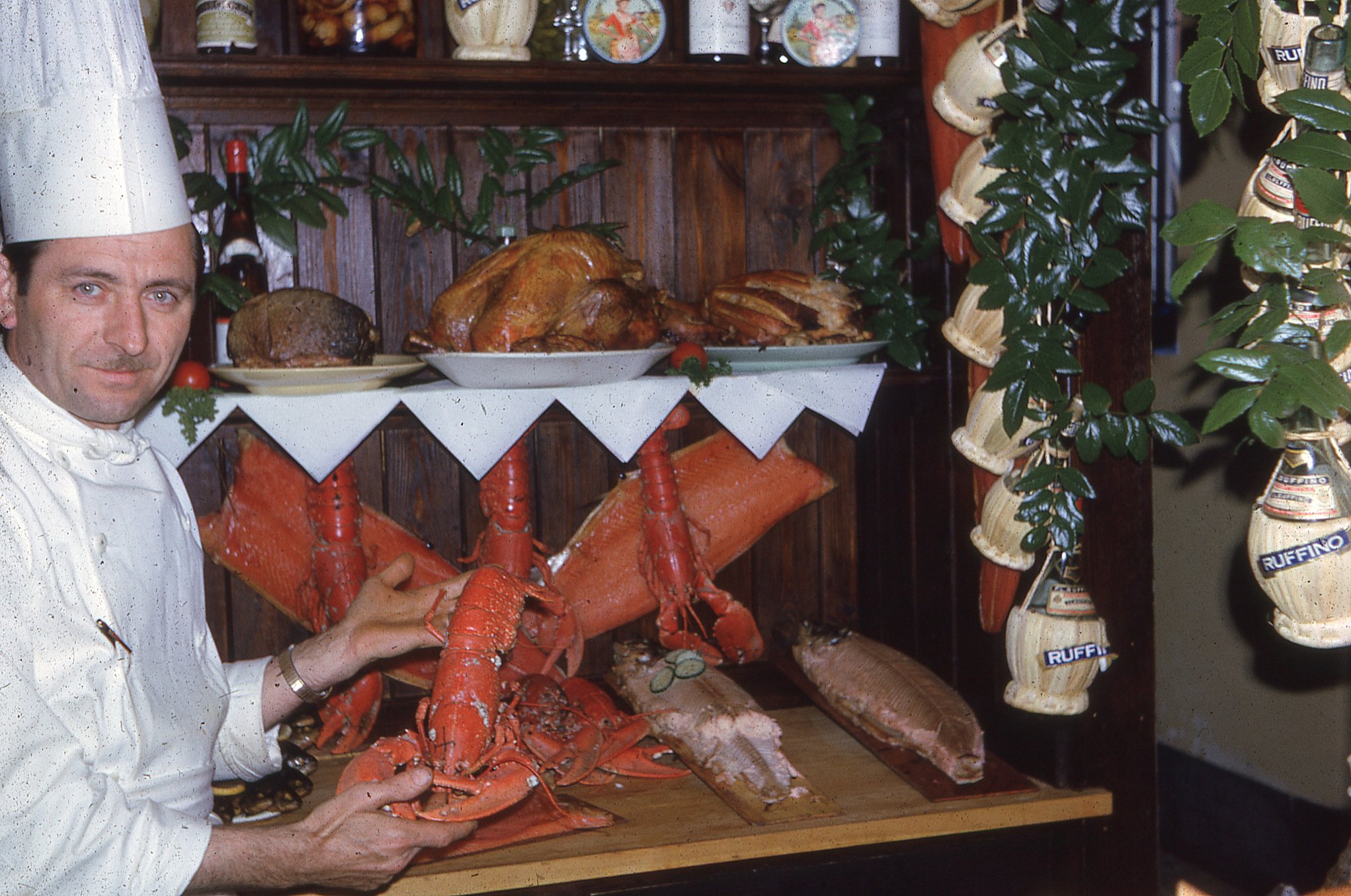
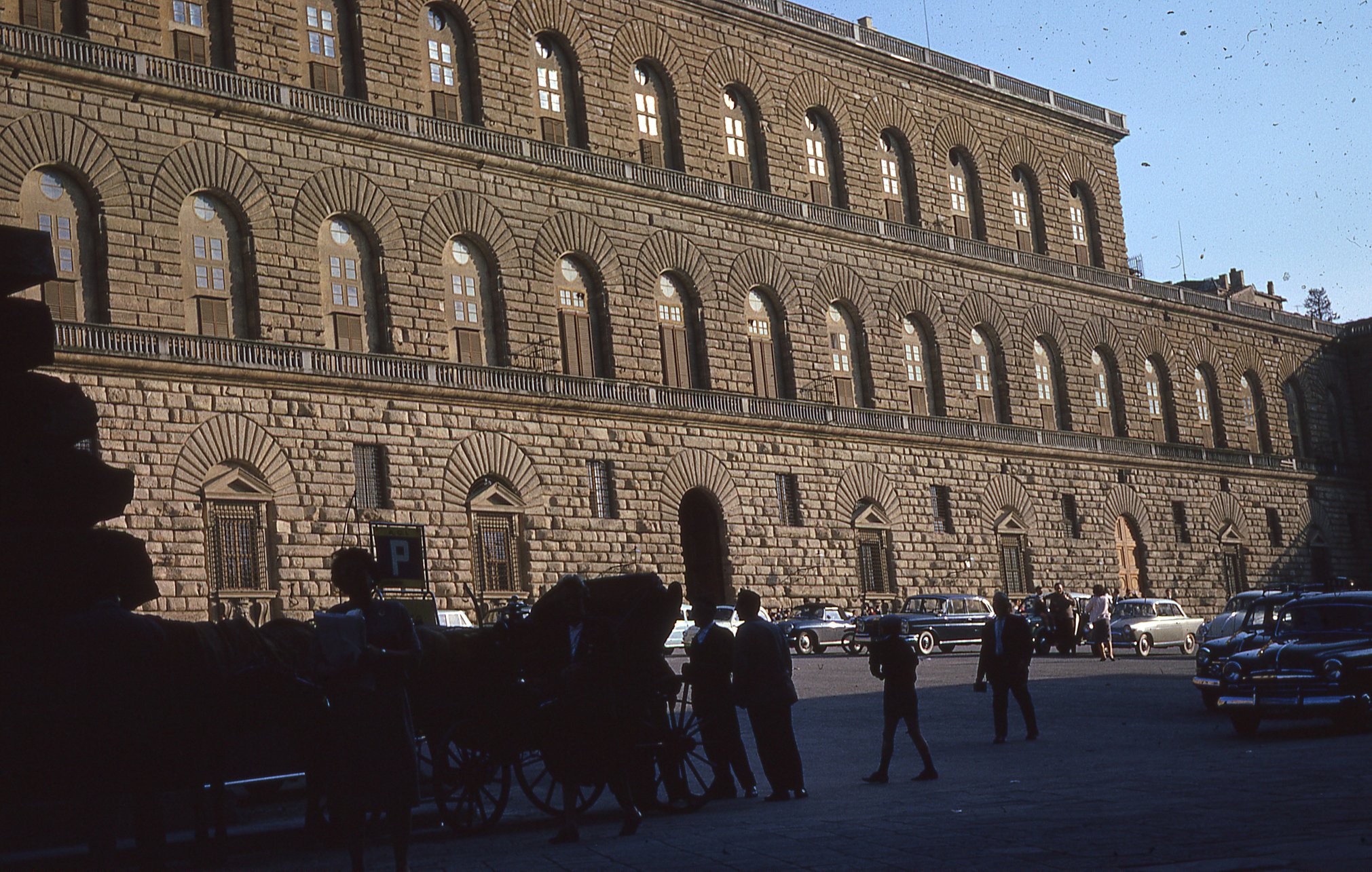
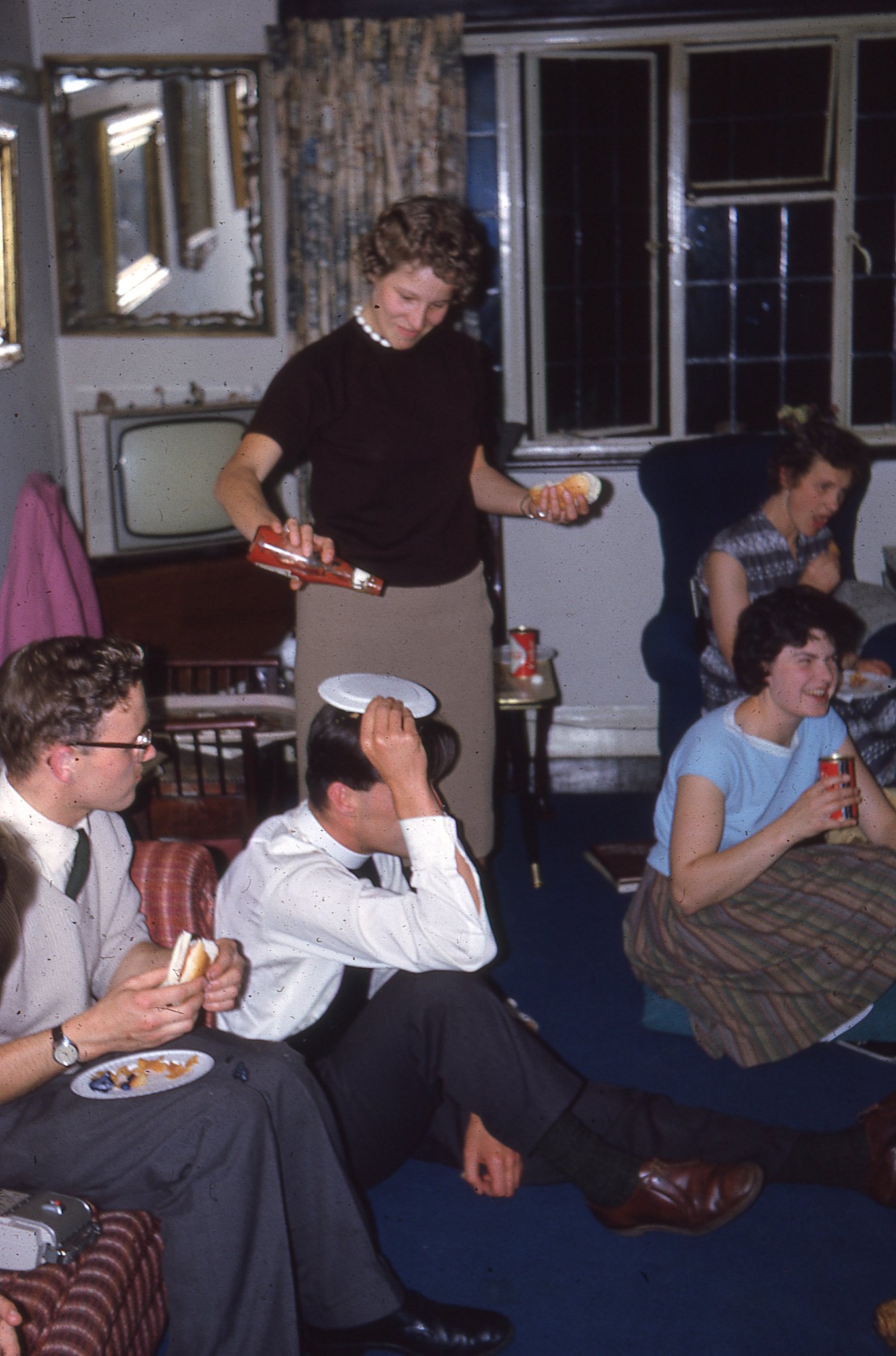
All of the photos in this set were processed in August 1962 and were probably taken around that time. The first and the last photo show a gathering of young people in a house having hot dogs. Perhaps a birthday or church youth group or 4th of July celebration or something along those lines... The other two photos I believe were both taken in Italy. One shows a chef holding a lobster in what appears to be an Italian restaurant and the other shows Palazzo Pitti or the Pitti Palace, a Renaissance era palace in Florence, Italy.


Palazzo Pitti


The entire collection that has been scanned and uploaded so far can also be found here.

Monday, November 14, 2022

Nintendo Power (January/February 1989)

Nintendo Power (January/February 1989)

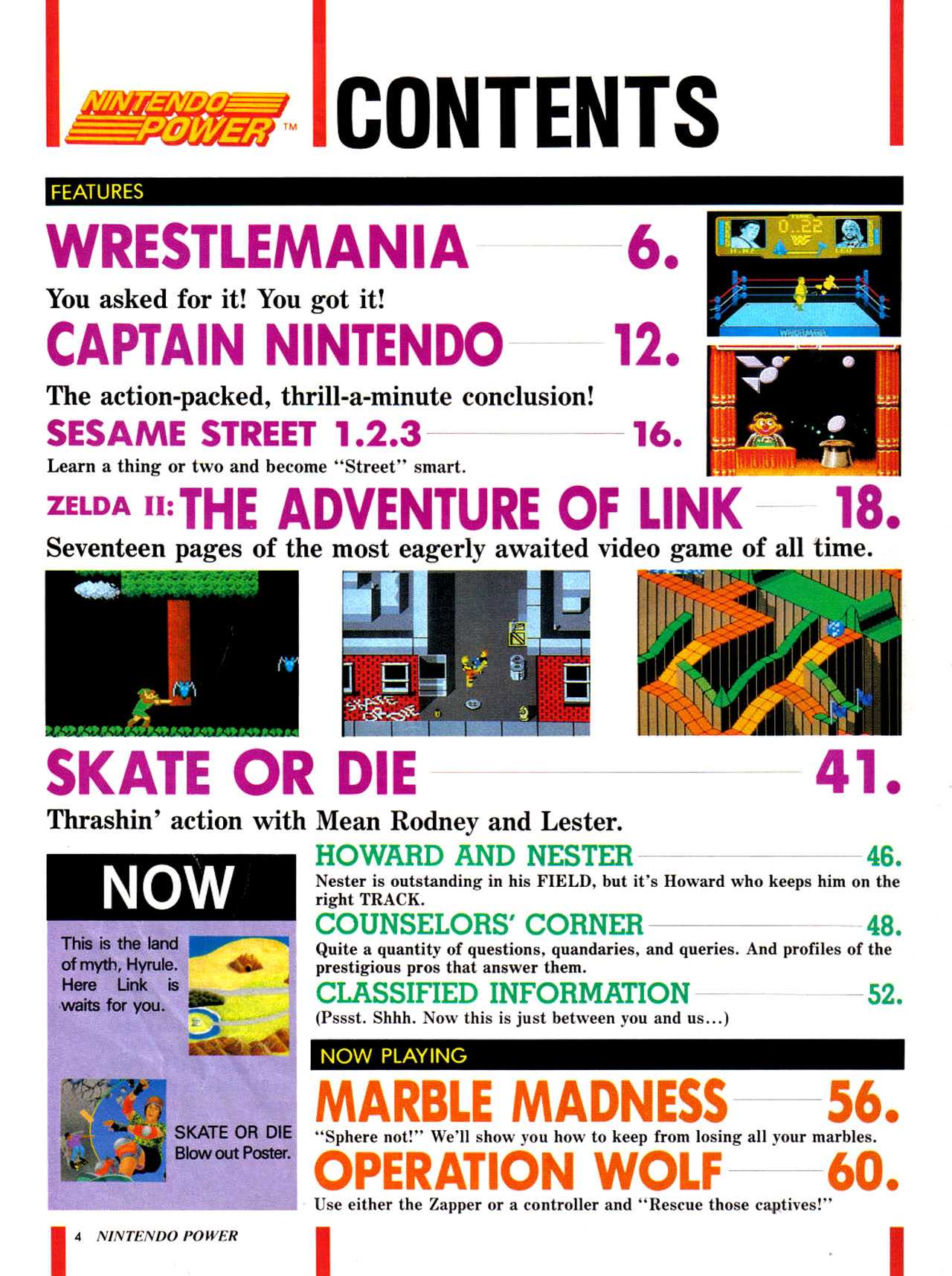
In early 1989, Nintendo Power only had the NES to cover. Nintendo Power was only a few months old but the NES had already been around for several years. The January/February 1989 issue includes:

Features

  • Wrestlemania - A wrestling game from an era near the peak of the WWF.

  • Captain Nintendo - Part 2 of a story involving a member of Nintendo's R&D team and the Mother Brain from Metroid among other gaming themes.

  • Sesame Street 1.2.3 - A couple of educational Sesame Street themed games that had previously been released on home computers, including Astro Grover and Ernie's Magic Shapes.

  • Zelda II: The Adventure of Link - A detailed guide to the sequel to one of the most successful Nintendo game ever, including maps, items lists and more.

  • Skate or Die - A guide to the classic skateboarding game from Electronic Arts.


Table of Contents from the January/February 1989 issue of Nintendo Power

Now Playing

  • Marble Madness - A guide to the classic isometric marble game.

  • Operation Wolf - One of the better light gun games on the NES and a decent port of the arcade version.

  • Nintendo Power Bowl - A comparison of three football games for the NES, including Tecmo Bowl, John Elway's Quarterback and N.F.L. Football.

  • Metal Gear - The beginning of a franchise. I still prefer this 2D overhead version to more modern incarnations.


Table of Contents from the January/February 1989 issue of Nintendo Power (continued)

Player's Forum

  • NES Journal - A look at a hands free controller designed for special needs kids. Also, a look at Nintendo's PlayChoice-10 arcade game (I used to love playing Excitebike on this), new music from Debbie Gibson, Julian Lennon, and Huey Lewis and the News, and more.

  • Mail Box - Mail from readers with topics such as Super Mario Bros. 2, Dragon Warrior, Metroid, a 4-year old's high score on Super Mario Bros, and more.

  • NES Achievers - Reader high scores on 1942, Arkanoid, Athena, Castlevania, Commando, Contra, Duck Hunt, Excitebike, Ghosts 'N Goblins, Golf, Golgo 13, Gradius, Gun Smoke, Hogan's Alley, and lots more.


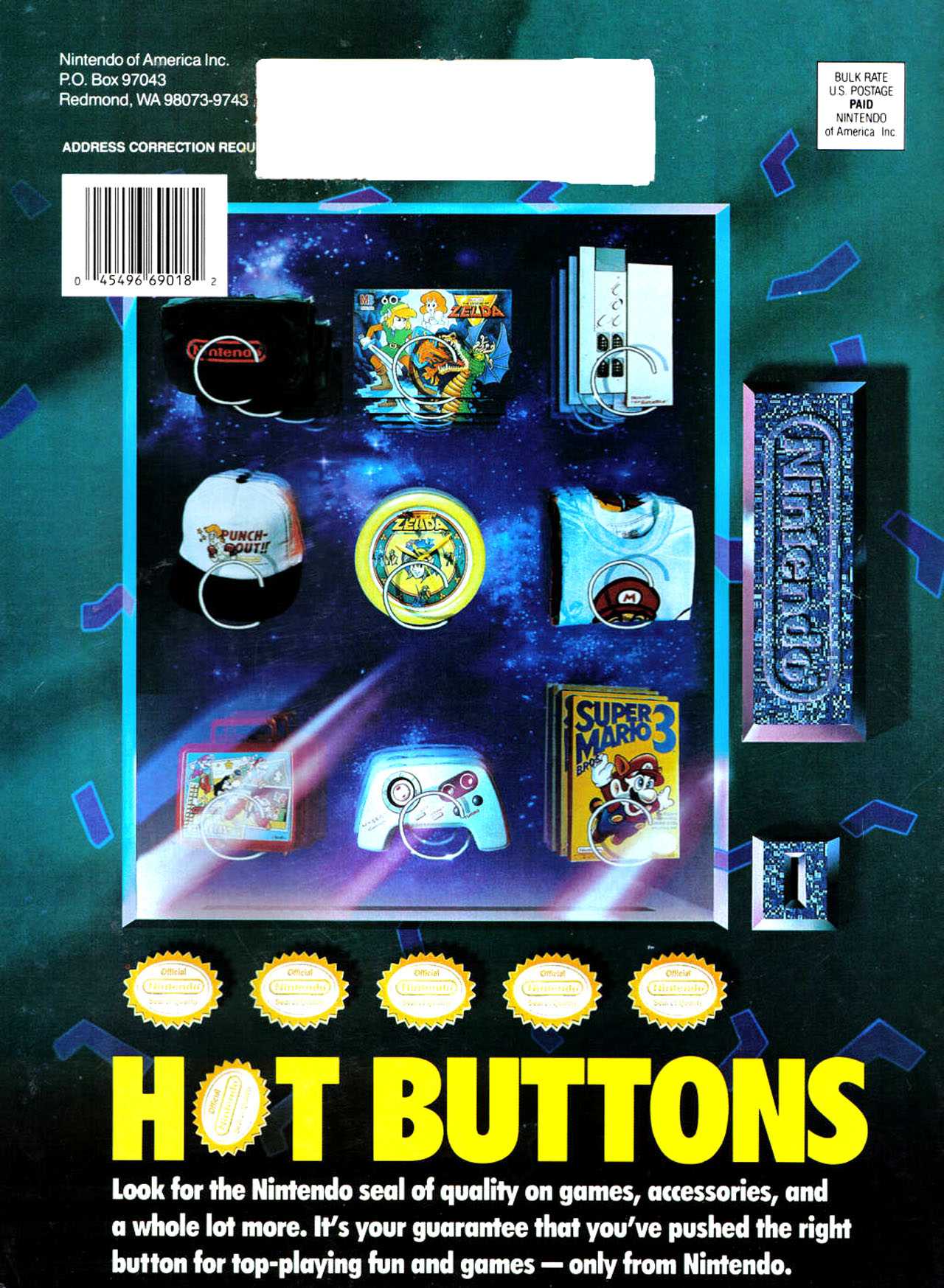
Back cover of the January/February 1989 issue of Nintendo Power
Read more: https://www.megalextoria.com/wordpress/index.php/2022/11/14/nintendo-power-january-february-1989/