steem

Sunday, September 10, 2023

Byte (March 1979)

Byte (March 1979)

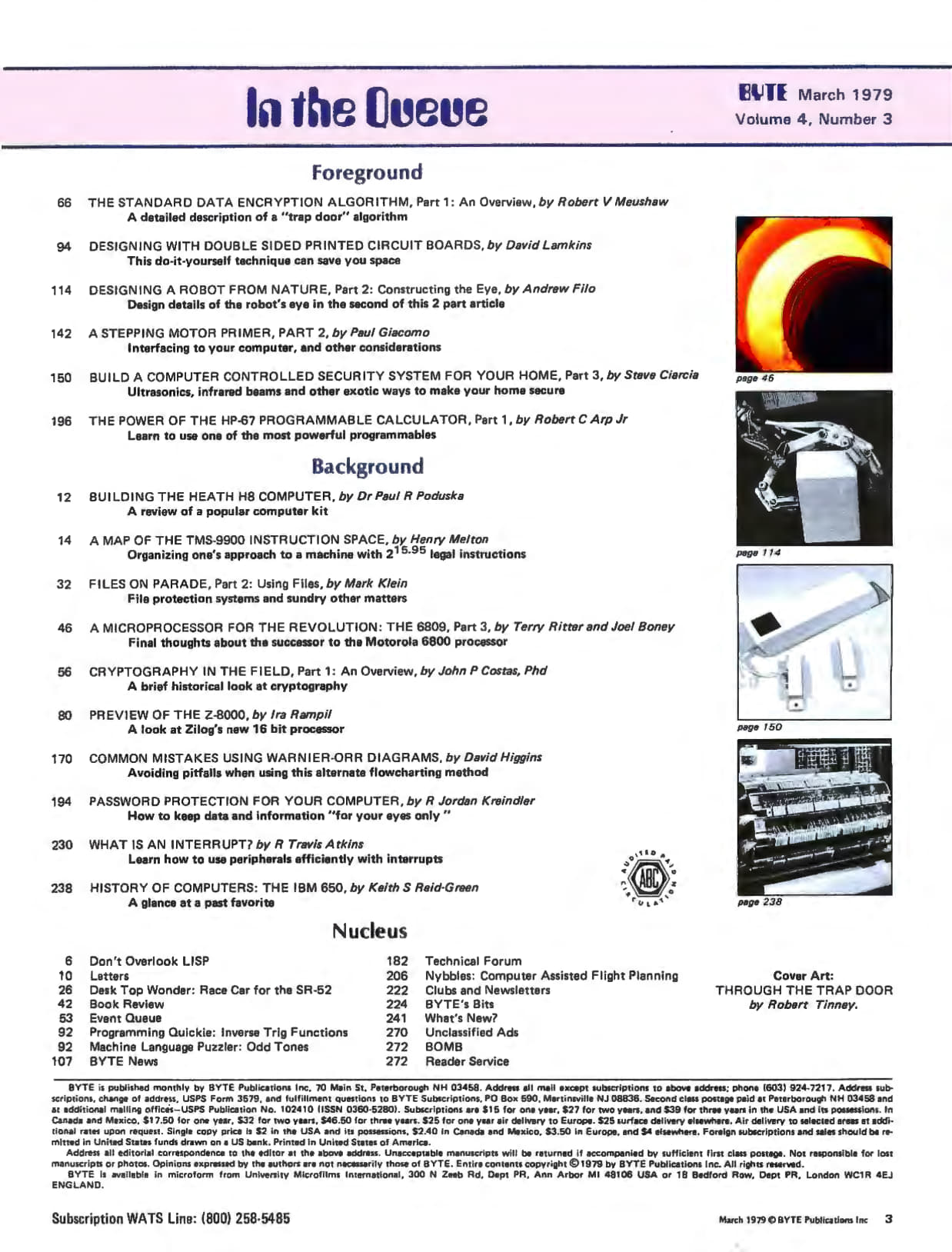
Byte was one of the earliest computer magazines and longest running. Publication began in the 1970s and continued through the early 1990s. The content tended to be technical, especially in the older issues. The March 1979 issue includes:

Foreground

  • The Standard Data Encryption Algorithm, Part 1 - An introduction to the Standard Data Encryption Algorithm and an implementation for the KIM which uses a 6502 processor

  • Designing with Double Sided Printed Circuit Boards - A tutorial for designing your own circuit boards.

  • Designing a Robot From Nature, Part 2 - Part 2 concentrates on the design of the eye of the robot. Really it's a contrast detector. The robot consists of a manipulator arm, an 8008 computer, and sustained contrast detector.


Table of Contents from the March 1979 issue of Byte

Background

  • Building the Heath H8 Computer - The Heath H8 was a computer that came in kit form. It was based on the 8080A CPU. This is a guide to putting it together.

  • A Map of the TMS-9000 - A look at machine language on this 16-bit processor.

  • Files on Parade, Part 2 - The second and final part in a series on using files.

  • A Microprocessor for the Revolution: The 6809, Part 3 - The concluding part of a series on the 6809 processor. This art discusses clock speed, timing signals, condition codes, and software design philosophy. This processor would be used in the TRS-80 Color Computer.

  • Cryptography in the Field, Part 1 - Part one of a series on the practical use of cryptography.

  • Preview of the Z-8000 - A technical look of this new 16-bit processor from Zilog.

Nucleaus

  • Don't Overlook Lisp - An editorial on the benefits of the LISP programming language.

  • Letters - Letters from readers about computers in the kitchen, computer humor, chess and Pascal, and more.

  • Desk Top Wonder: Race Car for the SR-52 - A racing game for the SR-52 programmable calculator.

  • Book Review - Review of "Your Own Computer" by Mitchell Waite and Michael Pardee.

  • BYTE News - More companies supporting Pascal on their machines; Intel, Texas Instruments and IBM release new memory chips; bubble memory increasing in availability; 5-inch floppy disks to increase in capacity to 1 to 2 MB; flat screen displays being developed; APL microcomputer coming soon; and more.


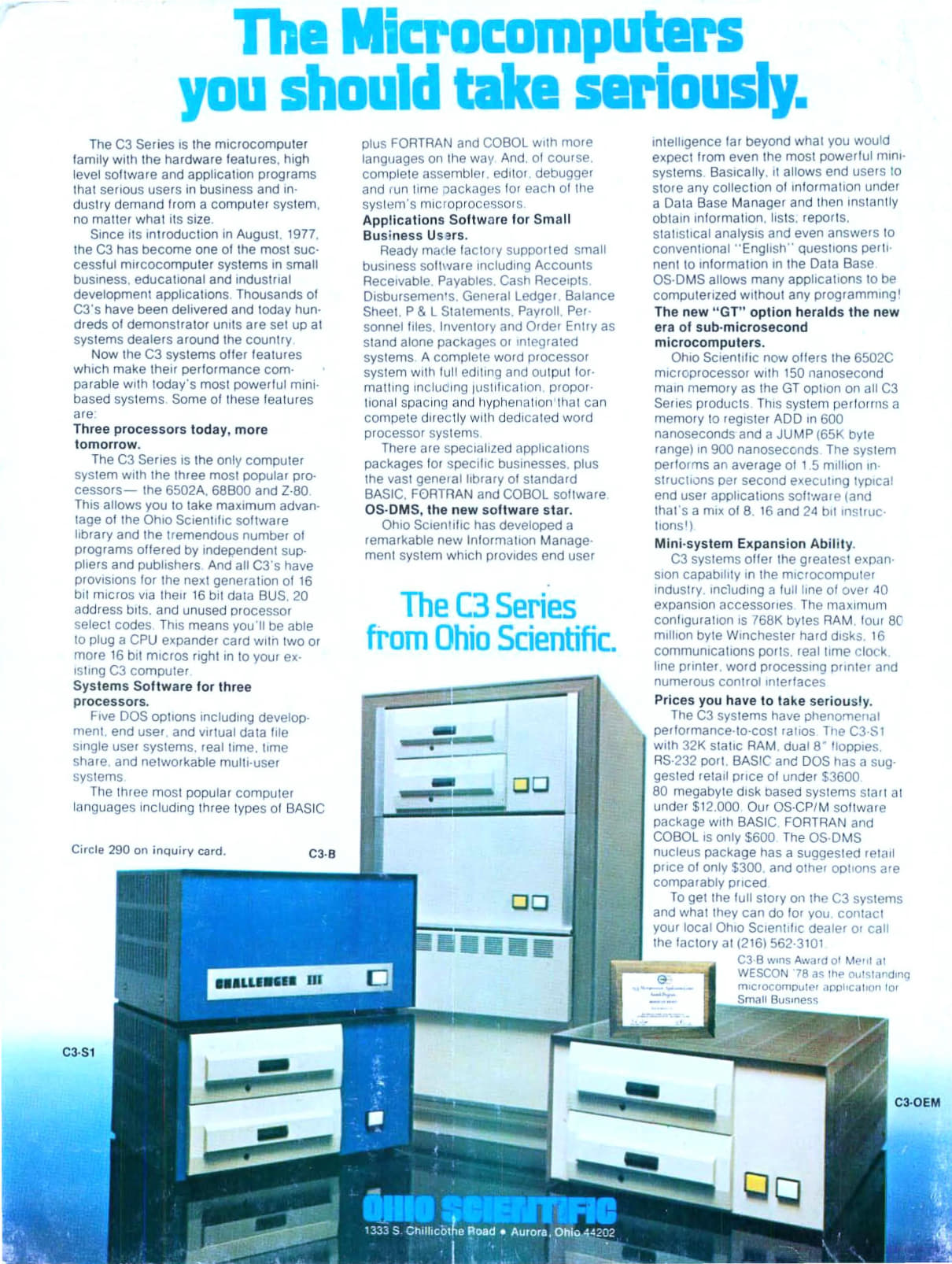
Back cover of the March 1979 issue of Byte

Read more: https://www.megalextoria.com/wordpress/index.php/2023/09/10/computer-video-game-magazines-byte-march-1979-cover/

Saturday, September 9, 2023

Bitcoin Is a Great Counterpoint to Calls for Government Innovation Subsidies

Bitcoin Is a Great Counterpoint to Calls for Government Innovation Subsidies

Title: How Bitcoin Highlights the Problem with Innovation Subsidies

Subtitle: The story of bitcoin shows us that true innovation follows its own path.

Abstract: If bitcoin is a specific case that exposes the general flaw in innovation economics, what other opportunities are being suppressed or missed because capital is being misallocated by innovation subsidies?

Dave Birnbaum

Have you heard of “innovation economics?” This relatively new school of thought represents a shift away from traditional economic theories, and emphasizes entrepreneurship, technological innovation, and, you might have already guessed, government intervention as key drivers of economic growth.

Since one of the members of the Federal Reserve Board of Governors subscribes to the concept of innovation economics, understanding this school of thought may help us interpret or even anticipate policymaker’s decisions that will affect us all.

Rooted in the ideas of thinkers like Joseph Schumpeter, this framework seeks to recognize the importance of innovation to an economy, not just the management of resources, and provides a theoretical framework for how to encourage and accelerate the creation of new technologies, products, and services.

Unlike classical economics, which focuses on equilibrium, innovation economics sees economies as dynamic and continuously evolving. While it’s true that the economy is a dynamic system, its proponents take this a step further, arguing that targeted government support can stimulate technological advancement, productivity growth, and economic progress.

This approach has shaped policies in the United States over the past 20 years. Proponents point to the America COMPETES Act, STEM education initiatives, and technological research and development grants as notable outcomes.

However, when you strip back the jargon, it becomes clear that innovation economics is just a new veneer on an age-old concept: government picking winners and losers. It is centralized industrial policy making updated with the trappings of the 21st century, and nets out to yet another form of state capitalism. The clear evidence for this can be found in an unlikely place: bitcoin.

A decentralized digital currency that is radically improving the world economy, bitcoin’s story is remarkable. In 15 short years, a moonshot to create a universal honest ledger has been adopted by hundreds of millions of people, and even nation-states. It is sound money that can be sent anywhere in the world, and promises change that both sides of the political aisle could get behind, from healthy market competition in the financial sector, to protection from exploitation for the populations of poor countries.

Ironically, bitcoin would be an ideal candidate for an innovation subsidy, given the tremendous positive impact it could have once key technical problems are solved. Its potential to revolutionize the financial system, enhance privacy, and democratize finance makes it a game-changer. And, although there is a robust commercial and industrial ecosystem evolving naturally around bitcoin, there is no question that the ecosystem would develop faster if it were subsidized.

However, the benefits offered by bitcoin come at a cost to the power of state apparata, which depend on seigniorage (profiting from money-printing) as a key lever of power. Whatever you think of bitcoin and its long-term prospects, there’s no question that if it were to succeed, it would obviate the need for government-controlled fiat currencies and the central banks that issue them, and reduce the power of the state over the economy.

Hence, even though bitcoin subsidies would seem to be consistent with the stated objective of innovation economics of helping people, bitcoin would never receive government support precisely because it works against the government's interest in maintaining control over fiat currency. This exposes a congenital defect of innovation economics—it must be biased towards preserving the power and control of those who decide what to subsidize.

This leads to a broader question that the reader must ponder. If bitcoin is a specific case that exposes the general flaw in innovation economics, what other opportunities are being suppressed or missed because capital is being misallocated by innovation subsidies?

The story of bitcoin, an innovation that emerged and thrived without government support, serves as a sobering reminder that true innovation often follows its own path.

Furthermore, it is not possible for the government to pick winners and losers in the innovation race without prejudice or self-interest. While innovation economics has alluring promises and can point to specific successes, it fails to escape the biases and conflicts that inevitably arise from government intervention.

Despite its modern facade and claimed successes, the theory of innovation economics falls short of delivering an unbiased, effective path to technological innovation. The specific case of bitcoin, coupled with the general potential for missed opportunities due to biased capital allocation, calls into question the very foundations of this approach. Policymakers and economists would do well to carefully consider these flaws.

Dave Birnbaum
Dave Birnbaum

Dave Birnbaum is the product director at Coinbits, where he leads a team that is making Bitcoin user-friendly for the next generation of Bitcoiners.

This article was originally published on FEE.org. Read the original article.

Bitcoin Is a Great Counterpoint to Calls for Government Innovation Subsidies/a>

Wednesday, September 6, 2023

PC World (December 1992)

PC World (December 1992)

PC World was probably the most popular PC magazine in the late 1980s and early 1990s and maybe longer than that (it was certainly around longer). This issue from December 1992 was from about 7 months or so before I bought my first PC (not counting my Commodore 64). It includes:

Cover Story

  • The Readers' Choice: World Class 1992 - Readers pick the best hardware and software of 1992. Some of the winners in the hardware category include the ATI Graphics Ultra video card, the Seagate ST3144A hard drive, the Bernoulli Transportable 90 Pro external drive from Iomega, the Jumbo 250 tape drive from Colorado Memory Systems, the ScanMan 256 handheld scanner from Logitech, and the Microsoft Mouse. Gateway 2000 was voted as the vendor with the best service and support, followed by Dell, Zeos, IBM, and Hewlett-Packard. Winners in the software category include WordPerfect, Excel, Windows 3.x, Norton Utilities, Paradox, ProComm Plus (I loved this terminal software), PageMaker, CorelDraw (another favorite of mine), Quicken, and more.

Windows

  • Windows NT: A DOS for the '90s - A detailed look at the upcoming new operating system from Microsoft, Windows NT.

Systems

  • 486SX-25s vs. 386DX-40s: The Upstart Fights Back - While Intel had moved on to the 486, AMD was still pushing the 386 to faster speeds with the 386DX-40 (I had a roommate in college with one). More than 50% of new sales were 486 systems by this point but the 386 was still thought to be a good budget choice at the time. In reality, it would be woefully out of date within a year or two. In this overview, it shows that the budget 486 processor (486SX-25) is faster than the 386DX-40 though doesn't have as good of a price/performance ratio. However, the 486 systems were also more easily upgradeable. The best performer in their lineup was the Boss 486SX/25 Cache. The best value was the Compudyne 486SX/25 with the Blackship BLK 386/40 taking second.

  • The Complete Guide to the New CPUs - A look at the latest 386 and 486 processors. Also, benchmark comparisons of 24 processors. From fastest to slowest: 486DX2-66, OverDrive-33/66, 486DX-50, OverDrive-25/50, 486DX-33, OverDrive-20/40, 486DX-25, Cyrix 486DLC-33, AMD 386DXL-40 (with math coprocessor), IBM 486SLC2-20/40, Cyrix 486DLC-33 (with math coprocessor), 486SX-25, 386DX-33 (with math coprocessor), AMD 386-40, 386DX-33, 486SX-20, Cyrix 486SLC-25, 386DX-25 (with math coprocessor), 386SL-25, 386DX-25, AMd 386SXL-25, 386SX-20, 386SX-20.


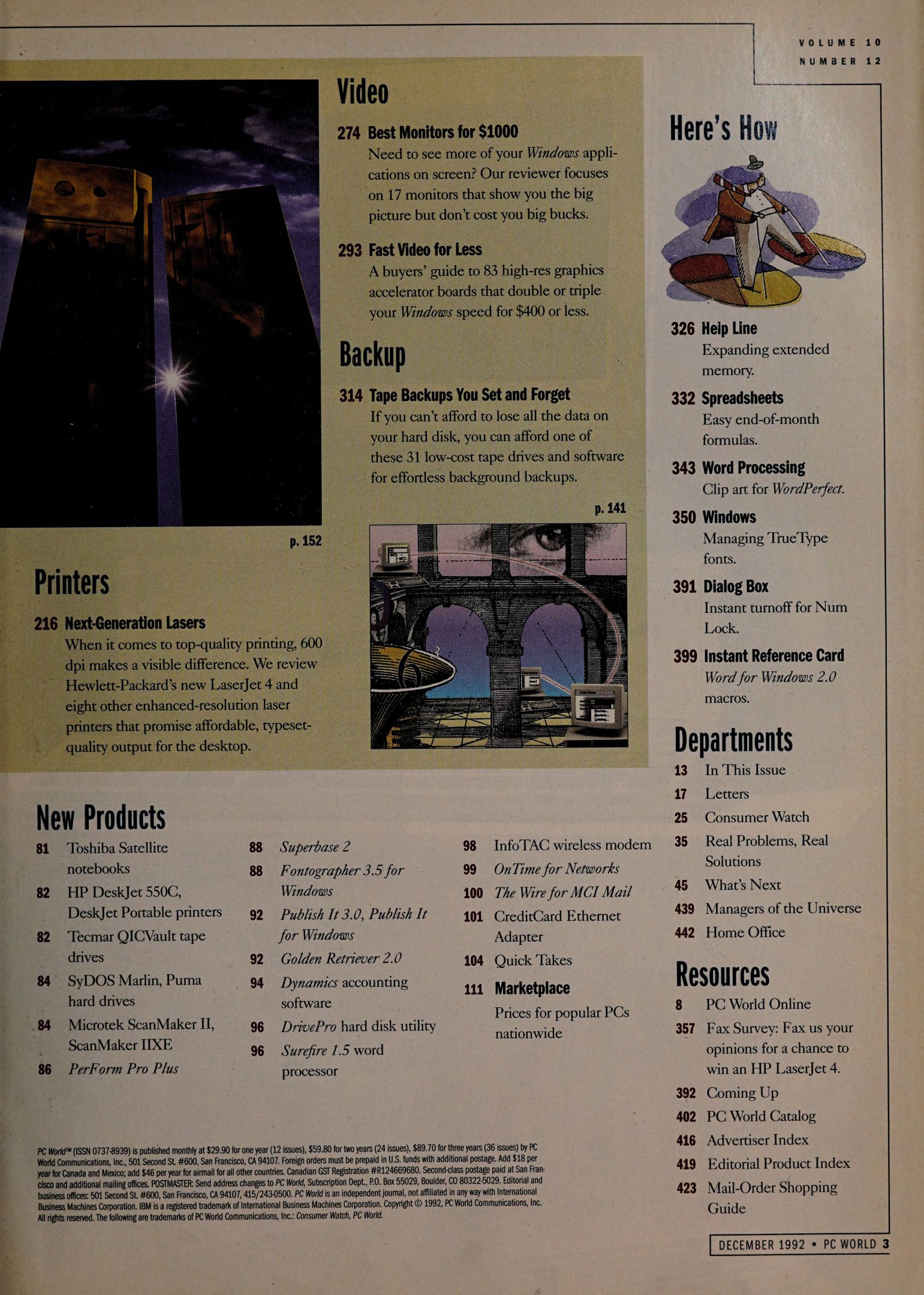
Table of Contents from the December 1992 issue of PC World

Top of the News

  • You Can Take It With You - A look at a bunch of recently released laptops, including the Compaq LTE 4/25c and Lite/25E (with 25-Mhz 486SL CPU); TravelMate 4000 WinDX2/50, WinDX2/40 Color, and WinSX/25; Grid Convertible (386SL-25 based); and Z-Lite 320L (386SL based).

  • Vendors Speed Up PC Introductions - Vendors are introducing new PCs at an increasingly rapid pace. PC tech started rapidly advancing starting in the late 486/early Pentium era. Within two years or so there were cheaper PCs available that were at least 400% faster than the 486-DX2/66 I got in 1993.

  • Microsoft's Accessible Database - Microsoft releases the easy to use Access database software.

  • Windows for Workgroups - The latest version of Windows, Windows for Workgroups 3.1 made networking easier.

Printers

  • Next Generation Lasers - Reviews of the latest laser printers, including the Compaq Pagemarq 15, Compaq Pagemarq 20 (best buy), Helett-Packard LaserJet 4 (best buy), Hewlett-Packard LaserJet 4M, IBM LaserPrinter 10P/Lexmark, Kyocera Ecosys a-SI, NewGen Systems TurboPS/660, Okidata OL810, and Xanite Accel-a-Writer 8000.

Video

  • Best Monitors for $1000 - Reviews of the latest "big-screen" monitors (we are talking 15 to 17-inch CRT based monitors) for prices ranging from $700 to nearly $1500. Models reviewed include the Amdek AM/815, Amdek AM/817, Compaq QVision 150, Dell 15LR, HP Ultra VGA 17-Inch Display, IOcomm ThinkSync 5, IOcomm ThinkSync 7A, Mag MX15F, Mag MX17F (best buy), NEC MultiSync 4FG (best buy), Rellsys RE1558, Samsung SyncMaster 5c, Sony CPD-1604S, Taxan MultiVision 550, TVM MediaScan 5A+LR (best buy), TVM MediaScan 6A Digital (best buy), and ViewSonic 7.

  • Fast Video for Less - A huge round-up of 95 graphic accelerator boards. These were designed to speed up displays in Windows more so than games.

Backup

  • Tape Backups You Set and Forget - A look at the latest "high-capacity" tape drives (typically with 120MB capacity and up to 250MB compressed capacity). Tape drives were a pretty common accessory from about this time through the early Pentium era. After that, they sort of faded away in favor of other options (Zip drives, etc.).

New Products

  • Toshiba Satellite Notebooks - Toshiba launches three "low cost" 386SX Notebooks. The T1800 featuring a 20-MHz 386SX, 2MB of RAM and a 60MB hard drive for $1800, the T1850 with 25-MHz 386SX, 4MB of RAM and an 80MB hard drive for $2200, and the T1850C which is the same as the T1850 except with a color screen for $3300.


  • HP DeskJet 550C, DeskJet Portable Printers - The new DeskJet 550C inkjet printer for $1099 and the new HP DeskJet Portable for $599.

  • Tecmar QICVault tape drives - SCSI based tape drives with 720MB capacity for prices ranging from $1139 to $1889.

  • SyDOS Marlin, Puma hard drives - A look at the new SyDOS 3.5" drive with removable media.

  • PerForm Pro Plus - Software for creating forms.

  • Superbase 2 - A relational database for Windows. I believe there was actually a Commodore 64 version of the original Superbase.

  • Fontographer 3.5 for Windows - Create and modify fonts.

  • Publish It 3.0, Publish It for Windows - Desktop publishing packages for DOS and Windows.

  • Golden Retriever 2.0 - A file manager for Windows.

  • Dynamics accounting software - A high end accounting package for Windows from Great Plains Software.


Table of Contents from the December 1992 issue of PC World (continued)

Here's How

  • Help Line - Questions answered about Stacker disk compression software, turning extended memory into expanded memory, printing screen graphics, OS/2, and more.

  • Spreadsheets - Questions answered about displaying negative percentages in parenthesis in 1-2-3, calculating the last day of the previous month in Excel 4.0, hiding columns in Excel 4.0, and more.

  • Word Processing - Questions answered about using clip art in WordPerfect 5.1, gridlines in Word for Windows 2.0, creating text with background shading in WordPerfect 5.1, and more.

Departments

  • Letters - Letters from readers about fraudulent ads in magazines, Hewlett-Packard's NewWave, CAD software, and more.

  • Real Problems, Real Solutions - Overcoming the feat of computers.

  • What's Next - A look at navigation software which at the time amounted to map software for your PC, some with subscriptions for updates.


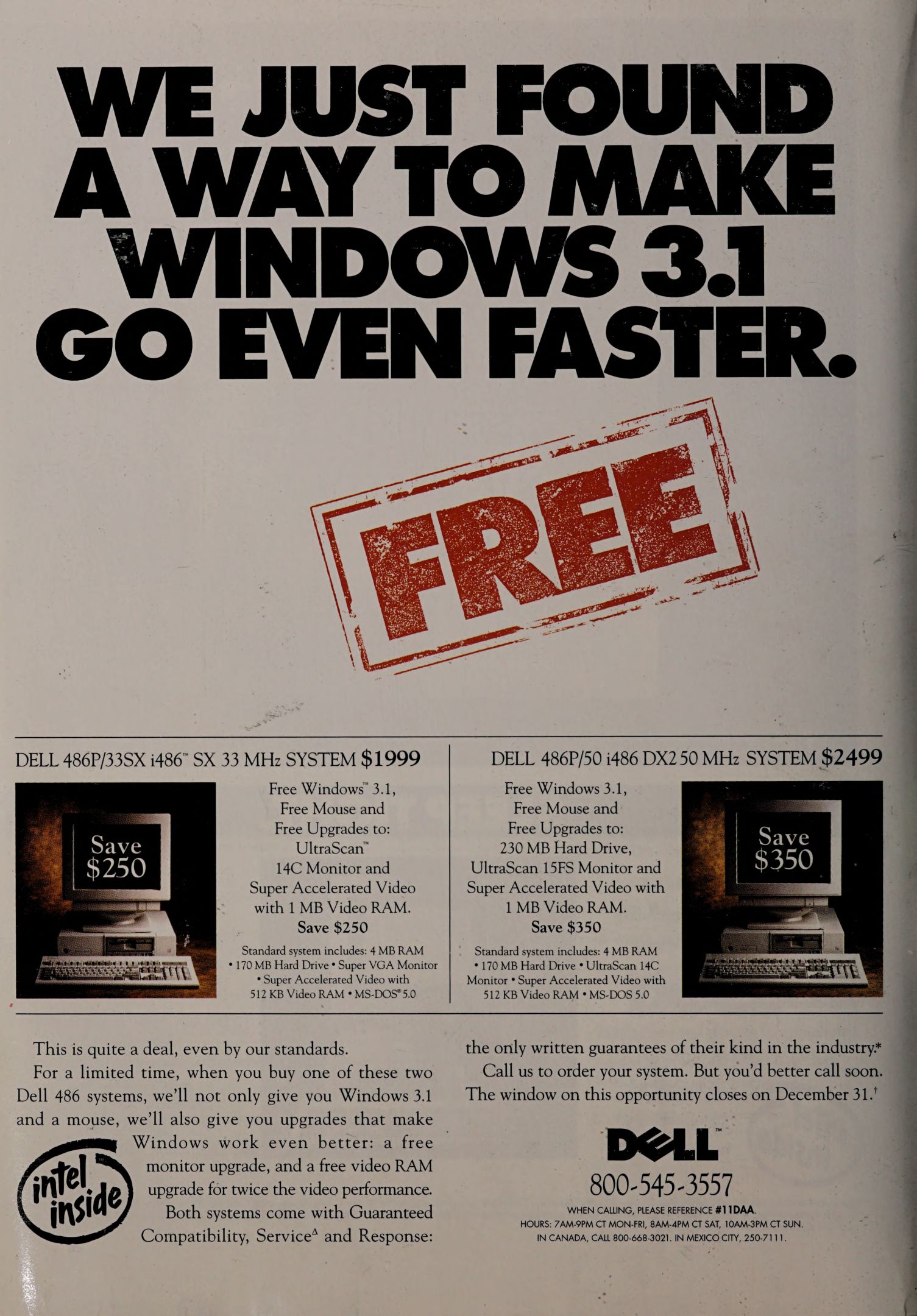
Back cover of the December 1992 issue of PC World

Read more: https://www.megalextoria.com/wordpress/index.php/2023/09/06/pc-world-december-1992/

Saturday, September 2, 2023

Personal Computing (September 1982)

Personal Computing (September 1982)

Personal Computing was a long lived computer magazine published in the U.S. from the late 1970s until 1990 or so. Though by the end of its run it was covering mostly the PC, it covered various computer platforms in its earlier days. The September 1982 issue includes:


Table of Contents from the September 1982 issue of Personal Computing

Departments

  • Editorial - Computer literacy and getting more out of Personal Computing.

  • Letters - Letters from readers about electronic mail, choosing a word processor, buying a printer, the need for two disk drives, and more.

  • Answers - Questions answered about compatible home and office computers, microdisks (the then new 3.5" disk format), portable computers, using electric typewriters as an interface.

  • Outlook - Purchasing software may qualify you for tax deductions; Club Med features computer workshop with Atari computers; universities use computers to help students with math; and more.

  • Interview - An interview with Jack Tramiel, chairman of Commodore Business Machines. He would later leave Commodore and move on to Atari.

  • Hardware of the Month - A look at new hardware including several new computers. The first is the portable Hyperion which is priced in the $4500 range, is compatible with the IBM PC, and features an 8088 processor, 256K RAM, and one or two floppy drives. The second is the NEC Model 200 which features various floppy/hard drive combinations starting at $4500. Also included here is a new Winchester hard drive from ATASI, a high resolution color 13" monitor, and more.

  • Software of the Month - New software including The Organizer (a personal information manager), Graphics Processing System, Kryptyk (encryption software), Oasis-16 (an operating system for the IBM PC), Easy Planner (spreadsheet), The Terminal Program from Hayes, and more.

Table of Contents from the September 1982 issue of Personal Computing (continued)

Features

  • Computing Literacy: Springboard to Success - Computer literacy is becoming important to up and coming executives.

  • Servicing Your System: Be Prepared - A proper service agreement can make the difference between a good system and a great system.

  • Squaring Off Over Computer Literacy - The best way to bring computer literacy to non-users.

  • Extend Your Reach with Telecommunications - Communicating with other computers with a modem. Something made practical only after Ma Bell lost their monopoly on telecommunications hardware used on their phone lines.

  • Big Four Accounting Software Roundup - A massive overview of the accounting software currently available in the categories of general ledger, accounts receivable, accounts payable, and payroll.


Back cover of the September 1982 issue of Personal Computing

Read more: https://www.megalextoria.com/wordpress/index.php/2023/09/02/personal-computing-september-1982/