steem

Showing posts with label Canada. Show all posts

Tuesday, April 23, 2024

Why Toronto Cops Are Advising Homeowners: Just Give Criminals Your Car Keys


One of my favorite movies growing up was RoboCop, Paul Verhoeven’s 1987 dystopian classic.

The movie, which was probably way too violent for a 10-year-old, depicts a fictional future in which Detroit is ravaged by violent crime and on the verge of social collapse. The police are virtually powerless against the criminals, who are too numerous and better armed. Led by a particularly nasty crime lord named Clarence Boddicker (Kurtwood Smith), the crooks prey on helpless citizens.

In one memorable scene, a member of Boddicker’s gang rolls up to a Shell station where a bespectacled clerk is doing geometry.

“Give me all your money, bookworm, before I blow your brains out,” the gang member says, tapping his automatic weapon against the plexiglass.

The clerk quickly puts down his compass and turns over the cash. Moments later, after filling up his motorcycle, the crook again approaches the clerk and appears poised to shoot. That’s when RoboCop shows up. 

“Drop it,” he orders, raising his three-round burst pistol. “Dead or alive, you’re coming with me.”

The scene has always stuck with me for some reason. Maybe it was the cruelty of the sawed-off gang member (“You a college boy or something?”). Maybe it was the patheticness of the mute clerk, who seemed so weak and helpless. But mostly, I think, it was the feeling of utter lawlessness the scene evoked.

Lawlessness is an overarching theme in RoboCop. The city is out of control. Citizens can’t protect themselves, and the police aren’t much help. We see this early on when Murphy, the hero of the movie, tries to stop Boddicker’s gang and is blown to pieces (literally). What remains of Murphy’s body is reconstructed into a law-enforcing cyborg — RoboCop, half machine, half man — who is going to take on not just Boddicker and his gang but Dick Jones (Ronny Cox), the corporate villain who heads up OCP, the corporation that created him.

RoboCop is a good enough flick for a kid, but the older I got, the more absurd the film felt. The villains are cartoonish, and the idea of a society imperiled by helpless citizens and weak police forces always seemed detached from reality. 

At least it did.

Toronto, Police, and Rotten Incentives

A couple weeks ago news broke that Toronto police, facing a crime wave, have offered new instructions to citizens: leave your keys at the front door for criminals.

“To prevent the possibility of being attacked in your home, leave your [key] fobs at your front door,” Const. Marco Ricciardi is heard telling citizens and reporters at a recent community meeting.

When I first saw these claims on social media, I thought it must be fake news. But Toronto police confirmed it in a statement.

“Police are concerned about an escalation in violence, where all sorts of weapons and firearms are being used to steal vehicles, and that includes during home invasions,” the statement reads.

Police have a point about surging crime. Car thefts are up 25 percent over the last year in Toronto, news agencies report, and many of the crimes involve crooks breaking into homes and snagging car keys.

When you watch the footage of masked attackers kicking in doors — many of whom are armed, according to police — one can see a certain logic to the guidelines. If the invaders find the keys quickly, it reduces the likelihood of an encounter between a homeowner and a potentially armed group of criminals.

Still, there are obvious problems. Put aside for now that your car (and everything in it) is being stolen. There’s also the problem of incentives.

We talk a lot about incentives (and disincentives) in economics. They are the drivers of human action. We make countless decisions every day, consciously and unconsciously, based on incentive structures around us. You needn’t be an economist to appreciate their power.

“Incentive structures work, so you have to be very careful of what you incent people to do,” Steve Jobs told author Brent Schendler many years ago, “because various incentive structures create all sorts of consequences that you can’t anticipate.”

The late Charlie Munger once said that if you showed him the incentive, he’d show you the result. And though incentives can get rather complicated, at their most basic level they are rather simple. A good incentive structure rewards good behavior and punishes bad.

Anyone who has trained a dog or raised a child understands this. You don’t give a dog a treat after he poops on your carpet; you give him a treat after he sits (or does whatever task you want him to do). You might reward a child with ice cream for getting a good grade on a spelling test, but not for throwing a tantrum at the grocery store.

Which brings me back to Toronto. By telling residents to leave their key fobs at the front door for criminals, police are essentially incentivizing burglary and theft. They are making it easier, not harder, to steal vehicles, diminishing the time it takes to commit the crime, thus lowering the risk involved.

One needn’t have a Ph.D in economics to understand this is likely to have an obvious adverse effect: an increase in car theft and home invasions in the city.

‘The Inviolable Domicile’

All of this is eerily reminiscent of RoboCop.

When you watch the Toronto police video footage of criminals kicking down doors of homeowners, and you combine that with police officers telling homeowners simply to give their keys to car-jackers, I’m reminded of the lawlessness of RoboCop and the mute gas station attendant who was helpless against it.

There’s something dystopian in normalizing this kind of violence, and in some ways it is darker and more depressing than RoboCop.

The police in Verhoeven’s film may have been ineffective, but at least they were trying to fight back. This is in contrast to the Toronto Police Service, whose lengthy list of home invasion tips was conspicuously absent an obvious response: homeowners exercising their right of self-defense.

This is strange, because the inviolability of the home is a legal concept that stretches back to before the birth of Christ.

“What is there more holy,” asked Cicero, “than the house of each individual citizen? Here is his altar, here is his hearth, here are his household gods; here all his sacred rights, all his religious ceremonies, are preserved.”

What we sometimes today refer to as the “castle doctrine” existed in the days of the Roman Republic.

“The domicile was seen as inviolable,” the French historian Numa Denis Fustel de Coulanges wrote in his celebrated history The Ancient City. “According to a Roman tradition, the domestic god repulsed the robber, and kept off the enemy.”

The Not-So-Inviolable Domicile

The legal right to protect one’s home, with defensive violence if necessary, is a concept more than 2,000 years old in the Western tradition. And it’s a legal precept you’ll find not just in the US but in Canadian legal charters.

“A person’s home is inviolable,” Sec. 7 of Quebec’s Charter of Human Rights and Freedoms explicitly states.

Apparently, not everyone sees the home as inviolable, even against violent intruders.

“You can’t use a gun for self-protection in Canada,” Prime Minister Justin Trudeau flatly stated in 2022. “It’s not a right that you have.”

This isn’t true, however. The Canadian government might not allow you to cite self-defense as a reason to obtain a firearm, but Canadians do have the right to defend themselves and their property, so long as the actions are deemed “defensive” and “reasonable.”

This right was recently tested when a 22-year-old Ontario man, Ali Mian, opened fire on a group of men who broke into his home and attacked his mother. One intruder was killed, and Mian was charged with second-degree murder. The charge was later withdrawn, however, apparently after prosecutors realized the shooting was a textbook case of self-defense.

Canada’s demonstrated legal protections for self-defense only make Trudeau’s callous dismissal of them all the more peculiar.

After all, the right to self-defense has a broad popular appeal and a rich intellectual tradition. It is present in the Bible and defended by thinkers as diverse as Confucius, Mencius, and Malcom X, who bluntly stated, “I am not against using violence in self-defense.”


The philosopher John Locke carved out perhaps the most robust defense of the right of self-protection in his Second Treatise on Civil Government:

I should have a right to destroy that which threatens me with destruction: for, by the fundamental law of nature, man being to be preserved as much as possible, when all cannot be preserved, the safety of the innocent is to be preferred: and one may destroy a man who makes war upon him.

Despite the rich tradition and popular appeal of the right of self-defense, Trudeau and many others remain hostile to it, which is no doubt why Toronto police declined to recommend defensive force as a deterrent to home intrusion.

This hostility likely stems from a number of sources, but in Trudeau’s case it is perhaps best explained by his disdain for individual rights, particularly property rights and the right to bear arms.

Critics of self-defense and gun rights have noted that for many, “the gun is the premier mark of individual sovereignty.” Yet many progressives see individual rights and individual sovereignty as a threat to the collective good; so the rights of individuals must be curbed and subordinated, as Trudeau has done with recent gun control legislation.

Unfortunately, placing the “collective good” above individual rights is a path toward dystopia and dysfunction. Individual rights — including the right to protect oneself and one’s home, and also to bear arms — are the wellspring of freedom. And freedom is the fountain of prosperity, civilization, and progress.

Departing from this tradition is how you end up with a society where individuals are unable to legally protect their own homes from violent criminals. Many will argue that this is why we have police, but the obvious problem is that police cannot protect everyone, certainly not with the immediacy that is needed in the midst of a burglary.

Unlike the citizens in RoboCop, Canadians can’t count on a cybernetic policeman to defend them from violent actors. 

Even worse, they’re being discouraged from protecting themselves and their homes by a government so hostile to individual rights and self-defense that it’s advising them simply to turn their property over to their attackers.

It’s not hard to see where this will go if Canada continues down this path.

This article originally appeared in AIER’s Daily Economy.

Source: Why Toronto Cops Are Advising Homeowners: Just Give Criminals Your Car Keys – FEE


Why Toronto Cops Are Advising Homeowners: Just Give Criminals Your Car Keys

Monday, November 27, 2023

Why Justin Trudeau Is Blaming Grocers for Surging Food Prices in Canada

New government data emerged this week showing that food prices in Canada continue to climb.

Though year-over-year inflation of consumer prices overall cooled to 3.8% in September, food prices increased 5.8% from a year ago, driven by surging prices of bakery products (up 8%), fresh vegetables (7.6%), pasta products (10.8%), and poultry (6.5%).

Food prices have long been a sore spot for Canadians. Even prior to 2023, statistics showed that some 7 million Canadians, including 1.8 million children, were in households struggling to put food on the table.

As inflation continued to drive food prices upward in 2023, consumer outrage quickly mounted.

“If I’m paying that much, I hope there’s gold in that chicken,” one user responded to a viral tweet in January showing a $37 price tag on a package of chicken breasts.

The episode prompted accusations of price gouging and a high-profile story in the New York Times — but the paper reported that outrage at grocers was misplaced.

“While it’s easy to get angry at the grocer, there’s very little evidence that the grocers are actually taking advantage of the situation,” said Mike von Massow, a food economics professor at the University of Guelph in Ontario.

Food prices have only gotten worse since then, and Prime Minister Justin Trudeau, apparently not a reader of the New York Times, has found the same scapegoat as many others unversed in basic economics: grocers.

Last month, Trudeau threatened to slap grocery stores with new taxes if they don’t find a way to lower food prices.

“Large grocery chains are making record profits. Those profits should not be made on the backs of people who are struggling to feed their families,” Trudeau told an Ontario crowd.

By taking aim at grocers and “record profits,” Trudeau is parroting the rhetoric of some U.S. politicians, including Sen. Elizabeth Warren (D-MA), who has argued that inflation is being driven by “corporate greed.”

The idea that corporations suddenly became greedy in the aftermath of the pandemic never passed the economic smell test, and it was recently rebutted in a Federal Reserve paper.

“Corporate profit margins were not abnormally high in the aftermath of the COVID-19 pandemic, once fiscal and monetary interventions are accounted for,” noted Dino Palazzo, senior economist at the Federal Reserve Board.

Yet politicians such as Trudeau, who less than a year ago criticized the idea of using a windfall tax on grocery companies to lower food prices, have repeated the claim over and over again that greedy corporations are the root cause of inflation. Why?

The answer is simple: the true blame for inflation lies with them.

Pierre Poilievre, leader of Canada’s Conservative Party, hit the nail on the head in a recent interview when he pointed out that the Canadian government’s policies are to blame for inflation — as are those who lead it.

“[Trudeau] prints $600 billion, grows our money supply by 32% in three years,” Poilievre said. “That’s growing the money eight times faster than the economy. No wonder we have the worst inflation in four decades.”

This is the mystery of inflation. (It’s not really a mystery.) Politicians and central banks flooded the economy with money, which devalued the currency.

Basic economics teaches that increasing the money supply faster than an economy can provide new goods and services will result in price inflation, and that is precisely what we’ve witnessed. Indeed, for much of modern history, inflation was defined as expansion of the money supply, not an increase in prices (which is the consequence of expanding the money supply). Henry Hazlitt famously explained the difference in Economics in One Lesson.

“Inflation is an increase in the quantity of money and credit. Its chief consequence is soaring prices,” Hazlitt explained. “Therefore inflation — if we misuse the term to mean the rising prices themselves — is caused solely by printing more money.”

Politicians such as Trudeau cannot, of course, admit it’s their own policies and money printing that are to blame for high food prices. So they hold speeches blaming grocery stores and food producers for the inflation they caused and threaten them with new taxes.

Whether Canadians will see through Trudeau’s crude charade is unclear. What is clear is that Canadian grocers are not responsible for the skyrocketing price of food in Canada. Justin Trudeau and the Bank of Canada are.

This article originally appeared on The Washington Examiner. 

Jon Miltimore
Jon Miltimore

Jonathan Miltimore is the Editor at Large of FEE.org at the Foundation for Economic Education.

This article was originally published on FEE.org. Read the original article.

Why Justin Trudeau Is Blaming Grocers for Surging Food Prices in Canada

Wednesday, May 17, 2023

Canada May Ban Fox News from Cable TV for ‘Abusive’ Tucker Carlson Segment

The regulatory body that oversees broadcasting in Canada has opened a public consultation about potentially banning Fox News from cable TV. Initiated on May 3, the process was prompted by the LGBTQ advocacy group Egale Canada, which asked for the consultation in early April in response to a Tucker Carlson segment that, in their view, “aimed to provoke hatred and violence against 2SLGBTQI communities.”

“This programming is in clear violation of Canadian broadcasting standards and has no place on Canadian broadcasting networks,” wrote Executive Director Helen Kennedy in an open letter. “Egale has experienced firsthand the hate that is generated from a single segment aired on Fox News in Canada. We cannot begin to imagine the broader impacts and potential rise in hate that might result from allowing more content like this to air in Canada.”

The body conducting the public consultation is the Canadian Radio-television and Telecommunications Commission (CRTC), essentially Canada’s version of the Federal Communications Commision (FCC). Among other things, the CRTC is responsible for enforcing the Broadcasting Act, which governs broadcasting in Canada.

“The CRTC maintains a list of international channels cable, satellite and IPTV providers can include in their packages,” the National Post explains. And the list does change every now and then. “In March 2022,” the Post writes, “the CRTC removed Russia Today and RT France from the list, following Russia’s invasion of Ukraine.”

Fox News was originally approved for Canadian viewers in 2004 and has been available in Canada ever since.

The specific regulation Egale Canada is accusing Fox News of breaking is section 5(b) of the Television Broadcasting Regulations which prohibits broadcasts of “any abusive comment or abusive pictorial representation that, when taken in context, tends to or is likely to expose an individual or a group or class of individuals to hatred or contempt on the basis of race, national or ethnic origin, colour, religion, sex, sexual orientation, age or mental or physical disability.”

Prohibiting what amounts to hate speech on public television may sound somewhat reasonable, but it opens the door for considerable censorship, as this story illustrates. After all, who gets to define hate speech?

Now, we could quibble about this specific regulation and how it should be interpreted or whether it should even exist, but there’s a much bigger issue to highlight, namely, the issue of broadcasting regulations as such.

For context, radio and television broadcasters in Canada are heavily regulated, much more than most people realize.

For one, foreign ownership of broadcasters is significantly restricted. As University of Ottawa law professor Dr. Michael Geist notes, “The foreign ownership rules generally limit [broadcast] licensees to 20 percent foreign ownership (up to 33 percent for a holding company). This covers all types of broadcasters including television, radio, and broadcast distributors.”

There are also strict rules about the amount of Canadian content—often called CanCon—that broadcasters must feature. The Canadian YouTuber J.J. McCullough draws attention to these requirements in an article for the Washington Post. “It is thanks to the CRTC, for instance, that Canadian radio stations ‘must ensure that at least 35% of the Popular Music they broadcast each week is Canadian content,’” he writes, “and that Canadian television stations must ‘devote not less than 50 per cent of the evening broadcast period to the broadcasting of Canadian programs.’”

As you can imagine, there is a complex list of rules that specify exactly what is required for media to be considered “Canadian Content.” Many of the personnel involved must be Canadians, for instance, and at least 75% of program and post-production expenses must pay for services from Canadians or Canadian companies.

Notably, it was these CanCon requirements that prompted much of the backlash against the recently passed Bill C-11, also known as the Online Streaming Act, which essentially aims at expanding these kinds of requirements to online platforms such as Netflix and YouTube. The legislation, originally called Bill C-10, has become quite contentious in Canada over the past few years because of the new powers it gives the government to regulate online content platforms.

Now, some proponents of Bill C-11 point out that the current system is rigged against legacy media and in favor of online content creators, and that Bill C-11 will level the playing field. I agree the current system is unfair in this regard. But the way to fix that is to deregulate legacy media, not to impose the same restrictions they face on new media.

Deregulating the broadcasting industry may sound radical, but it’s actually the status quo that should be cause for concern. Though they are rarely labeled as such, the current broadcasting regulations in Canada essentially amount to a form of protectionism. Steven Globerman comments on these regulations in a refreshingly candid 2014 study published by the Fraser Institute.

“One of the longest standing shibboleths of Canadian public policy is that popular culture industries in Canada must be financially supported and protected by government if those industries are to survive,” he writes. “While it is certainly incorrect to characterize all culture policy as protectionist, Canadian content regulations and foreign ownership limitations can be fairly characterized as such.”

The truth that is rarely spoken is that there’s a whole “Canadian Content” industry being propped up by these regulations, and it stands to lose a lot if the quotas and other protections were to disappear.

A group called SOCAN, which lobbies on behalf of Canadian musicians, eagerly boasts about the success of these regulations.

“In 1971, the Government of Canada recognized a problem: Canadian music wasn’t being played on Canadian radio, but foreign artists (mostly American) were. This meant that non-Canadian artists received the vast majority of radio airtime. Money flowed from Canada to support foreign talent rather than our Canadian talent.

As a result, Canadian Content (‘CanCon’) rules were implemented for radio stations. The CanCon rules require that at least 35 percent of music broadcast by radio stations during peak hours must meet a defined minimum level of ‘Canadian.’ In Québec, the level increases to up to 65 percent for French-language radio stations. The rest of the ‘traditional’ sector (television and cable) also has its own CanCon rules.

Those rules have been enormously successful in ensuring that Canada has its own cultural industry and Canadian voices, creating, sustaining, and building a significant source of monetary, emotional and cultural value. There are few, if any, aspects of Canadian culture that foster as much national pride and value as the success of music made in Canada.

Today, we’re facing a similar but new challenge: Canadian music isn’t sufficiently prominent on internet-based services.”

They go on to advocate for Bill C-10 (the precursor of Bill C-11) to “bring the Broadcasting Act into the digital era” because “it’s imperative to continue to sustain and build Canadian-made music.”

If this reminds you at all of the whole “Made in America” rhetoric, then you understand this issue perfectly. And if the emphasis on “preserving Canadian cultural identity” strikes you as a Baptist cover for a Bootlegger motive, then you’re really paying attention.

Why does this group favor the existing regulations and their expansion with Bill C-11? Because they represent the beneficiaries, the creators of “Canadian Content” who are given a competitive edge against their foreign counterparts with these quotas. An industry that owes much of its existence to a certain set of regulations tends to push pretty hard to keep those regulations. And if they can gain even more quotas in the increasingly dominant new media, all the better.

Should broadcasting regulations be scrapped then? Absolutely. Not only is broadcaster licensing protectionist, it’s also censorious, because it gives the government the power to control who is allowed to broadcast. The economist and political theorist Murray Rothbard discusses this in his book For a New Liberty.

“Because every station and every broadcaster must always look over its shoulder at the FCC, free expression in broadcasting is a sham. Is it any wonder that television opinion, when it is expressed at all on controversial issues, tends to be blandly in favor of the ‘Establishment’?”

Just imagine if the government tried to create licensing for books or newspapers, Rothbard says. “What we would all consider intolerable and totalitarian for the press and the book publishers is taken for granted in a medium which is now the most popular vehicle for expression and education: radio and television. Yet the principles in both cases are exactly the same.”

So what would a free market in broadcasting look like? Fortunately, we don’t have to guess. It would look like the internet, which the CRTC has thus far not been regulating (hence the push for Bill C-11). In other words, it would look like more choice and by-and-large better content.

Now, some might object to a free market in broadcasting because certain producers of “Canadian Content” would go under as a result. This is probably true, but success in content creation should depend on your ability to win viewers, not on your ability to rig the system in your favor.

Others may object because they believe patriotism and a national identity is important to foster. But it’s not the government’s place to foster culture. If the Chinese government imposed “Chinese Content” requirements for their broadcasters and had state-approved content creators to fill these quotas, wouldn’t that be considered an unwarranted interference with press freedom? Why should it be considered any less egregious when we do it?

Still others may object because of concerns about hate speech, such as with the Fox News case. But hate speech laws already exist in the Criminal Code. Now, whether those laws are themselves legitimate is another matter. For the purposes of this discussion the point is that specific hate speech regulations on broadcasters are at best redundant with existing laws and at worst censorious. In either case they shouldn’t exist.

A final objection that might be raised is that without regulation, Canadians would be allowed to watch foreign propaganda like Russia Today. And it’s true, RT would probably be on cable TV in a free market. But there’s a couple of points to make in response. First, it should be up to consumers to decide what constitutes state propaganda, not bureaucrats. And second, if your concern is genuinely that Canadians might be allowed to watch RT on TV, I would simply point out the irony that you are advocating for government censorship in the name of opposing authoritarianism.

Speaking of irony, it’s curious that Canadian politicians love to posture on the world stage about their commitment to freedom. If they actually want to practice freedom and not just pay lip service to it, the complete deregulation of broadcasting would be a great place to start.

This article was adapted from an issue of the FEE Daily email newsletter. Click here to sign up and get free-market news and analysis like this in your inbox every weekday.

Patrick Carroll
Patrick Carroll

Patrick Carroll has a degree in Chemical Engineering from the University of Waterloo and is an Editorial Fellow at the Foundation for Economic Education.

This article was originally published on FEE.org. Read the original article.

Canada May Ban Fox News from Cable TV for ‘Abusive’ Tucker Carlson Segment

Thursday, April 21, 2022

Canada to Ban “Downplaying” the Holocaust in Major Blow to Free Speech

Canada will be outlawing Holocaust denial in an attempt to crack down on white-supremacism and antisemitism in the country, documents show. The change to the Criminal Code will come as part of a bill enacting the budget (yes, seriously).

“The federal government is set to make it a criminal offence to make a statement denying the Holocaust took place or condoning or downplaying the killing of Jews by the Nazi regime, except in a private conversation,” The Globe and Mail reports. “Canada will join a string of European countries, including Germany, Greece, France, Belgium and the Czech Republic, which have already prohibited Holocaust denial.”

“There is no place for antisemitism and Holocaust denial in Canada,” said Public Safety Minister Marco Mendicino regarding the move. “The Holocaust was one of the darkest chapters in human history. We must preserve its memory, combat contemporary antisemitism and be unequivocal when we say: never again.”

Aside from the clear free speech problems, the broad wording of the bill is particular cause for concern. For instance, what exactly constitutes “denying, condoning, or downplaying” the Holocaust? These are relatively ambiguous terms that are open to interpretation, and it’s by no means obvious where the legal line will be drawn.

A good illustration of this issue can be found in the Globe piece itself. Consider the following quote from Irwin Cotler, the prime minister’s special envoy on preserving Holocaust remembrance and combatting antisemitism.

“Holocaust denial and distortion constitute a cruel assault on memory, truth, and justice – an antisemitic libel to cover up the worst crime in history – and thereby a cruel and mocking rebuke to Holocaust survivors and their legacy.”

According to Cotler, presumably one of the architects of this law, the Holocaust was “the worst crime in history.” Now here’s a question. If someone said the Holocaust was not the worst crime in history, would that constitute “downplaying” the Holocaust? Would that statement be punishable under this law?

Inquiring minds would like to know.

Now, it’s tempting to think that a law like this is more about making a statement than actually handing out fines and throwing people in jail. But these are not empty threats. Just a couple weeks ago, a Berlin court sentenced a 93-year-old German woman to 12 months in prison for denying the Holocaust. If the Canadian government is copying this German law, there’s no reason to believe they won’t also copy German-style enforcement.

The possibility of fines or even jail time puts this law into perspective, and it’s a sobering reminder about what it really means to outlaw something. The cold truth is that all laws are ultimately enforced with threats of violence. To ban or prohibit an action is to threaten violence against those who do it. Of course, a fine in itself is not a violent act. But if you ignore the fine and all subsequent demands (that is, if you peacefully mind your own business), sooner or later someone will show up to your house with a gun and threaten you with physical force.

Given this reality, the question we need to ask about this law is not whether the Holocaust was good or bad, real or fake, egregious or minor. The simple question is, would you use a gun to stop someone from saying things about the Holocaust that you disagree with? Is this something that warrants the threat and use of physical force?

Now, if you’re tempted to say yes, you’re not alone. After all, allowing people to speak freely means some people will probably say wrong or hateful things. But we need to be careful here. If we don’t allow hateful people to say hateful things, if we justify using the gun, then we have abandoned the principle of liberty and opened the door to tyranny.

“The trouble with fighting for human freedom,” said H.L. Mencken, “is that one spends most of one’s time defending scoundrels. For it is against scoundrels that oppressive laws are first aimed, and oppression must be stopped at the beginning if it is to be stopped at all.”

As tempting as it is to make an exception to free speech in the case of Holocaust denial, this sets a dangerous precedent. If we do not speak up now when they are going after Holocaust deniers, what’s to stop them from going after “climate deniers,” “election deniers,” or “war propaganda deniers”? Once this kind of law gets passed, it becomes very easy to go further, outlawing any speech deemed offensive, false, or otherwise inappropriate.

The point is, the moment we make exceptions is the moment we lose the principle. “If we don’t believe in free expression for people we despise,” said Noam Chomsky, “we don’t believe in it at all.”

This article was adapted from an issue of the FEE Daily email newsletter. Click here to sign up and get free-market news and analysis like this in your inbox every weekday.

Patrick Carroll
Patrick Carroll

Patrick Carroll has a degree in Chemical Engineering from the University of Waterloo and is an Editorial Fellow at the Foundation for Economic Education.

This article was originally published on FEE.org. Read the original article.

Canada to Ban “Downplaying” the Holocaust in Major Blow to Free Speech

Monday, February 21, 2022

Justin Trudeau Said He Admired China’s Dictatorship. Canadians Should Have Believed Him

At a “ladies night” fundraiser in Toronto in 2013, an up-and-coming politician was asked which nation’s administration he admired most in the world.

Wearing a pale blue shirt and a smile, the fresh-faced Liberal Party leader answered Communist China.

“There is a level of admiration I actually have for China because their basic dictatorship is allowing them to actually turn their economy around on a dime and say we need to go green, we need to start, you know, investing in solar,” Justin Trudeau told the group of women. “There is a flexibility that I know [Prime Minister] Stephen Harper must dream about: having a dictatorship where you can do whatever you wanted, that I find quite interesting.”

The comments drew fire, particularly from Canadians who noted China’s oppressive regime and documented human rights abuses.

"It seems to be that he's not well-informed," a member of a round-table told the CBC.

Nevertheless, the comments proved to be little more than a speed bump in Trudeau’s political ascent. In November 2015, Trudeau was sworn in as Canada’s twenty-third prime minister, succeeding Harper.

Trudeau’s comments deserve scrutiny since he now finds himself in the global spotlight.

On Monday, Trudeau announced he was activating rarely used emergency powers in an effort to suppress the Freedom Convoy, a movement originally created to protest vaccination mandates for truckers crossing the US border that has morphed into a broader protest against COVID restrictions.

"The blockades are harming our economy and endangering public safety," Trudeau said in a news conference. "We cannot and will not allow illegal and dangerous activities to continue."

By invoking Canada’s Emergencies Act—which in 1988 replaced the War Measures Act—Trudeau can use federal law enforcement to assist provincial governments and expand its search and seizure of private goods that sustain the protest movement.

"We are making these changes because we know that these (crowdfunding) platforms are being used to support illegal blockades and illegal activity which is damaging the Canadian economy," said Finance Minister Chrystia Freeland, who used the word “terrorism” in her comments.

Trudeau also said he intends to use federal forces to support provincial forces.

"Despite their best efforts, it is now clear that there are serious challenges to law enforcement's ability to effectively enforce the law," he said.

The prime minister’s actions, however, drew criticism from civil rights groups, who accused the administration of engaging in undemocratic actions.

“The federal government has not met the threshold necessary to invoke the Emergencies Act,” the Canadian Civil Liberties Association said. “This law creates a high and clear standard for good reason: the Act allows government to bypass ordinary democratic processes. This standard has not been met.”

According to Reuters, premiers in Quebec, Manitoba, Alberta, and Saskatchewan also came out against Trudeau’s plan.

"We really don't need to throw oil on the fire," said Quebec's Premier François Legault.

Trudeau’s actions are indeed dangerous. Yet as American history shows, the line between a peaceful protest and criminal activity is not always clear.

The Boston Tea Party is fondly remembered as a patriotic action in US history, but I had a professor in college who suggested it was an act of “domestic terrorism,” a view not as uncommon as many would believe. The events of 2020 also showed how peaceful protests can sometimes spiral into something unpeaceful very quickly (or “mostly peaceful,” a euphemism for violent).

For many, unfortunately, whether a protest is legitimate depends less on which methods are being used and more on which cause is being championed.

I’m willing to bet that many people (rightly) appalled at Trudeau’s actions supported calls from Republicans for President Trump to deploy the US military in 2020. Conversely, I imagine many of Trudeau’s current defenders were among those (rightly) outraged at the idea the US military should be deployed on American soil to put down civilian protests, unrest, and violence.

What’s particularly troubling about Trudeau’s escalation of the crisis is that the protests in Canada have been peaceful. Now, whether intentionally “snarling” traffic is a legitimate form of protest is a fair question, since impeding traffic does infringe on the rights of others. But it’s a stretch to suggest it meets the definition of violence, and it can be resolved by local authorities without declaring a national emergency.

The events in Canada represent something much bigger than the truckers and Canada’s economy. As Martin Luther King Jr. saw, non-violent protest is one of the few tools people without power have to resist the injustices of those who have it. To respond to peaceful protests with more power is to completely miss King’s important lessons on non-violence.

But in Trudeau’s case, perhaps it should not surprise us.

In 1989, the Chinese government faced its own “blockade” as student-led demonstrations in Beijing attempted to impede the Chinese military's advance into Tiananmen Square. Even though the demonstrations were peaceful, the Chinese Communist Party declared martial law and sent in the People's Liberation Army—equipped with rifles, automatic weapons, and tanks.

Nobody knows for sure how many died in the Tiananmen Square Massacre. The Chinese government said 200. A source for the United Kingdom estimated 10,000. Fatalities aside, what most people remember is the image of a young man staring down a Chinese tank, whose driver refused to crush the brave protester before him.

Justin Trudeau, however, remembers something else. For him, China’s regime represented a dream: “a dictatorship where you can do whatever you wanted.”

Trudeau’s 2013 remarks do not mean he will crush civilians with tanks, of course. But they do indicate he has failed the test of power—and for politicians, there’s no bigger test.

Jon Miltimore
Jon Miltimore

Jonathan Miltimore is the Managing Editor of FEE.org. His writing/reporting has been the subject of articles in TIME magazine, The Wall Street Journal, CNN, Forbes, Fox News, and the Star Tribune.

Bylines: Newsweek, The Washington Times, MSN.com, The Washington Examiner, The Daily Caller, The Federalist, the Epoch Times. 

This article was originally published on FEE.org. Read the original article.

Justin Trudeau Said He Admired China’s Dictatorship. Canadians Should Have Believed Him

Thursday, July 18, 2019

Fort Henry (3)

A view of Kingston, Ontario, Canada from Fort Henry. This photo was taken in the Fall of 2000.

Wednesday, July 3, 2019

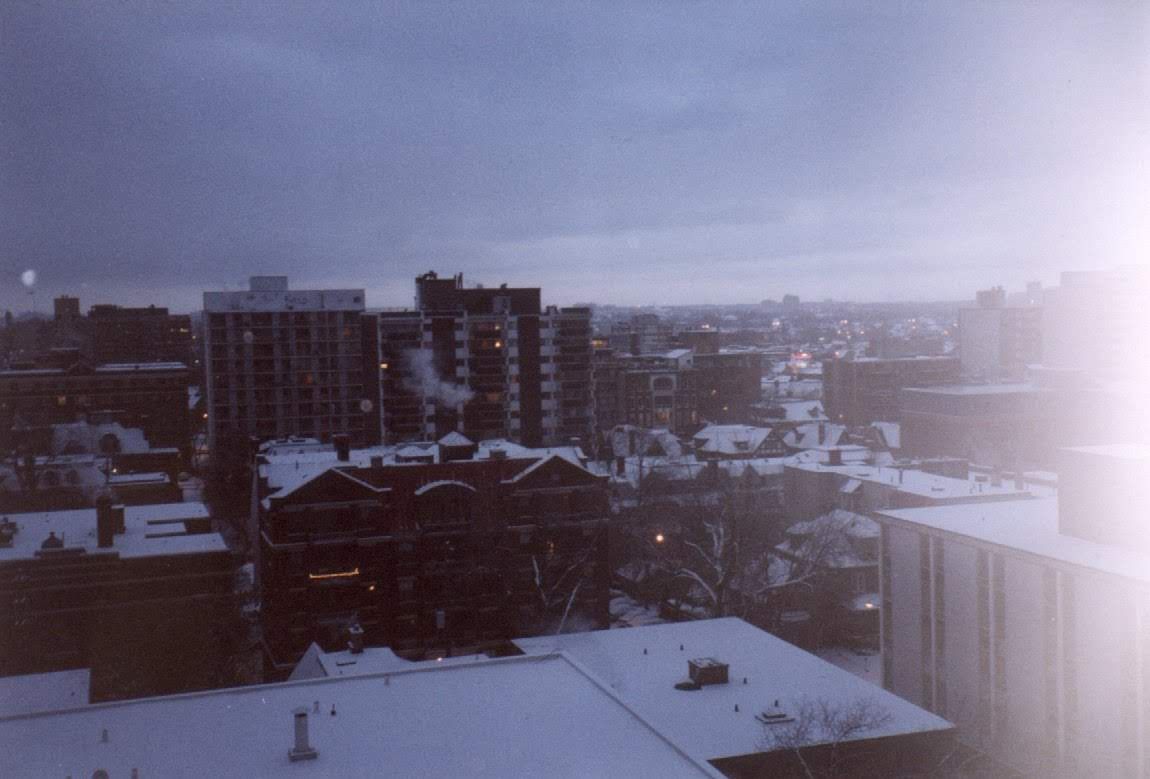
Downtown Ottawa (November 2000)(2)

A photo of part of the downtown area of Ottawa, Canada taken in November 2000.


External Link : https://supload.com/BkZ9o8WlH **Downtown Ottawa (November 2000)(2)**

Monday, July 1, 2019

Sunday, June 30, 2019

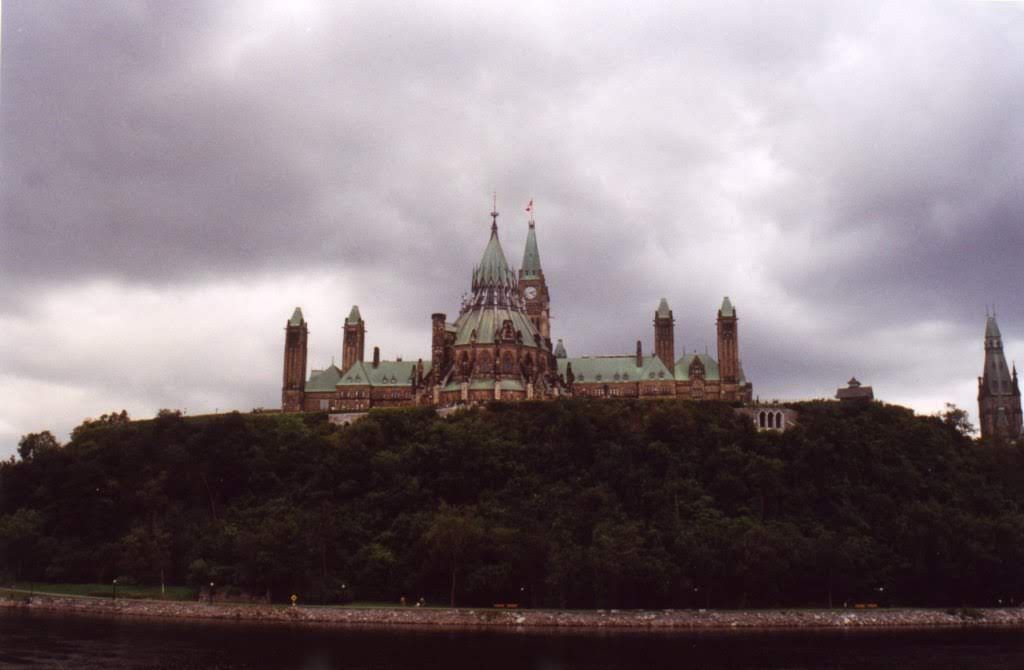
Parliament in Ottawa (2)

The back of the Parliament building in Ottawa where the library is located. This shot was taken from the river in 2000.

Friday, June 28, 2019

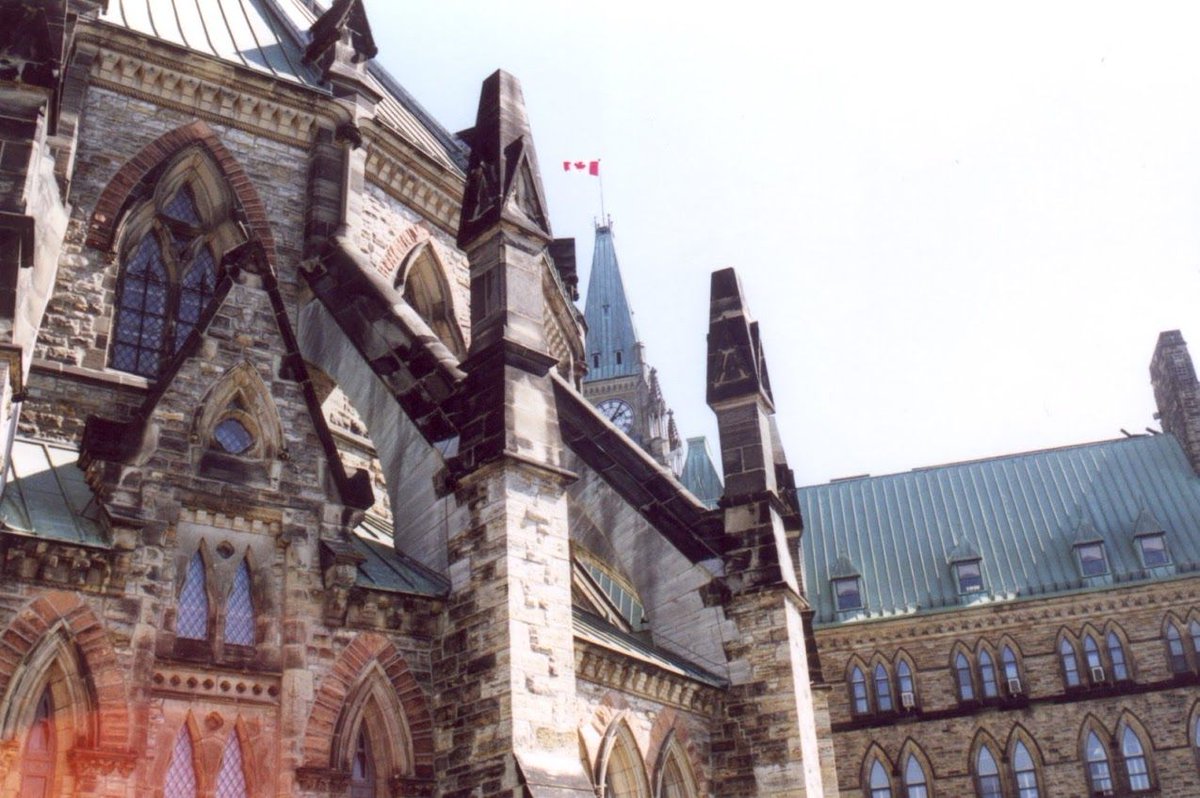
Parliament in Ottawa (1)

A close-up outside the Parliament library in Ottawa, Ontario, Canada. This photo was taken sometime in 2000.

Wednesday, June 19, 2019

Fort Henry (1)


This photo from Fort Henry in Kingston, Ontario, Canada was taken in September 2000. Fort Henry was built during the War of 1812 to protect the Kingston Royal Naval Dockyard. It was replaced with a much larger fort in the 1830s.

Wednesday, May 1, 2019

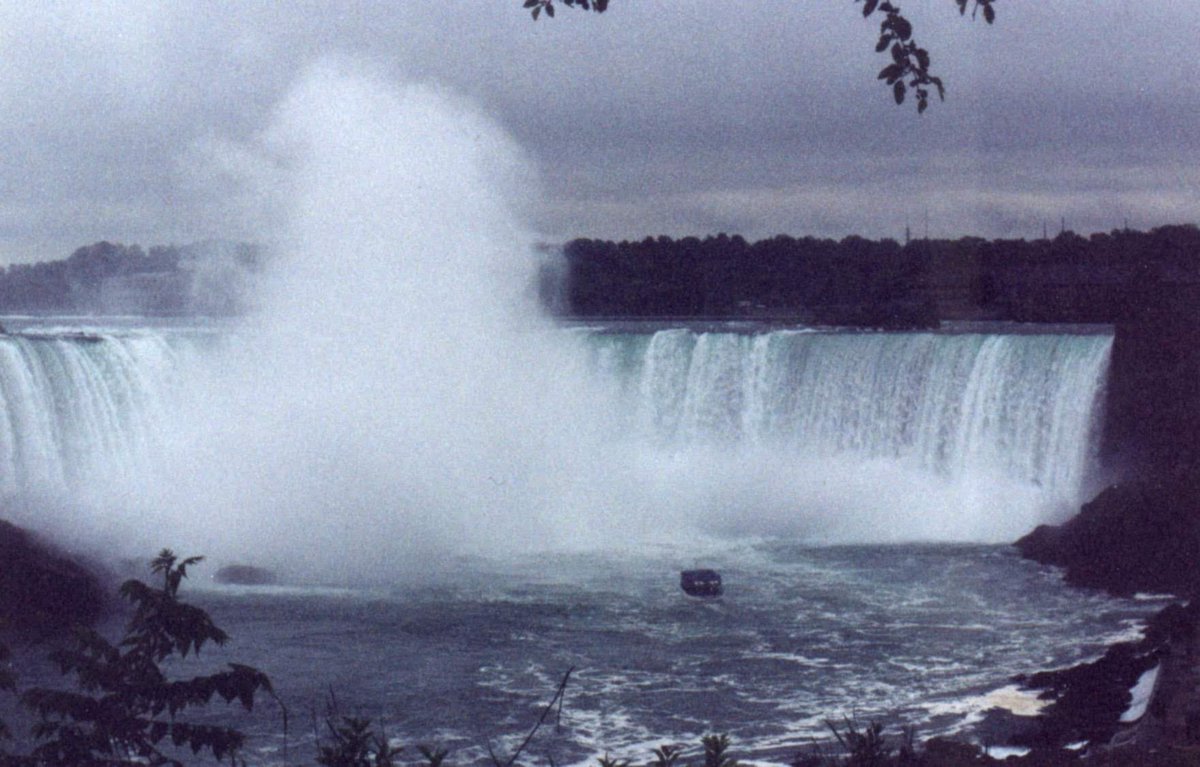
Niagara Falls (1)

Niagara Falls - from the Canadian side on my first visit there in 1999.
#travel #canada #niagarafalls #nineties #share2steem


Friday, January 19, 2018

Canada’s Prime Minister Only Pretends to Support Free Trade

The lack of free trade hurts poor people the most. Therefore, we should welcome Canadian Prime Minister Justin Trudeau’s comments in support of free trade, right? Well, not so fast.

During Trudeau’s visit to China in December, the Canadian Press published an article titled, "World at 'pivot point,' needs to embrace free trade: Trudeau":
The world is at a "pivot point" and will fail unless countries embrace free trade and elevate their citizens who have been left behind by globalization, Prime Minister Justin Trudeau warned Wednesday.

...Trudeau came to the Fortune Global Forum, a Davos-style gathering of the world's business elite, to sell Canada as a good place for foreign investment, but he went off script and delivered a stern warning about the dangers of allowing protectionism and inequality to flourish.

"We are at a pivot point in the world right now, where we decide whether we work together in an open and confident way and succeed or whether we all falter separately and isolated," he said.

"As that anxiety spreads, people start to turn inwards. They start to close off. They start to get fearful," he added. "If that continues to happen, make no mistake about it, we will all lose."

Trudeau didn't mention the Donald Trump administration in Washington, but he's already spoken out in China on the need to save the North American Free Trade Agreement [NAFTA] from demise...
Trudeau expressed concern about people starting “to turn inwards” and “close off” because “we will all lose.” He is referring to protectionism, and I suspect his comments are largely directed toward the United States. Much has been written about the NAFTA negotiations and Donald Trump’s desire for more protectionist tariffs.

Trudeau’s position seems to be that free trade is economically beneficial and protectionism is economically harmful. I agree, but if we pay close attention, we see that the Prime Minister is merely paying lip service to free trade.

Defining Free Trade

Free trade is a simple concept which exploits the division of labor to the fullest possible extent. Two parties want to trade with each other. They want to exchange goods for goods, or goods for money, or labor for money. If no one interferes with this voluntary exchange between the two parties, then free trade exists. If a third party — the government — intervenes and uses force to prohibit the exchange or to impose conditions on the exchange, then free trade does not exist. In today’s world, free trade does not exist.

Many countries negotiate “free trade agreements,” but this is a misnomer. The essence of these “agreements” is to serve corporate interests through the establishment of rules that reduce competition. These are lengthy, complex documents that contemplate “managed trade,” not “free trade.” The largest beneficiaries are multinational corporations, and the biggest losers are consumers who pay higher prices. The division of labor is suppressed, and political power becomes more centralized.

Bill Curry, writing for the Globe and Mail before the US dropped out of the Trans-Pacific Partnership (TPP), referred to the TPP as an agreement which “would create a free-trade zone among 12 nations around the Pacific, making it the world’s largest.” However, further along in the article, we read this: “TPP countries get duty-free access to 3.25 percent of Canada’s dairy market and 2.1 percent of its poultry market.”

So, more than 95 percent of Canada’s dairy and poultry markets remain unfree. I am not sure why Curry defines this as free trade, but that is how the TPP is commonly described.

Similarly, Canada’s dairy and poultry markets are highly protected under NAFTA, which Trudeau wants to “save from demise.” The Prime Minister has a strange conception of free trade.

Protectionism

If a firm is unable to sell its products at a price that consumers are willing to pay, and which allows the firm to be profitable, then the firm is wasting resources — human labor and raw materials. I have written about this here. In the realm of free trade, lower-priced imports send a market signal to inefficient domestic producers. The signal says, “You must improve efficiency, lower your costs etc., or you will go out of business,” thereby conserving resources for someone else who can utilize them more efficiently.

However, producers hate these market signals, and they lobby the government for tariff protection. This penalizes consumers whose choices are limited to buying the expensive domestic product, or the formerly cheap import which is now expensive because of the tariff.

The government claims it must approve tariff requests from these inefficient producers in order to “save” domestic jobs while simultaneously avoiding discussion about the economic cost of this policy. Studies often reveal this cost to be exorbitant when the “additional markup” all consumers are forced to pay in a particular year is divided by the total number of workers whose jobs have been saved. The cost per job saved is often considerably higher than the worker’s annual salary.

For example, according to calculations by the Peterson Institute for International Economics, the total cost to American consumers from higher prices resulting from safeguard tariffs on Chinese tires in 2011 was at least $900,000 for each job “saved,” where the annual average salary for a tire builder was $40,070. Studies in other industries have also revealed an exorbitant cost for each job saved.  

Furthermore, as the Peterson Institute tells us, tariffs have a ripple effect elsewhere in the economy:
The additional money that US consumers spent on tires reduced their spending on other retail goods, indirectly lowering employment in the retail industry. On balance, it seems likely that tire protectionism cost the US economy around 2,531 jobs, when losses in the retail sector are offset against gains in tire manufacturing. Adding further to the loss column, China retaliated by imposing antidumping duties on US exports of chicken parts, costing that industry around $1 billion in sales.
NAFTA contains numerous protectionist measures favoring special interest groups at the expense of the general public. Prime Minister Trudeau knows this, and he wants to “save NAFTA from demise.” All his talk about the evils of protectionism is nothing more than political rhetoric.

Get Government Out of the Way

Governments do not trade with each other — individuals do. If a government really wants to facilitate free trade, a legal document that runs hundreds, or even thousands of pages, is unnecessary. A one-page document with two sentences would suffice: “People are allowed to trade freely. The government’s role will be limited to enforcing the terms of the contract which the private parties themselves have voluntarily negotiated."

I have seen no evidence that Prime Minister Trudeau is sincere about “embracing free trade.” He appears to be a typical politician, subservient to special interest groups while attempting to bamboozle the public with an illusion of free trade.

Lee Friday
Following a 23-year career in the Canadian financial industry, Lee Friday has spent many years studying economics, politics, and social issues. He operates a news site at www.LondonNews1.com

This article was originally published on FEE.org. Read the original article.