steem

Showing posts with label housing. Show all posts

Tuesday, December 14, 2021

NYT Explores What Happens When Democrats Have All the Power. The Answer May Surprise You

Last week New York Times video journalist Johnny Harris asked a simple question.

“What do Democrats actually do when they have all the power?”

It turns out that 18 states in the US are effectively run by Democrats, who control both the executive and legislative branches. As Harris notes, Democratic leaders tend to blame Republicans for foiling their progressive plans, but that’s hardly the case in these 18 states where Republicans stand well away from the levers of power.

To answer his question—what do Democrats do when they have power?—Harris teamed up with Binyamin Appelbaum, the lead writer on business and economics on the Times editorial board and author of The Economists' Hour.

What they found may surprise you.

First, Harris and Applebaum drilled into the 2020 Democratic Party Platform to see which values were most important to Democrats. They then focused on a particular state: California, the “quintessential liberal state” where Democrats rule with ironclad majorities and control the government in most major cities. Finally, the journalists decided to look at one specific policy: housing.

As Harris notes, housing policy is not exactly sexy stuff. But Applebaum stresses just how important housing is in battling inequality.

“Looking at California, you have to look at housing,” Applebaum says. “You cannot say you are against income inequality in America unless you are willing to have affordable housing built in your neighborhood….The neighborhood where you are born has a huge influence on the rest of your life.”

Moreover, Harris points out that Democrats overwhelmingly agree on its vital importance, noting that the word housing is mentioned more than 100 times in the Democrats’ platform. Indeed, Democrats are shown repeating a common mantra in the Times video.

“Housing is a human right.”

“Housing is a human right.”

“Housing is a human right.”

Democrats may say housing is a human right, but Applebaum notes their actions say something else, at least in California.

“You know those signs where you drive into a state and it says ‘Welcome to California'?” asks Applebaum. “You might as well replace them with signs that say KEEP OUT. Because in California the cost of housing is so high that for many people it’s simply unaffordable.”

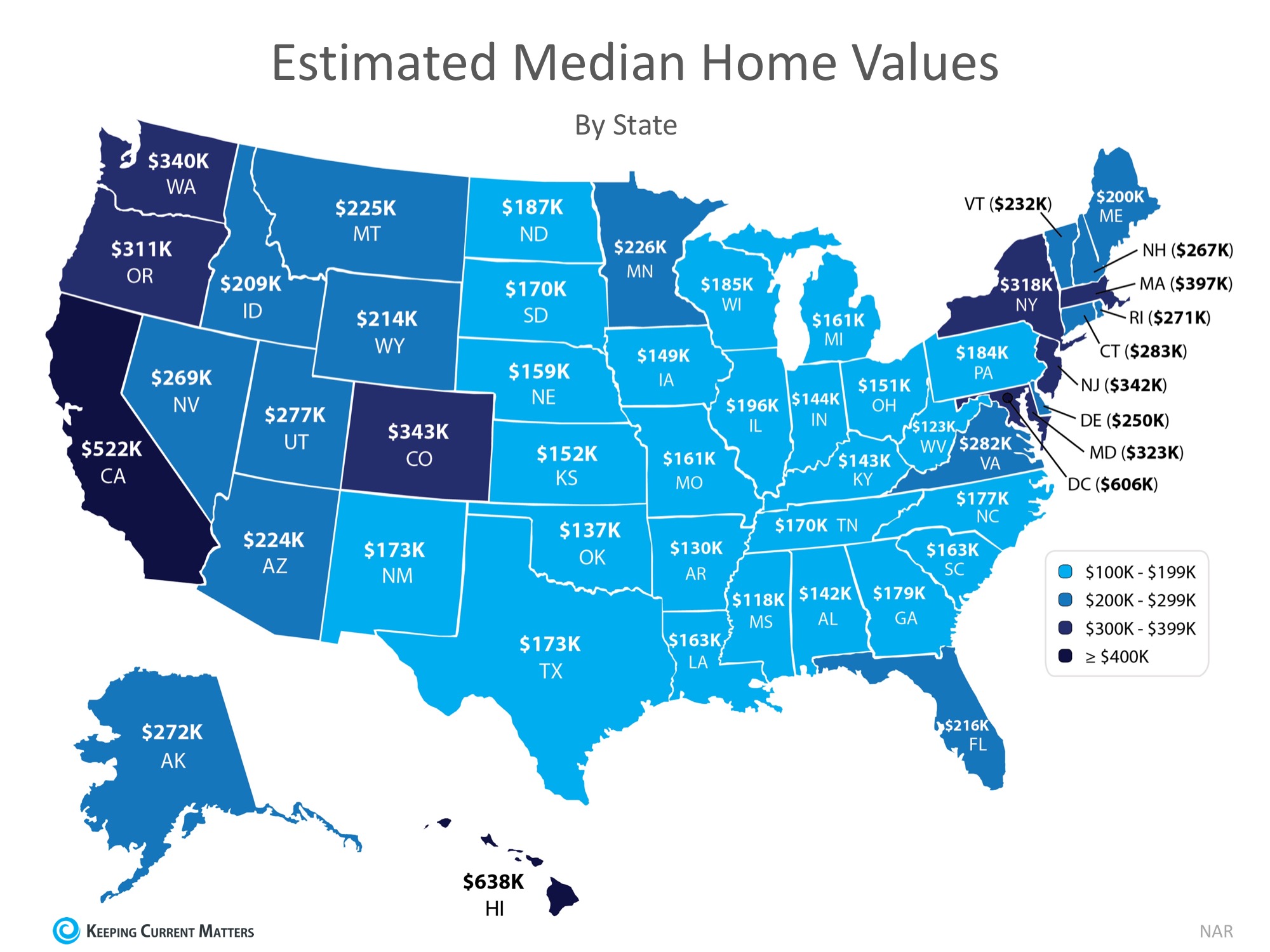
As the Los Angeles Times noted in 2019, California has “an overregulation problem,” which is why nine of the 15 priciest metro areas in the US are in California and the median price of a house in San Diego is $830,000. In some cases, people have had to wait 20 years to build a pair of single family homes. (Applebaum, it’s worth noting, appears to misdiagnose the problem. He complains that “the state has simply for the most part stopped building housing.” Perhaps Applebaum simply misspoke, but it’s worth noting the state doesn’t need to build a single unit of housing; it simply needs to step back and allow the market to function.)

Regulations, however, aren't the full story. As Harris notes, Californians themselves have fought tooth and nail to keep higher-density affordable housing out of their neighborhoods. Palo Alto is cited as an example, where voters in 2013 overturned a unanimous city council vote to rezone a 2.46-acre site to enable a housing development with 60 units for low-income seniors and 12 single-family homes.

“I think people aren’t living their values,” Applebaum says. “There’s an aspect of sort of greed here.”

Housing isn’t the only area the Times journalists find where progressives fail to “live their values.” Washington state having the most regressive tax rate in the US is cited as another example, as are the “gerrymandered” school districts in states like Illinois and Connecticut that consign low-income families to the least-funded schools because of their zip code.

The journalists are left with a gloomy conclusion.

“For some of these foundational Democratic values of housing equality, progressive taxation, and education equality, Democrats don’t actually embody their values very well," Harris says. 

Applebaum is even more blunt.

“Blue states are the problem,” the economics writer says. “Blue states are where the housing crisis is located. Blue states are where the disparities in education funding are the most dramatic. Blue states are the places where tens of thousands of homeless people are living on the streets. Blue states are the places where economic inequality is increasing most quickly in this country. This is not a problem of not doing well enough; it is a situation where blue states are the problem.”

Harris says affluent liberals “tend to be really good at showing up at the marches” and talking about their concerns over inequality. But when rubber meets the road, they tend to make decisions based on a different calculus: what benefits them personally.

For some, the findings and claims of the Times journalists could be jarring. But they are likely no surprise to FEE readers.

One of the pillars of public choice theory—a school of economics pioneered by Nobel Prize-winning economist James Buchanan—is that people make decisions based primarily on self-interest. (People act out of concern for others, too, but these interests tend to be secondary to self-interest.) Buchanan’s theory rests on the idea that all groups of people tend to reach decisions in this manner, including people acting in the political marketplace such as voters, politicians, and bureaucrats.

Many believe that self interest is part of the human condition, something as natural as hunger, love, and procreation. Harnessing the instinct of self-interest in a healthy way—through free exchange—has long been considered a cornerstone of capitalism and a key to a prosperous society.

“It is not from the benevolence of the butcher, the brewer, or the baker, that we expect our dinner, but from their regard to their own interest,” Adam Smith famously observed in The Wealth of Nations. “We address ourselves, not to their humanity but to their self-love, and never talk to them of our necessities but of their advantages.”

For many progressives, however, self-interest has become a kind of heresy. The idea that individuals should be motivated by such things as profit and self-interest is anathema; these are values to be found in Ayn Rand novels, not practiced in 21st century America.

But as Applebaum notes, progressives are in fact making decisions based on self-interest—he uses the word “greed”—not altruism. This should come as little surprise, and it would be perfectly fine if progressives were acting on self-interest in a market economy; but they are not. They are using the law in perverse ways to their own benefit—all while maintaining the belief that they’re acting out of altruism.

The Times article makes it clear that voters and politicians in progressive states still arrive at decisions like everyone else: on self-interest. The results are just far worse when those decisions are made in the political space, not the marketplace.

Jon Miltimore
Jon Miltimore

Jonathan Miltimore is the Managing Editor of FEE.org. His writing/reporting has been the subject of articles in TIME magazine, The Wall Street Journal, CNN, Forbes, Fox News, and the Star Tribune.

Bylines: Newsweek, The Washington Times, MSN.com, The Washington Examiner, The Daily Caller, The Federalist, the Epoch Times. 

This article was originally published on FEE.org. Read the original article.

NYT Explores What Happens When Democrats Have All the Power. The Answer May Surprise You

Thursday, July 1, 2021

Here’s How Biden Is Making It Even Harder to Buy a Home


The US housing market is extremely competitive right now; prices are high and houses are selling fast.

When Molly Rodela — who is a wife as well as a mother to two kids — was finally able to find a suitable house for a reasonable price online, she could not spend any time considering the decision. She contacted her agent, visited the house without her husband, and then put in an offer $20,000 above the asking price all in the same day.

With her quick action, the Rodelas were able to get the house. But many have not been so lucky.

Moreover, the factors behind the tight housing market are concerning.

For homebuilders across the country, it has become harder and harder to create affordably-priced housing. One of the reasons is the increased labor costs associated with a shortage of skilled workers.

And a huge factor has been the recent spike in the price of lumber. In fact, the National Association of Homebuilders recently reported that the cost of building a new house has gone up by $24,000 due to soaring lumber prices alone.

For homebuyers, the issue may go from bad to worse.

The Biden administration recently took the first step to double tariffs on Canadian lumber from roughly nine to 18 percent.

In doing so, the administration is falling for an age-old economic fallacy.

In his timeless book, Economics In One Lesson, Henry Hazlitt argued that “The art of economics consists in looking not merely at the immediate but at the longer effects of any act or policy; it consists in tracing the consequences of that policy not merely for one group but for all groups.”

In other words, Hazlitt believes that we must not assess policy with blinders on, but rather with a broad understanding of the policy’s consequences.

In the chapter titled “Who’s ‘Protected’ by Tariffs,” he applied this principle to anti-trade protectionism specifically, pointing out that people who support tariffs fall for the fallacy of “considering merely the immediate effects of a tariff on special groups, and neglecting to consider its long-run effects on the whole community.”

In this case, Biden is justifying his tariff hike by its immediate effects on the American lumber industry. He argues that when Canada subsidizes their lumber industry, they are able to undercut US producers in an unfair way. So, by implementing a tariff on Canadian lumber, Biden is making Canadian lumber more expensive, thus giving American lumber companies a competitive advantage.

But a true practitioner of the art of economics would then ask: who else does the tariff impact, and how?

But a true practitioner of the art of economics would then ask: who else does the tariff impact, and how?

One important question to ask, for instance, would be how does the tariff impact American industries that purchase lumber? The answer: they have to pay higher prices.

The burden of these increased production costs inevitably ends up being passed onto consumers. Basic economics tells us that when the price of one resource used to produce a good goes up, the price that the consumer eventually pays for that good rises as well.

This is exactly why home buyers — and consumers of products that use lumber in general — will be the victims of Biden’s lumber tariff.

A shortage of lumber as a result of the pandemic led to its price in May being up nearly 400 percent over the past year. But prices have begun to drop again because production has started to ramp up. To increase the tariff — which is just an import tax — would serve to restrict the supply of lumber. This would not allow prices to decrease back to pre-pandemic levels.

The natural consequence of high lumber prices is the increase in price for all of the goods that use lumber in their production. This does not just stop at houses, but rather includes things such as furniture and storage appliances as well. The average consumer will then have to pay a higher price for all of them.

Tariffs are not only harmful to individual consumers, but the economy as a whole. As Hazlitt points out, “Higher prices in one area mean that they will not be able to spend that money on something else, thus hurting other industries as well.”

For example, if, because of Biden’s tariff hike, people have to spend more on houses and other things made with lumber, they will have less money to spend on things such as restaurants, tourism, and consumer technology. Therefore, workers and investors in those industries will be economically disadvantaged by the tariffs, too.

As Hazlitt says, “In order that one industry might grow or come into existence, a hundred other industries would have to shrink.”

At the core of the matter, President Biden is making the mistake of only looking at the effect of this tariff on a special group — the US lumber industry.

At the core of the matter, President Biden is making the mistake of only looking at the effect of this tariff on a special group — the US lumber industry. But, in doing so, he is neglecting the millions of Americans who — far from being protected — will be economically harmed by the tariff hike, including consumers (especially homebuyers), workers, and investors.

Tariffs, much like any number of other well-meaning government programs, seem like a plausible solution to certain problems we face. But, if we think like an economist and widen our lens to encompass the bigger picture, it becomes clear that they will primarily hurt the American people.

Buy Economics in One Lesson from the FEE Store.

Jack Elbaum
Jack Elbaum

Jack Elbaum is a Hazlitt Writing Fellow at FEE and an incoming sophomore at George Washington University. His writing has been featured in The Wall Street Journal, Newsweek, The New York Post, and the Washington Examiner. You can contact him at jackelbaum16@gmail.com and follow him on Twitter @Jack_Elbaum.

This article was originally published on FEE.org. Read the original article.


Here’s How Biden Is Making It Even Harder to Buy a Home

Monday, January 11, 2021

How California Politicians Created a Homelessness Crisis


California has more homeless people than any other state, with large homeless tent camps occupying the sidewalks of many of its streets. California also has the second most expensive housing of all states, lagging only behind Hawaii.

Writing at the Washington Examiner, Timothy P. Carney wonders to what extent the state government’s regulatory environment is contributing to both problems.

Land-use regulations make housing more expensive. The Los Angeles metro area ranks as the 15th most restrictive in land-use regulation.

People who own houses in housing-restricted places often don’t want to deregulate. They like the space. They fear the traffic. And they know that adding more housing could harm their home values. Of course, preserving scarcity in housing to keep your housing investments valuable is not really something most people want to admit to, so they make other arguments.

They suggest that the regulations drive up home values not by curbing supply but by giving people what they want: green buildings, safe buildings, adequate parking, and uncrowded neighborhoods.

But the one study that has looked into this finds that more than 90% of the price effect of regulation comes not from making the homes more desirable but from limiting supply. So regulation is affecting the market mostly by preventing homes from being built.

That finding raises a question. How many regulations has California put in the way of building homes?

According to QuantGov, last year the state government of California imposed on businesses and residents a total of 395,503 restrictions, as defined by the number of times that words like “must”, “shall”, “required”, “prohibited”, and “may not” appear within the online version of the California Code of Regulations (CCR).

Those regulations haven’t come about by accident—they are the result of years of effort on the part of California politicians and regulators.

Not only is that number more than any other state, it is nearly 88,000 more than the number of similar government-mandated restrictions imposed by New York’s government agencies, the state that ranks second in this measure.

Within the CCR, California’s Building Standards Code (Title 24) contains more restrictions than any other section, totaling no fewer than 75,712 restrictions. At the same time, the section for Housing and Community Development (Title 25) contains 12,204 restrictions, the tenth largest of all sections (or titles) contained in the CCR.

Combined to total 88,186 regulatory restrictions, these two sections that effectively dictate what housing may be built in California account for over 22 percent of the total regulatory burden set by all the state’s government agencies.

How does that compare with New York? QuantGov’s 2017 report for New York suggests the Empire State imposes far less of a regulatory burden on homebuilders, but since the state’s building code contains fewer than 12,474 restrictions, it doesn’t even make the list of the Top 10 contributors to that state’s regulatory burden.

It occurred to me that California’s building code might be more restrictive than a state like New York because much of the state is prone to natural disasters like earthquakes, mudslides and wildfires. So I looked at my former home state of Washington, which is prone to similar disasters. Its building code does make the top ten in QuantGov’s list of the state’s biggest contributors of restrictive regulations for 2019, where the state’s Building Code Council (Title 51) ranks ninth by accounting for a total of 4,585 restrictions.

California has over 19 times that number of restrictions limiting what housing and other structures may be built within the state. Those regulations haven’t come about by accident—they are the result of years of effort on the part of California politicians and regulators.

If you remember the sky-high oil and fuel prices of a decade ago, the political slogan of many seeking to bring the runaway prices of that day was “Drill, Baby, Drill.”

These advocates recognized that increasing the supply of oil was the only effective path to bring oil and gas prices back down to more affordable levels, so they worked to remove regulatory barriers to producing more supply. It may sound corny, but it worked.

If California’s politicians and bureaucrats ever want to get serious about building a larger supply of affordable housing, they need to start demolishing the artificially restrictive environment they have built and that has produced the opposite outcome they claim they want. The right slogan for California to improve the lives of the state’s neediest residents is “Build, Baby, Build.”

This article has been reprinted with permission from the Independent Institute.

Craig Eyermann
Craig Eyermann

Craig Eyermann is a Research Fellow at the Independent Institute.

This article was originally published on FEE.org. Read the original article.

How California Politicians Created a Homelessness Crisis

Wednesday, February 28, 2018

Want More Affordable Housing? Build More Housing, and Don’t Impose Government Rent Controls

According to a recent Wall Street Journal article (“Rent Controls, a Bane of Landlords, Are Gaining Support as Costs Soar“), rent control is making a comeback in response to rising housing prices in urban areas across the country in states like California, Illinois, Washington, and Massachusetts. Megan McArdle responds in a Bloomberg View op-ed “Rent Control Needs Retirement, Not a Comeback” (emphasis mine):
Policymakers should remember that a price is just the intersection of supply and demand. If you alter the price, but don’t alter the supply or the demand, the problem doesn’t go away; rationing just shows up in different forms. There will still be too many people who cannot find housing in your area.

Worse still, price controls actually make the scarcity worse. They increase demand — who wouldn’t want to live in New York City in a $600-a-month apartment? Meanwhile, price ceilings reduce the supply because they decrease the incentive to build, and can make it downright imperative to remove rental housing from the market and turn it to some other use — condos, warehouses, anything that won’t trigger the rent controls.

And in the long run, the situation for the very low-income people you’re trying to help probably gets worse. After all, if you take price signals out of the market, something has to ration the limited supply of housing: years-long wait lists, or personal friendships, or credit scores, or side payments to people lucky enough to have some housing. The wider the gap between supply and demand gets, the worse that rationing will be. And the people left out by those forms of rationing will be every bit as needy and deserving as the people currently being forced out by higher rents; given the deleterious effects on the supply of rental housing, possibly more so.

If politicians actually want to make sure everyone who needs a place to rest their head has one, there’s only one way to do it: Build more housing. Which means, in turn, loosening the legal restrictions and community veto points that make it so hard to add supply. Because there’s no way to escape the fundamental math: Unless you build enough housing to shelter the people who want to live in your city, a whole lot of people will be left out in the cold.

As the graphical Supply/Demand analysis above of rent control illustrates very clearly, rent control laws that artificially force the rental price of housing (P1 above) below the market-clearing equilibrium price (P0) are guaranteed to create a housing shortage by: a) increasing the number of rental units demanded at the artificially low rents (QD) and b) decreasing the number of rental units supplied to the market (QS).

You can artificially restrict the amount of rent a landlord can legally charge for a rental unit, but you can’t force developers, builders, and landlords to build or supply more rental housing in the future. And the supply of rental housing in markets with rent control is guaranteed to decline.

If a perverse public policy goal was, in fact, to guarantee that there would be a continued and worsening supply of rental housing, there would be no more effective way to ensure that outcome than a government rent control law. And despite the best of intentions on behalf of policymakers to promote more affordable housing with rent control laws as a way to combat high housing prices, the reality is that those very laws are guaranteed, with 100 percent certainty, to do the opposite by making affordable housing as scarce as possible.

Price controls aren’t the answer. Building more housing is the only real solution to increase the supply of affordable housing.

Reprinted from the American Enterprise Institute.


Mark J. Perry


Mark J. Perry is a scholar at the American Enterprise Institute and a professor of economics and finance at the University of Michigan’s Flint campus.

This article was originally published on FEE.org. Read the original article.