steem

Showing posts with label regulation. Show all posts

Wednesday, November 8, 2023

The Incandescent Ban and the Lie of LED Efficiency

It happened as I went to grab a new package of baby wipes from under the sink. I flipped on my bathroom light, and I noticed something strange—one of my three mirror light bulbs began flickering and ultimately settled at a barely luminous dim setting.

My LED light went out.

The problem is, I changed that light bulb around a month ago as memory serves. Aren’t LED lights supposed to outlast the heat death of the universe or some unbelievably long amount of time?

Under this guise and the guise of energy efficiency, the Biden administration finally allowed a 2007 ban on incandescent light bulbs to go through at the end of July this year.

The problem is that LED lights are not more efficient in a meaningful economic sense, and, as my story illustrates, they don't necessarily last longer. To understand why, let’s explore some of the technical and economic details behind the mythical efficient LED.

The ban on incandescent lights isn’t a ban on them specifically. Rather, the standard is that a light bulb must illuminate 45 lumens per watt. Most incandescent bulbs are incapable of doing this, so the regulation effectively bans them except in particular circumstances.

It is by this scientific jargon of an arbitrary lumens per watt standard that the government claims LEDs are more efficient.

The problem is that just because the LED bulbs (when they work) have a higher lumens per watt ratio, that doesn’t make them more efficient.

Consider an example to see why. Imagine we have two ice cream trucks. One ice cream truck is just an empty van. The driver throws a bunch of tubs of ice cream in the van and sets out for the day. The second truck is a van equipped with freezers to preserve the ice cream. Tell me, reader, which truck uses more energy?

Obviously the truck with freezers. So which truck has the best ratio of gallons of ice cream moved per unit of energy? Well that would be the truck without freezers. By our arbitrary technical measure, the freezerless ice cream truck is more efficient.

The problem, as you know, is that frozen ice cream is better than room temperature ice cream soup. The issue with our efficiency measure is that it ignores the important fact that the two trucks are accomplishing different goals. One is delivering ice cream people want, the other is delivering inedible slop.

You cannot compare the efficiency of two things which accomplish different outcomes for consumers. The same issue is true of light bulbs.

Incandescent bulbs put out a consistent, pleasing light output. LED lights do not. The Department of Energy website tries to debunk this obvious truth with an appeal to technical jargon. In response to the criticism that LED lights are dim compared to incandescent, the website says,

“LED bulbs produce more lumens per watt and last up to 25 times longer than incandescent bulbs. A 10W LED bulb emits as much light as a 60W incandescent bulb, making them both brighter and more energy efficient.”

This is akin to claiming that melted ice cream is still ice cream.

It is sometimes true that LED bulbs emit as many or more lumens than incandescent bulbs, but what people colloquially refer to as “brightness” is not the same as what scientists call “lumens.”

When people talk about brightness, they aren’t just talking about lumens. They’re also talking about the extent to which different light sources make things like color easier to see. An essential component of whether something is easier to see is how warm or cool light is.

This is where things get complicated. For incandescent bulbs, wattage is what mattered. More watts meant more visibility. For LEDs, things are different. Lumens measure the brightness but Kelvin (a temperature scale) determines how “warm” or “cool” the light appears. There is an in-depth piece by Tom Scocca in New York Magazine’s website The Strategist which describes this very well.

The summary is that LED light bulbs, though usually bright in terms of “lumens,” often do not always illuminate colors well. Scocca points out:

“If you want the objects that the light shines on to look the same, you’re getting into a different color question, specifically the color-rendering index. Your incandescent bulb — a glowing analog object, its light coming from a heated wire — had a CRI of 100 for a full unbroken spectrum. Your typical LED bulb, shining with cold digital electroluminescence, will not. Some colors will be missing or just different. If you’re lucky, the LED will have a CRI of 90 or higher. The box may not list any CRI at all.”

He then highlights that so-called experts often downplay the importance of the CRI index, but provide no substitute measure for color-rendering.

So lumens alone is not brightness—at least not the way you and I talk about brightness. But that isn’t the only problem.

Remember my flickering bathroom light bulb? Turns out this isn’t a one-off complaint by yours truly. All over the internet I found people complaining about LED lights malfunctioning in much shorter time spans than it takes an incandescent to burn out.

When searching, I found several answers for why. One common answer is that the driver in the power base (bottom opaque plastic part of each light bulb) often fails in the less expensive LED lights. Temperature issues were also listed as a possible cause as well as the building providing “too much” power.

The bad driver in cheap LED bulbs could be explained away by saying you simply have to buy more expensive bulbs, but the up front cost of LEDs being higher was already an issue. Now we can’t even buy the best value version of the more expensive bulb?

In Scocca’s piece, he highlights well how good lighting is more expensive with LEDs:

“I checked my nearest dollar store and discovered that there were plenty of LED bulbs to be had there. Their color temperature was 6,400 Kelvin — the harshest, cheapest possible light, a light so blue that when I Googled it, what came up were grow bulbs. The efficient future of lighting now includes poor people; it just does it by making lighting one more form of privation.”

Even worse, it’s not always obvious when the driver isn’t working or that the power base is too hot. Sometimes the bulb just gets subtly dimmer. The Department of Energy can kiss its “lumens” argument goodbye. It may be the case that LED bulbs can produce more lumens in theory, but if they dim frequently without warning in practice, who cares?

LED lighting advocates will be quick to argue you can get the same results as incandescent light if you just approach it correctly. “Make sure your lumens are high enough. Don’t forget to memorize which degree Kelvin is best for each setting! But be careful not to buy one with a bad driver. You may need to rewire your house for best results, of course.” The list of excuses—and extra work for consumers—goes on.

Unfortunately, not all of us have time to get a degree in electrical engineering to make sure our home doesn’t look like the inside of an alien spaceship.

As I’ve demonstrated, technological efficiency is not the proper way to evaluate the efficiency of a product. So how should we evaluate it?

Let’s return to our ice cream truck example. Which truck will consumers buy ice cream from? Obviously the one with freezers. It may cost a bit more than Uncle Sam’s ice cream soup, but people will pay the cost.

When discussing efficiency as it applies to people’s choices, economic efficiency is king. The idea behind economic efficiency is there are lots of technologically feasible combinations of goods and services that can hypothetically be produced. The question is, which combination yields the most value? Economic efficiency is the criterion that separates the highest valued use of scarce resources from all other possible combinations.

How is this point determined? By consumers! If consumers value frozen ice cream enough, they’ll be willing to pay more for an ice cream truck with a freezer. These higher prices enable the truck owner to buy the higher energy costs associated with running the freezers.

The same is true with light bulbs.

Who pays for an “inefficient” incandescent light bulb? The homeowner who installs the light bulb does in the form of higher energy bills! So how would we know if the better (or at least more consistent) lighting is worth the higher energy usage?

Well, if the consumer chooses an incandescent bulb over an LED bulb, they are confirming they value the services of the incandescent bulb even after accounting for the cost of using more energy.

The same principle operates with cars. Is the purchaser of an SUV tricked into buying a product which is not as efficient with fuel as a small sedan? Obviously not! The SUV owner prefers the additional space and larger size more than the cost of the extra gasoline. Since the SUV is assigned higher value than the extra gasoline that must be purchased to use it, the “inefficient” fuel economy is completely compatible with economic efficiency!

If LED light bulbs are truly unquestionably superior, you would not need to pass a law stopping consumers from purchasing incandescent bulbs. Consumers would make the switch themselves to save money. Good ideas don’t require force, as they say.

The fact that a law was needed to displace incandescent bulbs highlights a simple truth: on many margins LED lights are frankly worse for consumers. And all the bureaucratic gobbledygook in the world will not change that fundamental fact.

Peter Jacobsen
Peter Jacobsen

Peter Jacobsen is a Writing Fellow at the Foundation for Economic Education.

This article was originally published on FEE.org. Read the original article.

The Incandescent Ban and the Lie of LED Efficiency

Tuesday, August 3, 2021

Biden Administration’s New ‘Woke’ Corporate Disclosure Rules Will Cost Companies Billions, Experts Warn

Under the Biden administration’s leadership, the Securities and Exchange Commission (SEC) has proposed new “woke” corporate disclosure rules. A new form of social-justice-based financial regulation, the federal agency’s rules would mandate that companies track, report, and disclose a wide array of data on issues such as climate change emissions and diversity. 

This might poll well or look nice at first glance. But like any complex federal regulation, the woke reporting rules will have many unintended consequences—namely, they’ll cost businesses billions.

“Business groups are trying to calculate just how much money public companies might have to shell out to comply with the Securities and Exchange Commission’s planned new ‘woke’ corporate disclosure rules, and initial estimates aren’t pretty,” Fox Business reports. “While no exact estimate can be determined, the SEC’s new disclosure mandates involving everything from the environment to board diversity is likely to cost U.S. public companies well into the billions of dollars.” 

The goal of the SEC regulation is to promote environmentalism and racial equality, with regulators likely having good intentions. But they are either unable or unwilling to foresee the adverse consequences that could accompany this virtue-signaling effort.

Heritage Foundation senior fellow David R. Burton, a specialist in tax and financial regulation, laid out the many ways these rules will likely backfire in a letter to the SEC. 

He agreed that “requiring all public companies to develop climate modeling expertise, the ability to make macroeconomic projections based on these models and then make firm-specific economic assessments based on these climate and economic models will be expensive,” likely costing billions.  

The result? 

“These expenses would harm investors by reducing shareholder returns,” Burton explained. This means it’s not just Big Business, but the millions of Americans who invest in the stock market or rely on it for their retirement, who could bear the costs. 

Burton further warns that these woke disclosure rules would result in “the creation of a new compliance eco-system and pro-complexity lobby composed of the economists, accountants, attorneys and compliance officers that live off of [regulatory compliance].” Simply put, they would even further entrap firms into wasting money on red tape compliance costs. 

The Heritage expert also added that the rules would fuel a huge rise in costly litigation.

Meanwhile, it’s unclear what, if anything, the SEC’s woke disclosure mandates would accomplish—beyond merely virtue-signaling, of course. 

"This whole ESG thing is just one giant waste of time and money," said Chris Whalen, chief of Whalen Global Advisors. "It’s just a big show that only benefits the consultants and the lawyers who are making money off of this.”

Like this story? Click here to sign up for the FEE Daily and get free-market news and analysis like this from Policy Correspondent Brad Polumbo in your inbox every weekday. 

Brad Polumbo
Brad Polumbo

Brad Polumbo (@Brad_Polumbo) is a libertarian-conservative journalist and Policy Correspondent at the Foundation for Economic Education.

This article was originally published on FEE.org. Read the original article.

Biden Administration’s New ‘Woke’ Corporate Disclosure Rules Will Cost Companies Billions, Experts Warn

Tuesday, June 1, 2021

The Government’s War on Pipelines Made Us Vulnerable to Attacks on Our Infrastructure

Vickie Phillips received an unpleasant surprise when she stopped in for a fill-up at the Pop Shoppe in Greensboro, North Carolina on Monday.

There was no fuel.

“I can’t believe that we’re here and can’t even get gas,” Phillips told a local TV station. “People are tired of sitting in the house and they just want to get out and try to resume something of normality with their life and they’re definitely going to need fuel and gas to do that.”

Phillips was just one of thousands of people who saw their travel plans disrupted in the wake of a cyberattack on Friday targeting the Colonial Pipeline, a vital network of pipelines that run some 5,500 miles from the US Gulf Coast to New York Harbor.

The New York Times reported that many stations in southeastern states have placed caps on the amount of fuel consumers can purchase, while many stations have run out of fuel altogether.

In the wake of the disruption, North Carolina Gov. Roy Cooper declared a state of emergency, while Georgia Gov. Brain Kemp suspended the state’s gas tax. The Biden administration, meanwhile, lifted environmental regulations on the sale of gasoline in several states and the nation’s capital.

Following the attack, fuel futures jumped to $2.217, a three-year high.

There’s no question that the Colonial Pipeline is a key piece of infrastructure.

Analysts have described the pipeline as one of the most vital energy arteries in the country, one capable of carrying up to 3 million barrels of fuel—gasoline, diesel and jet fuel—per day to the East Coast.

"This is as close as you can get to the jugular of infrastructure in the United States," Amy Myers Jaffe, research professor of the Climate Policy Lab, told Reuters. "It's not a major pipeline. It's the pipeline."

Still, the widespread disruption seemed to surprise even the hackers responsible for the cyberattack.

"Our goal is to make money and not creating [sic] problems for society," DarkSide, the group the FBI confirmed is responsible for the attack, wrote on its website.

This invites an important question: how was a single cyberattack able to derail an entire region of the most prosperous country in the world, disrupting the lives of millions of Americans?

One answer is that we simply don’t have enough oil pipelines. The Colonial Pipeline provides nearly half—45 percent—of the fuel consumed on the East Coast. As other astute commentators have noted, “one pipeline network shouldn't be serving half of the East Coast's fuel needs.”

The reality is regulatory hurdles have made it all but impossible to build new pipelines, which has placed a great deal of pressure on existing energy infrastructure. And it’s getting worse. Indeed, politicians are now actively scrapping pipelines that are instrumental to meeting future energy needs.

One of President Biden’s first initiatives was to scrap, by executive order, the Keystone Pipeline, a 1700-mile pipeline that could have carried roughly 800k barrels of oil each day from Alberta to the Gulf Coast. (Instead, the bulk of that fuel will be transported by railways, which are less environmentally friendly and more dangerous.)

Biden’s scrapping of the Keystone Pipeline received a great deal of attention, but it’s worth noting the action was part of a trend that has been largely overlooked. Across the US, pipelines are being targeted by politicians, regulators, and courts with great zeal.

A year ago, Michigan Gov. Gretchen Whitmer took legal action to force the shutdown of the Line 5 Pipeline, which links Lake Michigan and Lake Huron and carries about 500,000 barrels of crude each day.

"Here in Michigan, the Great Lakes define our borders, but they also define who we are as people," said Whitmer, who gave Enbridge Energy a deadline of May 2021 to stop the oil.

As of Tuesday, with the deadline rapidly approaching, the oil was still flowing. And news reports say Enbridge Energy and the Michigan governor are likely heading for a legal showdown.

Then there is the Atlantic Coast Pipeline. Last year Duke Energy and Dominion Energy announced the cancelation of the 600-mile project—which would have piped gas from West Virginia to eastern North Carolina—because delays and regulatory uncertainty had threatened “the economic viability of the project.”

The 1,200 mile-long Dakota Access Pipeline, which has been flowing since 2017, currently carries hundreds of thousands of barrels of crude through the Dakotas to Iowa and Illinois. While the Biden administration has announced it will not shut down the pipeline, a US district court judge did in July 2020. That ruling was overturned by a federal appellate court, but the pipeline’s fate hangs in the balance pending an environmental review.

For many, the lesson of the recent gas shortage is that we need more cybersecurity oversight.

"This pipeline shutdown sends the message that core elements of our national infrastructure continue to be vulnerable to cyberattack,” Mike Chapple, a professor in University of Notre Dame’s Mendoza College of Business, told Reuters. “Securing our energy infrastructure is a national security issue that involves several different federal agencies and requires centralized leadership.”

Anyone who understands the “knowledge problem” will be rightly skeptical of solutions based on “centralized leadership,” especially when it comes to a “national security issue that involves several different agencies,” given the track records of the NSA, the TSA, the CDC, etc. What we really need is, not more, but less government oversight getting in the way of more pipelines.

The current disruption should serve as a reminder that fossil fuels are an essential part of human prosperity.

No one has made this point better than Alex Epstein, the author of The Moral Case for Fossil Fuels, who noted that cheap, plentiful fossil fuels—when married with human ingenuity—allow humans to improve the world around them.

“Fossil fuel technology transforms nature to improve human life on an epic scale. It is the only energy technology that can currently meet the energy needs of all 7+ billion people on this planet,” wrote Epstein. “Ultimately, the moral case for fossil fuels is not about fossil fuels; it’s the moral case for using cheap, plentiful, reliable energy to amplify our abilities to make the world a better place – a better place for human beings.”

The other side of that coin is that when energy is made needlessly expensive, scarce, and unreliable—whether by cybercriminals or politicians—it makes the world a more frustrating and unhappy place for human beings, as Vickie Phillips and many other Americans discovered this week.

Jon Miltimore
Jon Miltimore

Jonathan Miltimore is the Managing Editor of FEE.org. His writing/reporting has been the subject of articles in TIME magazine, The Wall Street Journal, CNN, Forbes, Fox News, and the Star Tribune.

Bylines: Newsweek, The Washington Times, MSN.com, The Washington Examiner, The Daily Caller, The Federalist, the Epoch Times. 

This article was originally published on FEE.org. Read the original article.

The%20Government%u2019s%20War%20on%20Pipelines%20Made%20Us%20Vulnerable%20to%20Attacks%20on%20Our%20Infrastructure%20%u2013%20Megalextoria

Monday, January 11, 2021

How California Politicians Created a Homelessness Crisis


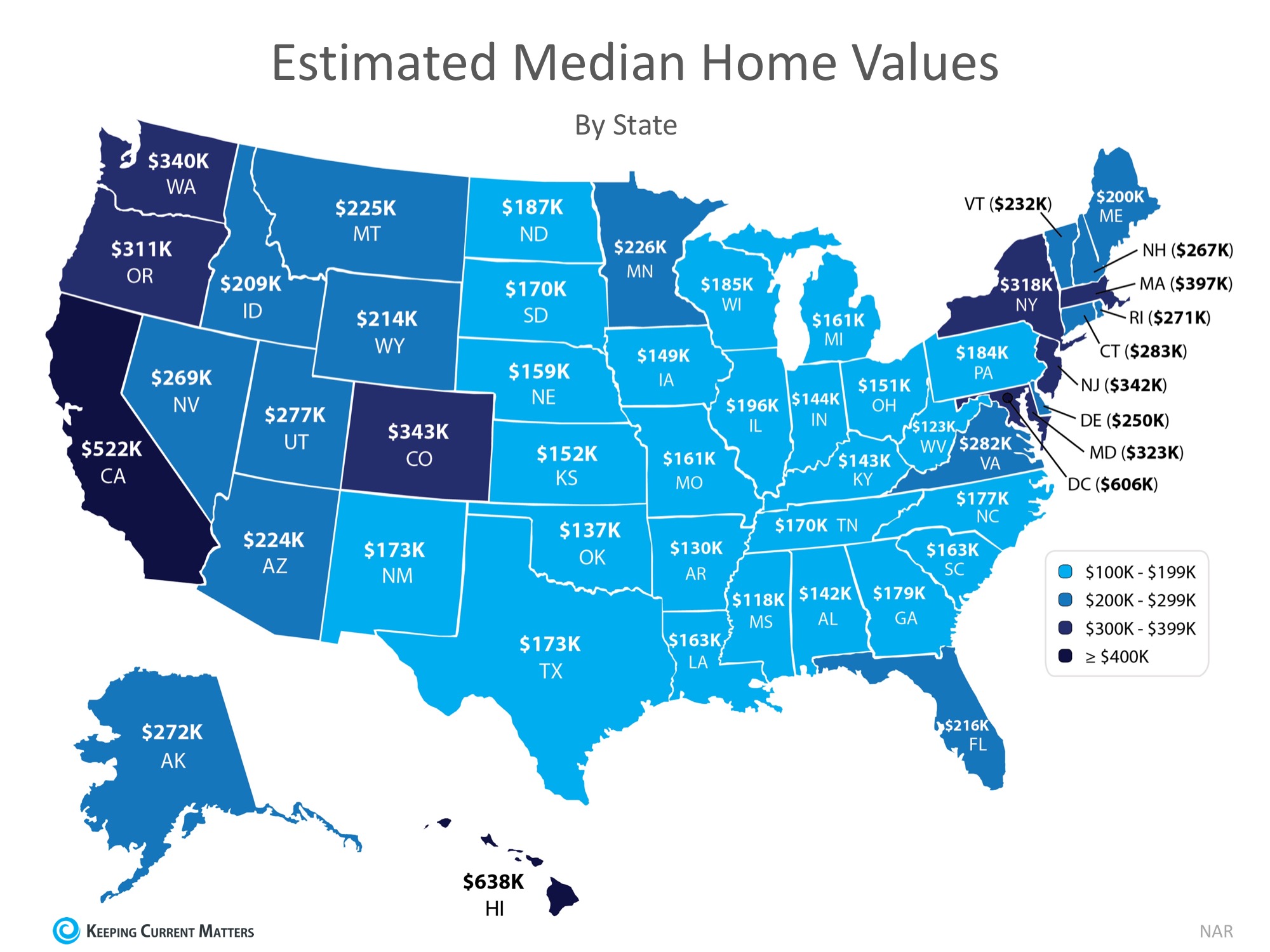
California has more homeless people than any other state, with large homeless tent camps occupying the sidewalks of many of its streets. California also has the second most expensive housing of all states, lagging only behind Hawaii.

Writing at the Washington Examiner, Timothy P. Carney wonders to what extent the state government’s regulatory environment is contributing to both problems.

Land-use regulations make housing more expensive. The Los Angeles metro area ranks as the 15th most restrictive in land-use regulation.

People who own houses in housing-restricted places often don’t want to deregulate. They like the space. They fear the traffic. And they know that adding more housing could harm their home values. Of course, preserving scarcity in housing to keep your housing investments valuable is not really something most people want to admit to, so they make other arguments.

They suggest that the regulations drive up home values not by curbing supply but by giving people what they want: green buildings, safe buildings, adequate parking, and uncrowded neighborhoods.

But the one study that has looked into this finds that more than 90% of the price effect of regulation comes not from making the homes more desirable but from limiting supply. So regulation is affecting the market mostly by preventing homes from being built.

That finding raises a question. How many regulations has California put in the way of building homes?

According to QuantGov, last year the state government of California imposed on businesses and residents a total of 395,503 restrictions, as defined by the number of times that words like “must”, “shall”, “required”, “prohibited”, and “may not” appear within the online version of the California Code of Regulations (CCR).

Those regulations haven’t come about by accident—they are the result of years of effort on the part of California politicians and regulators.

Not only is that number more than any other state, it is nearly 88,000 more than the number of similar government-mandated restrictions imposed by New York’s government agencies, the state that ranks second in this measure.

Within the CCR, California’s Building Standards Code (Title 24) contains more restrictions than any other section, totaling no fewer than 75,712 restrictions. At the same time, the section for Housing and Community Development (Title 25) contains 12,204 restrictions, the tenth largest of all sections (or titles) contained in the CCR.

Combined to total 88,186 regulatory restrictions, these two sections that effectively dictate what housing may be built in California account for over 22 percent of the total regulatory burden set by all the state’s government agencies.

How does that compare with New York? QuantGov’s 2017 report for New York suggests the Empire State imposes far less of a regulatory burden on homebuilders, but since the state’s building code contains fewer than 12,474 restrictions, it doesn’t even make the list of the Top 10 contributors to that state’s regulatory burden.

It occurred to me that California’s building code might be more restrictive than a state like New York because much of the state is prone to natural disasters like earthquakes, mudslides and wildfires. So I looked at my former home state of Washington, which is prone to similar disasters. Its building code does make the top ten in QuantGov’s list of the state’s biggest contributors of restrictive regulations for 2019, where the state’s Building Code Council (Title 51) ranks ninth by accounting for a total of 4,585 restrictions.

California has over 19 times that number of restrictions limiting what housing and other structures may be built within the state. Those regulations haven’t come about by accident—they are the result of years of effort on the part of California politicians and regulators.

If you remember the sky-high oil and fuel prices of a decade ago, the political slogan of many seeking to bring the runaway prices of that day was “Drill, Baby, Drill.”

These advocates recognized that increasing the supply of oil was the only effective path to bring oil and gas prices back down to more affordable levels, so they worked to remove regulatory barriers to producing more supply. It may sound corny, but it worked.

If California’s politicians and bureaucrats ever want to get serious about building a larger supply of affordable housing, they need to start demolishing the artificially restrictive environment they have built and that has produced the opposite outcome they claim they want. The right slogan for California to improve the lives of the state’s neediest residents is “Build, Baby, Build.”

This article has been reprinted with permission from the Independent Institute.

Craig Eyermann
Craig Eyermann

Craig Eyermann is a Research Fellow at the Independent Institute.

This article was originally published on FEE.org. Read the original article.

How California Politicians Created a Homelessness Crisis

Friday, September 14, 2018

The Sectors Driving America’s Cost of Living Spike All Have One Thing in Common: They’re Heavily Regulated by Government

The Sectors Driving America’s Cost of Living Spike All Have One Thing in Common: They’re Heavily Regulated by Government

In a recent extract of her book Squeezed, Guardian columnist Alissa Quart documented in detail the insecurities faced by many ordinary American families. Student loan debt, housing costs, and health care bills can be crippling even for those on decent enough incomes. For the struggling poor with job insecurities, the situation can be worse still.

Even with the US labor market tightening, concern about working- and middle-class living standards has left politicians reaching for radical solutions. In the past year, mainstream politicians have advocated federal job guarantees, universal basic income, huge minimum wage hikes, attempts to boost union power and membership, expanding tax credits, co-determination laws, universal single-payer health care, and much else besides.

A better first step is surely to ask why certain things are expensive in the first place.

Putting aside the legion risks of such policies, these proposals have one major thing in common: they could be described as “income-based approaches” to trying to raise living standards. They all assume that markets, left to their own devices, cannot provide adequate living standards, necessitating interventions to raise households’ disposable incomes (through affecting income via pay or transfers directly, or reducing household payments for certain goods or services).

For sure, some policies in this mold can help to alleviate financial hardship. But Quart highlighting out-of-control costs of different goods or services surely suggests a better first step is surely to ask why certain things are expensive in the first place, before reaching for compensatory interventions or transfers.


In a recent research paper for the Cato Institute, I did precisely that for basic goods and services which poor households spend disproportionately on. And I found that nine types of intervention alone in housing, food, child-care, transport, clothing, and sectors governed by occupational licensing combine to raise the cost of typical poor households directly by anywhere between $830 and $3,500 per year. All these “income-based approach” things we do, in other words, are compensating households for cost-inflating government policies elsewhere.

The average household in the bottom income quintile puts 25.2 percent of total spending per year towards direct housing costs, for example. Yet land use planning and zoning laws imposed at local levels of government, particularly in desirable metropolitan areas, impose a significant regulatory tax. This costs households anywhere up to around $2,000 per year, depending on location. This not only has direct financial consequences but makes it more difficult for poor households to move to good job opportunities.

The best evidence suggests too that state-level child-care regulation, including staff-child ratios and qualification requirements for center staff, raises prices by $500 per year or more across the country, not to mention making it more difficult for low-income parents to return to work.

In fact, in area after area, one sees misguided interventions raise the costs of everyday items. Ethanol mandates and protectionist sugar and milk programs raise the cost of everyday groceries. Regulations relating to fuel efficiency and car dealerships raise the cost of cars and hence driving. Tariffs on clothing and footwear are extraordinarily regressive because the poor spend disproportionately on these goods, and lower-quality variants of products tend to attract the highest tariffs. It’s well established too that occupational licensing raises wages in sectors and the price of associated services.

Any analysis of this type has to stop somewhere. Mine focused on basic goods and poorer families, but one could make similar arguments for other sectors, not least health care and utilities, and some of the analysis applies even more forcefully for those further up the income scale.


A recent Cato book, Overcharged: Why Americans Pay So Much For Healthcare, documents in lucid detail how the whole US healthcare system encourages high costs for services, for example. It’s not my area of expertise, but no doubt similar logic applies to the university sector, too.

With the federal budget deficit already large, and most of the ideas floating around all coming with risky unintended consequences, now seems an opportune time for a cost-of-living agenda which examines and undoes these cost-inflating interventions at all levels of government.

Some goods and services will always be expensive, and there may be a role for government to supplement the incomes of the unfortunate. But we should at least, from a regulatory perspective, aim for a “first do no harm” approach which does not raise living costs for families unnecessarily.

Rather than treating the symptoms of the financial struggles outlined in Squeezed and talked about every day, let’s do what we can to address the underlying causes.


Source: https://fee.org/articles/government-is-behind-the-cost-of-living-spike-in-the-us/


Wednesday, May 9, 2018

A Startup Designed a Cheap Alternative to Braces. Orthodontists (Naturally) Want It Regulated.

I have an economist friend who nags me (appropriately) for not sufficiently discussing supply-side solutions to the high cost of medical care in the United States. Here's one step in righting the balance.

Kayla Stetzel, a Spring 2018 intern at Reason, writes in "Start-Ups Make Cheap Alternative to Braces, Dental Trade Groups Cry for Regulation," May 3:
Braces are a burden. People have to miss work, arrange for child care, and travel to the orthodontist office over the span of a two to three years. Teens have to cut classes and ditch those after-school events to make room for appointments. Then there's the price. Traditional Braces cost on average $5,000. Invisalign—a clear, plastic alternative to braces that is available only through licensed dental care providers—runs around $8,000.

SmileDirectClub's aligners—clear plastic mouth guards designed to straighten teeth—cost $1,850. CandidCo., another dental startup, charges $1,900. The fitting and monitoring uses a telemedicine model. Customers who can't or don't want to get their teeth scanned in-store can have impression kits delivered straight to their door. "Aligners" based on those molds are then delivered to customers at home. It's part of an emerging trend in dental care known as teledentistry, which uses alternative platforms like mobile apps, video chats, and dashboards to give people remote access to dental care.

The stark difference in cost and convenience matters. Many insurance companies do not cover orthodontic work, which is cosmetic for 98 percent of consumers. Private plans typically have a small cap for orthodontic coverage, leaving most people on their own to foot the bill. The AAO states that roughly 80 percent of Americans could benefit from orthodontics, yet less than four million people receive orthodontic treatment each year. According to the ADA, high costs are the chief reason why one-third of Americans don't receive adequate dental care.
Notice the price difference between this new technology for orthodontics and the old. You can see why orthodontists are arguing against it: some of them would lose their jobs and many of them would lose income from this new Schumpeterian competition.

Incentives Matter

Also, as the third paragraph above implies, it shouldn't be surprising that we see such cost-saving technologies in orthodontics. Just as with Lasik eye surgery or elective plastic surgery, when customers are paying a huge percent—in many cases, 100 percent—of the bill, they are quite sensitive to costs.

IBy the way, this shows that my emphasis on reforming the demand side of health care—one of the main ways being by having the customer face more of the incremental cost—might be justified. If customers face more of the cost, they will be more open to, and many will advocate, reforms on the supply side.

Aside: On the Hillsdale College website, Ms. Stetzel writes that she "plans on attending law school with the intent of becoming an entertainment attorney." That could make sense. I hope she doesn't too quickly reject being a writer on public policy. She has a knack.

Reprinted from the Library of Economics and Liberty.


David R. Henderson 65


David Henderson is a research fellow with the Hoover Institution and an economics professor at the Graduate School of Business and Public Policy, Naval Postgraduate School, Monterey, California. He is editor of The Concise Encyclopedia of Economics (Liberty Fund) and blogs at econlib.org.

This article was originally published on FEE.org. Read the original article.


Tuesday, April 10, 2018

3 Facepalm Moments in Regulation

As a policy wonk, I mostly care about the overall impact of government on prosperity. So when I think about the effect of red tape, I’m drawn to big-pictures assessments of the regulatory burden.

Here are a few relevant numbers that get my juices flowing.
  • Americans spend 8.8 billion hours every year filling out government forms.
  • The economy-wide cost of regulation reached $1.75 trillion in 2010.
  • For every bureaucrat at a regulatory agency, 100 jobs are lost in the economy’s productive sector.
  • A World Bank study determined that moving from heavy regulation to light regulation “can increase a country’s average annual GDP per capita growth by 2.3 percentage points.”
  • Regulatory increases since 1980 have reduced economic output by $4 trillion.
  • The European Central Bank estimated that product market and employment regulation has led to costly “misallocation of labour and capital in eight macro-sectors,” and also found that reform could boost national income by more than six percent.

But one thing I’ve learned over the years is that I’m not normal.

Most people don’t get excited about these macro-type calculations.

Instead, they’re far more likely to get agitated by regulations that make their daily lives a hassle. Such as:
I certainly can sympathize. It’s galling that the clowns in Washington have made our existence less pleasant.

Most people also are quite responsive to anecdotes about red tape. Simply stated, big-picture numbers are like a skeleton, while real-world examples put meat on the bones.

Today, let’s look at some absurd examples of the regulatory state in action.

We’ll start with bone-headed pizza regulation, as explained by the Wall Street Journal.
FDA released guidance for posting calorie disclosures at restaurants with more than 20 locations, and the ostensible point is to help folks choose healthier foods. The regulations…are an outgrowth of the 2010 Affordable Care Act… The reason some restaurants have spent years fighting these rules is not because executives lay awake at night plotting how to make Americans obese. It’s because the rules are loco. …Take pizza companies, which have to display per slice ranges or the number for the entire pie. Calories vary based on what you order—the barbarians who put pineapple on pizza are consuming fewer calories than someone who chooses pepperoni and extra cheese. But the number of pepperonis on a pizza depends on the pie’s size and whether someone also adds onions and sausage. ..The rules are so vague that companies could face a crush of lawsuits, which will be abetted by this “nonbinding” FDA guidance.
By the way, you won’t be surprised to learn that academic researchers have found these types of rules have no effect on consumer choices.
A systematic review and meta-analysis determined the effect of restaurant menu labeling on calories and nutrients…were collected in 2015, analyzed in 2016, and used to evaluate the effect of nutrition labeling on calories and nutrients ordered or consumed. Before and after menu labeling outcomes were used to determine weighted mean differences in calories, saturated fat, total fat, carbohydrate, and sodium ordered/consumed… Menu labeling resulted in no significant change in reported calories ordered/consumed… Menu labeling away-from-home did not result in change in quantity or quality, specifically for carbohydrates, total fat, saturated fat, or sodium, of calories consumed among U.S. adults.
Shocking, just shocking. Next thing you know, someone will tell us that Obamacare didn’t lower premiums for health insurance!

For our second example, we have a surreal story out of California.
A farmer faces trial in federal court this summer and a $2.8 million fine for failing to get a permit to plow his field and plant wheat in Tehama County. A lawyer for Duarte Nursery said the case is important because it could set a precedent requiring other farmers to obtain costly, time-consuming permits just to plow their fields. “The case is the first time that we’re aware of that says you need to get a (U.S. Army Corps of Engineers) permit to plow to grow crops,” said Anthony Francois, an attorney for the Pacific Legal Foundation. “We’re not going to produce much food under those kinds of regulations,” he said. …The Army did not claim Duarte violated the Endangered Species Act by destroying fairy shrimp or their habitat, Francois said. …Farmers plowing their fields are specifically exempt from the Clean Water Act rules forbidding discharging material into U.S. waters, Francois said.
Wow, sort of reminds me of the guy who was hassled by the feds for building a pond on his own property. Or the family persecuted for building a house on their own property.

Last but not least, our third example contains some jaw-dropping tidbits about red tape in a New York Times story.
Indian Ladder Farms, a fifth-generation family operation near Albany, …sells homemade apple pies, fresh cider and warm doughnuts. …This fall, amid the rush of commerce—the apple harvest season accounts for about half of Indian Ladder’s annual revenue—federal investigators showed up. They wanted to check the farm’s compliance… Suddenly, the small office staff turned its focus away from making money to placating a government regulator. …The investigators hand delivered a notice and said they would be back the following week, when they asked to have 22 types of records available. The request included vehicle registrations, insurance documents and time sheets—reams of paper in all. …the Ten Eyck family, which owns the farm, along with the staff devoted about 40 hours to serving the investigators, who visited three times before closing the books. …This is life on the farm—and at businesses of all sorts. With thick rule books laying out food safety procedures, compliance costs in the tens of thousands of dollars and ever-changing standards from the government…, local produce growers are a textbook example of what many business owners describe as regulatory fatigue. …The New York Times identified at least 17 federal regulations with about 5,000 restrictions and rules that were relevant to orchards. …Mr. Ten Eyck…fluently speaks the language of government compliance, rattling off acronyms that consume his time and resources, including E.P.A. (Environmental Protection Agency), OSHA (Occupational Safety and Health Administration), U.S.D.A. (United States Department of Agriculture) and state and local offices, too, like A.C.D.O.H. (Albany County Department of Health).
And here’s an infographic that accompanied the article.

Wow. No wonder a depressingly large share of the population prefers to simply get a job as a bureaucrat.

Needless to say, this is not a system that encourages and enables entrepreneurship.

Which is why deregulation is a good idea (and Trump deserves credit for making a bit of progress in this area). We need some sensible cost-benefit analysis so that bureaucracies are focused on public health rather than mindless rules.

And it also would be a good idea in many cases to rely more on mutually reinforcing forms of private regulation.

Since I’m a self-confessed wonk, I’ll close by sharing this measure of the ever-growing burden of red tape. I realize it’s not as attention-grabbing as anecdotes and horror stories, but it is very relevant if we care about long-run growth and competitiveness.

P.S. On the topic of regulation, I admit that this example of left-wing humor about laissez-faire dystopia is very clever and amusing.

P.P.S. I’ve used an apple orchard as an example when explaining why a tax bias against saving and investment makes no sense. I’ll now have to mention that the beleaguered orchard owner also has to deal with 5,000 regulatory restrictions.

Reprinted from International Liberty.


Daniel J. Mitchell


Daniel J. Mitchell is a Washington-based economist who specializes in fiscal policy, particularly tax reform, international tax competition, and the economic burden of government spending. He also serves on the editorial board of the Cayman Financial Review.

This article was originally published on FEE.org. Read the original article.