steem

Friday, May 15, 2020

A Poorer Economy Means a Sicker World


A number of economists and commentators have argued that government-imposed social distancing laws should be relaxed sooner rather than later: Brutal government restrictions have led to collapsing output, skyrocketing unemployment, and long lines for welfare funded by ballooning government debt.

The response to this argument, in some circles, has been disgust. After all, what kind of person would risk people’s lives in the name of the economy? But here is where the discussion has cratered into a false dichotomy. The idea that this debate is about a trade-off between saving lives and saving GDP numbers represents a widespread and frustratingly tragic misunderstanding of why economic growth matters. The first reason, amongst many, is that economic growth is how we save more lives tomorrow than we can today.

A growing economy means that, over time, the community will enjoy increasing real incomes. As incomes grow, people will spend a smaller portion of their money on necessities and a larger share on their personal wellbeing and health. This, in turn, encourages more capital investment in health and a larger share of the labor force can move into nursing and medicine.

Therefore, if our economy grows quickly, a larger share of our wealth will be redirected towards the healthcare system. Growing demand for healthcare services encourages innovation, entrepreneurship, and medical research, all of which means that more lives will be saved tomorrow, the next day, next year, and years into the future. Conversely, if economic growth collapses, we know that more people will die in the future. Lower growth today means fewer lives saved next year.

The IMF is anticipating that the global economy will contract by three percent this year as a consequence of the ongoing pandemic and national government policy responses (social-distancing laws). A three percent contraction means that the world loses roughly $9 trillion (USD). According to a 2019 report from the currently maligned World Health Organisation, roughly ten percent of global GDP is spent on health.

In other words, a contraction of three percent in global GDP means that the world’s healthcare services will lose $900 billion (USD). How many lives could we have saved with an extra $900 billion? How many lives will not be saved because the health industry is going to lose $900 billion? Economic recessions cost lives. Not just today, but in the years to come as medical technology that would have been developed stays in incubation and health insurance that would have been affordable is just a bit too expensive.

This line of reasoning does not even take into account the real suffering inflicted by lost jobs and ongoing unemployment. It does not consider the human cost of being unable to pay rent or mortgage payments. It does not consider the mental health and domestic abuse problems exacerbated by keeping people inside. Much of the human suffering created by these lockdown laws is almost impossible to quantify.

To be clear, I am not arguing that governments should relax all social distancing measures overnight. A recent paper from economists at the New York Federal Reserve Bank has found evidence suggesting that some lockdown provisions may actually be better for the economy in the long run than allowing COVID-19 to run rampant through the population. Maintaining certain lockdown laws for the next few months may be the optimal policy choice.

My point is that, in terms of saving lives, it is not at all clear which option is superior. Sacrificing economic growth in the name of stopping the spread of COVID-19 will lead to deaths. Prioritizing economic growth over slowing down COVID-19 will also lead to deaths. Both options are horrible. The challenge is working out which one will kill the fewest and it is not a simple equation to solve. To claim that the best policy choice is obvious is to massively oversimplify a complex world.


Mitchell  Harvey

Mitchell Harvey

Mitchell Harvey is a Teaching Associate and Research Assistant in the Monash University Economics Department.


This article was originally published on FEE.org. Read the original article.


Wednesday, May 13, 2020

Gangster Alley (Atari 2600)

Gangster Alley (Atari 2600)


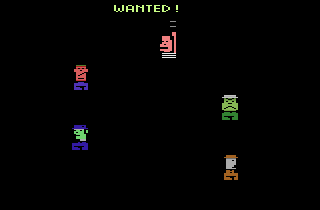
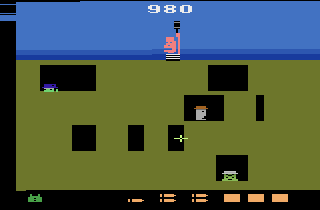
Gangster Alley was released in 1983 by Spectravision for the Atari 2600. As game play goes, like most Atari 2600 games, it is fairly simple. One of six gangsters will raise there head in the window of a building and you must shoot them before they shoot you. To mix things up a little, it won't always be a gangster sticking their head out of the window but innocent people too. You have to be careful not to shoot them as well. Also, one of the gangsters (Nitro Ed) will occasionally lob a grenade from the top of the building.


Scoring is based on how many gangsters you shoot and how many bullets you have left. If you get hit by one of them then you lose one of your bullet proof vests (which amounts to a life). A hit from a grenade and you are done for. The gangsters are worth various amounts from $20 to $100 and extra bullets are worth $10 each. However, hitting an innocent person is particularly costly at $1000. Shooting one of the gangsters only disarms them so you'll have your chance to shoot them again and again.


The game play is simple and reviews were pretty average but it's a fairly unique game for the Atari 2600. This would have possibly been a better game with a light gun but you are stuck with a joystick on the Atari 2600. If you have an Atari 2600, this game can be had for as little as $7 or $8 on eBay if you only want the cartridge. Otherwise, you can play it via an emulator. I am not aware of any official re-releases or other ports. This is an Atari 2600 exclusive.

The ad above is from the October 1982 issue of Video Games magazine.

Monday, May 11, 2020

Computer Gamer (January 1986)

Computer Gamer (January 1986)

Computer Gamers is a computer gaming magazine that was published in the U.K. in the 1980s. The January 1986 issue includes:

Regulars

  • News - The latest game news.
  • High-Score - Are you one of the best?
  • Coin-op Connection - What's going to be in the arcades next year? Find out by reading our special report from the Associated Leisure Show.
  • The Trolls Tavern - The second part of our special article on Roleplaying games.
  • Adventure Helplines - Help and hints for ailing adventurers.
  • Adventure Reviews - The latest adventures reviewed.
  • Dungeon Dressing - This month DD features 100 million adventure plots!
  • PBM Update - Sign up for our special offer game of It's a Crime.
  • Between the Covers - More editions for the Gamer library.
  • Reviews - Screenshot reviews of the latest games.
  • Into Games - Our arcade game writing series features a game for the Spectrum.

Features

  • Elektraglide - An in depth review of English Software's superb new racing game.
  • Assault on Argon - All the rules and counters you'll need to play our fantastic free game.
  • Superman - You've read the comics, seen the films now read about the game.
  • The Abbey of Satanic Evil - Can you survive a visit to the Abbey in this month's "Heroic Warrior" adventure.
  • Spellbound - A superb arcade adventure.

Programs

  • Fairytale Adventure (Commodore 64)
  • Krakatoa (Spectrum)

Offers

  • Readers Club - Join the thousands that have joined our FREE club.
  • Elite Competition - Win a copy of this fantastic game for your machine.
  • Win the Infocom Classics! - If you enjoy adventures then you'll love this prize.
  • Win a Roleplaying Game! - 25 copies of Corgi's Dragon Warriors roleplaying game up for grabs in our easy to enter competition.

...and more!

Vintage Photos - Oestreicher (691-694)


See the previous post in this series here.

I had the opportunity to pick up a huge batch of slides a while back. These are pictures span from as early as the late 1940s to as late as the early 1990s (maybe earlier and/or later but these are what I have sampled so far). These came to me second (third?) hand but the original source was a combination of estate sales and Goodwill. There are several thousand...maybe as many as 10,000. I will be scanning some from time to time and posting them here for posterity.

Apparently, getting your pictures processed as slides used to be a fairly common thing but it was a phenomenon I missed out on. However, my Grandfather had a few dozen slides (circa late 1950s) that I acquired after he died. That along with having some negatives I wanted to scan is what prompted me to buy a somewhat decent flatbed scanner that could handle slides and negatives, an Epson V600. It can scan up to four slides at a time with various post-processing options and does a decent enough job.

This set continues a rather large batch of slides that originally came from an estate sale and appear to have belonged to a locally well known photographer (or perhaps a close family member) from the Spokane Washington area and later Northern Idaho named Leo Oestreicher. He was known for his portrait and landscape photography and especially for post cards. His career started in the 1930s and he died in 1990. These slides contain a lot of landscape and portrait photos but also a lot of photos from day to day life and various vacations around the world. Here's an article on him from 1997 which is the only info I have found on him: http://www.spokesman.com/stories/1997/jan/04/photos-of-a-lifetime-museum-acquisition-of-leo/

Many of these slides had the date they were processed (presumably) stamped or printed on them. I've found that in cases where I could verify the date, either because a more specific date was hand written or there was something to specifically date the photo in the photo itself, that this date has typically been the same month the photos were taken. In other words, I expect that in MOST cases these photos were taken relatively near the processing date. No doubt there are some exceptions.

Click on one of the images or the link below to also see versions processed with color restoration and Digital ICE which is a hardware based dust and scratch remover, a feature of the Epson V600 scanner I am using. There are also versions processed with the simpler dust removal option along with color restoration.

The first photo in this set is a landscape photo from July 1965. However, other than the date it is unlabeled. The next photo appears to be taken in a church. There is a "World Death Rate Calculator" in the background along with some international flags. Not really sure what is going on there. It is not labeled or dated but I would guess it is from the late 1960s or early 1970s. The third photo was processed in July 1973 and appears to be a podcast 1970s style. The final photo was also processed in July 1973 and is of a cat proving that cat pics didn't start with the Internet.


July 1965


Processed July 1973


Processed July 1973


The entire collection that has been scanned and uploaded so far can also be found here.