steem

Showing posts with label Atari 2600. Show all posts

Saturday, October 10, 2026

E.T. (Atari 2600)

If you were a member of the Atari Club, you could get this steaming pile for $5 off!

Seriously though, there really are many games that are worse than E.T. but perhaps none with such an abysmal hype/quality ratio. In those days, there was no internet so word of mouth was a little slower. Despite how awful E.T. was, it still became one of the best selling Atari 2600 games largely because so many people got it for Christmas. Despite this, there still really were many thousands buried in a landfill in New Mexico.

E.T. is largely credited with the video game crash of 1982/83 but really that’s giving it too much credit. No doubt being such a dud had an effect and maybe if it had instead been one of the best games of all time (i.e. lived up to its advertising and hype) things would have been a little different. However, the fact is that there was so much garbage and so many clones (often clones of the garbage) being rushed to market at this time that the crash was probably a forgone conclusion. Besides, the video game crash helped lead to the rise in popularity of home computers and my Commodore 64 was so much better anyway…

Wednesday, September 30, 2026

Stargate (Atari 2600)

Stargate was the arcade sequel to Defender and is sometimes known as Defender II. The original arcade game was Stargate but most home ports were retitled Defender II because of copyright concerns. The Atari 2600 version was originally released as Stargate but a later release changed the name to Defender II. Other ports include the Atari 5200, Atari 8-bit computers, Atari 5200, NES, Apple II and DOS. The arcade version was also included in Midway Arcade Origins released in 2012 though it was also titled Defender II and not Stargate.

The game itself is similar to defender but with many more enemies and a stargate that serves different functions depending on the circumstances. For example, it may be used to transport your ship instantly to where a humanoid is in trouble or it may be used to skip levels.

Stargate/Defender II was a very good game though it never really came close to the popularity of Defender. The Atari 2600 port was also very good which was not always the case with arcade translations.

Thursday, May 28, 2026

Missile Command (Atari 2600)

Missile Command was originally released as an arcade game by Atari in 1980 and was one of the games that made arcades and Atari popular. The premise is pretty simple. Nuclear missiles are raining down on your cities and it is your job to shoot them down before they strike. I guess you could say it was the perfect Cold War era game.

Given its popularity it was an obvious candidate to port to Atari’s own home video game system, the Atari 2600, the following year. Not all arcade ports turned out well for the 2600 but this one was quite good and even better if you had a trackball. Missile Command became the third bestselling Atari 2600 game of all time. It was also released on various other systems throughout the years, sometimes in updated form, but the Atari 2600 is the one pictured above and the one that had the most success.

Friday, May 8, 2026

Dragonfire (Imagic)

Dragonfire was originally released by Imagic for the Atari 2600 in 1982. It's one of Imagic's better games and while it is relatively simplistic as most Atari 2600 games are, it is fun enough to keep you interested.

Game play is fairy straightforward. There are two unique stages. In the first stage you are attempting to cross a draw bridge, from one side of the screen to the other, while avoiding fireballs from a dragon that you can either attempt to jump over or duck under. The second stage switches to an overhead view inside the castle. In this stage you are attempting to collect the various treasures that are scattered about. In this stage the dragon lobs fireballs at you from the bottom of the screen. Once you have collected all of the treasures, a door will appear and you can exit. After this, the stages repeat only the fireballs come faster.

While Dragonfire was initially released for the Atari 2600 in 1982, it was ported to various other systems over the next few years. Later in 1982 is was released for Intellivision. In 1983 it was released for the VIC-20 and Spectrum. In 1984 it made its way to the Apple II, Commodore 64, ColecoVision and the TRS-80 Color Computer. While the graphics are better on the later version, game play is very similar and just as fun on the 2600 as on the other versions.

I am not aware of any rereleases for this game so you will have to track down an original if you want to play it. The Atari 2600 cartridge is pretty easy to come by and worth having if you are a collector for that system. Cartridge versions are also available for the VIC-20, ColecoVision, Intellivision and CoCo. I believe all the others were disk based.

Read more: http://www.megalextoria.com/wordpress/index.php/2020/01/23/dragonfire-imagic/

Saturday, May 2, 2026

Dig Dug (1982)

Dig Dug (1982)

Dig Dug is an arcade game that was released by Namco in 1982. It was one of the immensely popular games during the golden age of arcade gaming. It was originally described as a "strategic digging game" and was pretty unique for the time and remains so today.

Arcade

As the title character, you spend your time digging through the earth in order to defeat various enemies. This can be done in one of two ways. First, you can inflate them with a bike pump. It works as a sort of spear gun so this attack has a short range. Once impaled, You can inflate them until they explode or if left partially inflated (perhaps because you had to flee from another enemy) they will float harmlessly for a brief time. You can't move around during the inflation process so sometimes you have to cut and run. The other way you can kill enemies is by digging under a rock which would cause it to fall on any enemy following you. The longer a round lasts, the faster the enemies will move. Enemy speed also increases (as do the number of enemies) as the levels increase.

Atari 2600

Dig Dug was hugely popular and has seen literally dozens of ports over the years. Initial ports included early video game systems like the Atari 2600 Intellivision as well as 8-bit computers like the Commodore 64 and Apple II. However, every generation of video games systems has seen a re-release of some kind of this game.

Commodore 64

More recent releases of Dig Dug, which are mostly emulations or near arcade perfect ports with added features, include Namco Museum Vol 3 (1996 for the PlayStation), Namco Museum / Namco Museum 64 (1999 for the Nintendo 64, Dreamcast and Game Boy Advance), Namco Museum 50th Anniversary (2005 for the GameCube, PlayStation 2 and Xbox), Namco Museum Remix (2007 for the Nintendo Wii), Namco Museum Essentials (2009 for the PlayStation 3) and Namco Museum Switch (2017 for the Nintendo Switch), and as a bonus in Pac-Man Party. It was also released as part of the Xbox Live Arcade series for the Xbox 360 and on Steam for Windows. There's probably a few I've missed.

Atari 8-bit

There were also a few sequels that came along (including Dig Dug II) but these were not nearly as popular or as good. If you want to give Dig Dug a try than any of the releases above from 1996 or later are fine. The early home ports are good as well but they aren't going to give you an arcade perfect experience. The 8-bit computer versions or the later NES version are generally going to be better than the other 1980s console versions.

Friday, April 17, 2026

Snow White and the Seven Dwarves (Atari 2600)

Snow White and the Seven Dwarfs Platform: Atari 2600 The Atari 2600 had a very long life that started all the way back in 1977. The last commercial games for that system were not released until 1991 (1992 in Europe). As a consequence, there were a large number of games that production started on but for one reason or another were never finished. Many prototypes have been found throughout the years, some quite playable and others not so much. One Such prototype is Snow White and the Seven Dwarves.
Apparently, Atari went so far as to license Snow White from Disney (or maybe it was part of some other larger licensing deal?) but managerial indecision about what kind of game it should ultimately be led to delays that eventually led to cancellation. It was thought that no coding was ever done until a prototype showed up on eBay in 2000.
It turns out there were two prototypes (that anyone knows about so far anyway). The first is dated November 9th, 1982 and is about 50% complete and has parts that are somewhat playable though it doesn't make for a very enjoyable game. The second, dated December 9th 1983 is a somewhat different game that is simpler but less complete. Screen shots above are from the more complete version.

Wednesday, July 22, 2020

Atari Age (November 1983-February 1984)


Atari Age (November 1983-February 1984)


Atari Age was Atari's official publication in the early to mid 1980s. It didn't last terribly long because of the video game crash and Atari's declining popularity after the release of the NES. It was a quarterly publication and the November 1983-February 1984 issue includes:

  • Atari Club Videogame Masters Competition
  • Captain's Log
  • New Cartridge Report
    • Mario Bros.
    • Pigs in Space
    • Quadrun
    • Snoopy and the Red Baron
    • Big Bird's Egg Catch
  • How to Shoot Screen Photos
  • The Casebook of R. Cade
  • Game-Grams
  • Atari News
  • Sneek Peaks
  • Your Turn
  • Master Strategy Guide: Berzerk
  • Atari Club Calendar
  • Computerworks
  • The Clubhouse Store
  • Coin Video Corner
  • Limerick Contest

...and more!

Friday, May 22, 2020

Video Games (October 1982)

Video Games (October 1982)


Video Games was one of a number of early video game magazines that were born just in time to die an early death due to the video game crash of that time period. The October 1982 issue includes:

Features

  • Video Games Interview: Tim Skelly - One of a growing list of unmasked, eager-to-talk game designers, Skelly's topics include his recent game Reactor, his days at Cinematronics and theta wave meditation.
  • Video Games Go to the Movies - Tron and Starblasters are sure-fire evidence of Hollywood's latest love affair.
  • The Art of Video Games - How do all those pretty pictures get on to the video screen? Bob Mecoy provides some answers and also takes a revealing peek into the future.
  • Coleco Has a Vision - Better Games for All - What's in a name? Steve Bloom examines the past, present and immediate future of this extremely ambitious toy manufacturer.

Special Section

  • Roger Dionne's A Buyer's Guide to Home Video Games - Dionne dissects 19 of the most popular and/or up-and-coming cartridges, including Defender, Star Strike and The Quest for the Rings. Adapted from the Banbury book.

Departments

  • Hyperspace - A few words of hype from the editor.
  • Double Speak - Some words of advice from our readers.
  • Blips - Death of a gamer, Applefest reviewed, new software on the block, Apollo's story, the latest legal news, last call for computer camp.
  • Dr. Video - Ever wonder what all that game playing is doing to your eyes? Our resident optometrist, Dr. Arnold Sherman, has.
  • Book Beat - John "Hey Buddy! Can You Spare a Quarter?" Holmstrom can't stand all those "beat-the-games" books. Can you?
  • Coin-Op Shop - Nobody review 'em better than Eugene "Defender/Stargate/Robotron" Jarvis. Everyone's favorite game designer takes a look at Turbo, Zaxxon, Dig Dug, Robby Roto and Grand Champion.
  • Hard Sell - Got $300? Wanna blow it on a TV-game system? Roger Dionne narrows your choice down to Intellivision and Astrocade.
  • Comic Relief - Videosyncratic views of arcade life from Matt Howarth, Lou Stathis, Peter Bagge, and John Holmstrom (again?).
  • Outtakes

...and more!

Wednesday, May 13, 2020

Gangster Alley (Atari 2600)

Gangster Alley (Atari 2600)


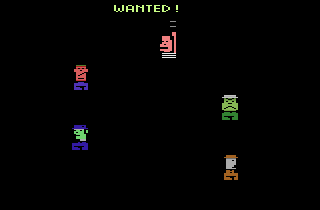
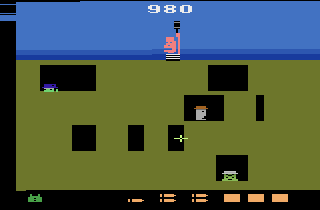
Gangster Alley was released in 1983 by Spectravision for the Atari 2600. As game play goes, like most Atari 2600 games, it is fairly simple. One of six gangsters will raise there head in the window of a building and you must shoot them before they shoot you. To mix things up a little, it won't always be a gangster sticking their head out of the window but innocent people too. You have to be careful not to shoot them as well. Also, one of the gangsters (Nitro Ed) will occasionally lob a grenade from the top of the building.


Scoring is based on how many gangsters you shoot and how many bullets you have left. If you get hit by one of them then you lose one of your bullet proof vests (which amounts to a life). A hit from a grenade and you are done for. The gangsters are worth various amounts from $20 to $100 and extra bullets are worth $10 each. However, hitting an innocent person is particularly costly at $1000. Shooting one of the gangsters only disarms them so you'll have your chance to shoot them again and again.


The game play is simple and reviews were pretty average but it's a fairly unique game for the Atari 2600. This would have possibly been a better game with a light gun but you are stuck with a joystick on the Atari 2600. If you have an Atari 2600, this game can be had for as little as $7 or $8 on eBay if you only want the cartridge. Otherwise, you can play it via an emulator. I am not aware of any official re-releases or other ports. This is an Atari 2600 exclusive.

The ad above is from the October 1982 issue of Video Games magazine.

Monday, April 6, 2020

VCS Owners Club Bulletin (September 1982)


https://www.megalextoria.com/wordpress/index.php/2020/04/06/vcs-owners-club-bulletin-september-1982/


https://megalextoria.blogspot.com/2020/04/vcs-owners-club-bulletin-september-1982.html

While the Atari 2600 (A.K.A. VCS - Video Computer System) was not the very first console, it is the one most responsible for popularizing home video games. While no doubt most popular in the U.S., it was a worldwide phenomena.

This is the September 1982 issue of VCS Owners Club Bulletin. This was the official Atari publication for the VCS in the U.K. It consisted of only a few pages and typically included new game release information (Demons to Diamonds is once such new release mentioned in this issue and it's on the cover too) and at least one article (in this case, one on the regional Pac-Man Competition in the U.K.) and a few other items like high scores and tips.

Monday, January 6, 2020

Video Games (December 1982)


Video Games (December 1982)


Video Games was an early 1980s video game magazine covering systems like the Atari 2600, ColecoVision, Intellivision, Arcadia 2001, Vectrex and others of the time. The December 1982 issue includes: Features
  • Video Games Interview: Ken Uston - From stockbroker to blackjack whiz to video game maven, the celebrated author knows no bounds. An exclusive interview by Roger Dionne.
  • Programming for Dollars - Game designers are turning ideas into megabucks. Who are they, how do they do it and could you become one of them? Dale Archibald is on the case.
  • The Selling of Intellivision - The maker of Barbie has come a long way, baby. An inside look at Mattel and its prime-time duel with Atari. Also, a rare interview with George Pimpton. Susan Prince and Steve Hanks do the job.
  • The House That Pac Built - Space Invaders, Galaxian, Pac-Man, Gorf, Ms. Pac-Man, Tron! Midway Manufacturing has done them all. On the even of the Company's 25th anniversary, Andrea Stone paid a visit to the coin-op Goliath.
Special Section
  • From Cutoffs To Pinstripes - On Atari's 10th birthday, Video Games brings you the company that started it all. An incredible report by Steve Bloom.
Departments
  • Hyperspace - A few words of hype from the editor.
  • Double Speak - Some words of advice from our readers.
  • Blips - Pac-Man gets a TV show, gamer clubs, Siggraph '82, drugs in arcades, the latest and greatest high scores, why Wall Street is saying all those terrible things about video games.
  • Soft Spot - Perry Greenberg pulls no punches as he guides you through the ever-expanding software maze. Reviews of 16 brand new cartridges, including Atlantis, Pitfall and The Empire Strikes Back.
  • Book Beat - The mad, mad, mad world of a video game book author. Between hands of poker and the change of cartridges, Roger Dionne found the time to tell us how it's done.
  • Coin-Op Shop - Eugene Jarvis returns with more expert opinions on the latest batch of quarter-eaters. Je also has a few things to say about Tron.
  • Hard Sell - The TV-game system that nobody knows. Introducing Emerson's Arcadia 2001. Critique by Sue Adamo.
  • Comic Relief - Our resident funny men are back on the loose. John Holmstrom's "Bernie," Gene Williams' "Joysticks," and Peter Bugge "Video Kid."
  • Outtakes
...and more!

Monday, December 23, 2019

Mr. Do!’s Castle (Atari 2600)


Mr. Do!’s Castle (Atari 2600)


Mr. Do! became quite the popular arcade character after the first game featuring him in 1982 simply titled Mr. Do! The game was popular enough that to speed along a sequel, an existing game in development was modified to be a Mr. Do! game by changing the graphics. The game was originally to be titled Knights vs. Unicorns. The Japanese version became Mr. Do! versus Unicorns and the U.S. release was called Mr. Do!'s Castle.
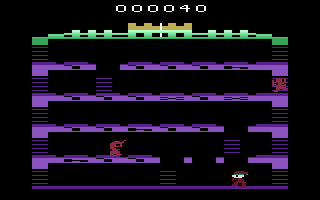
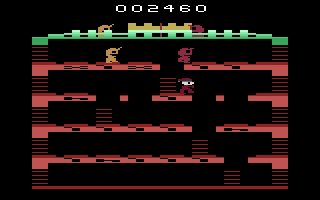
Mr. Do!'s Castle features Mr. Do! climbing up and down ladders in a castle. The goal is to collect cherries by using a hammer to knock out blocks that contain them. The holes left behind can then be used to trap the Unicorn monsters which can then be smashed with another block.
Mr. Do!'s Castle was released in 1982 and was ultimately ported to a wide variety of contemporary platforms including the Atari 2600. Unfortunately, the Atari 2600 version just isn't that good. The Atari 2600 was a limited platform anyway but during the 1982 and 1983 time period in general, many games were rushed to try to take advantage of the video game craze. The graphics were never going to be close to the arcade version but they are hardly even recognizable. The game play is not significantly better. While the arcade version is a fun game I would steer clear of the 2600 version and if you want a home version try one of the 8-bit computer versions such as the Commodore 64 port. Really though, you might as well emulate the original arcade version. Screen shots above are from the Atari 2600 version of Mr. Do's Castle.

Tuesday, November 19, 2019

TV Gamer (April 1984)


TV Gamer (April 1984)

TV Gamer was a U.K. based gaming magazine from the mid 1980s. I suppose it was a competitor to C&VG but only for a relatively short time. TV Gamer was only published for about two years with the last couple of issues being incorporated in to Big K. The April 1984 issue includes: Cover Feature
  • Space cockpit games - Off this month into outer space, we take a look at the universe from the front viewport of your own craft.
In Depth Reviews
  • Yar's Revenge - Follow the exploits of the world's most lethal fly in his life-or-death struggle against the merciless Qotile and its deadly Swirl.
  • Raiders of the Lost Ark - We give a map and game-plan for one of the most perplexing games ever produced for the VCS.
The Arcade Scene
  • New Coin-op Games - Andy Harris has gone round to his local arcade armed with a barrel of tenpences to try out the latest, dazzling games.
Systems
  • The Sinclair computers - TV Gamer's Darrin Williamson takes a look at four remarkable Sinclair computers and the incredible range of games software available for one of the, the ZX Spectrum.
Competition
  • Prize Quiz - Here's a chance to win Britain's most popular home computer, the ZX Spectrum, with valuable peripherals and games software.
Special Feature
  • Adventure Games - Look at your computer again and say "there's a whole new world in there", because, as Mike Lewis explains, this could be your chance to hobnob with hobbits and wisecrack with wizards.
Interview
  • The Champs - Karl Dallas has been talking to the Atari world champs, and they're both British.
Reviews
  • The new games - A fresh look at the latest carts and cassettes hot off the distributors' shelves.
Games Governments Play
  • Battlefield video - This month Mike Roberts reveals the incredible electronic toys that the military can use to train soldiers while saving on weapons.
Research
  • Games are OK - In answer to the games knockers here's some hard evidence that video games are good for you.
Regulars
  • Editorial
  • News
  • Late news
  • Top 20 video games and top 10 arcades
  • Top scores
  • TV Gamer club
  • Advertisers, What's coming
...and more!

Monday, November 4, 2019

Amidar (Atari 2600)


Amidar (Atari 2600)


Amidar was released as an arcade game by Konami in 1981. As this was near the height of the popularity of the Atari 2600, it's unsurprising that it received an Atari 2600 port the following year. While this ad doesn't specifically mention the Atari 2600, that was the only home system that it was released for at the time.

This game makes fun of the endless maze games that were essentially knock-offs of Pac-Man. Ironically though, this game was really just another take on that concept. Amidar is really nonsensical as far as what you are doing in the game. On odd numbered levels you control an ape who must collect coconuts while avoiding headhunters. On even number levels you control a paint roller and must paint over each spot on the board while avoiding pigs. I have no idea what these two things have to do with each other.

Other play mechanics are very much like Pac-Man. Touching enemies normally kills you but by clearing a board you are temporarily able to kill enemies by touching them (as if you ate a power pellet in Pac-Man). However, there is the rather unique jump button. Instead of making you jump it makes all your enemies jump and you can then walk under them. As you might expect, as the level increases, your enemies get faster and more numerous.

The Atari 2600 version along with a 1983 release for the obscure Japanese only Casio PV-1000 are the only official releases I could find reference to. There were various knock-offs for various home computers that came a few years later. However, if you want an official home version you'll have to find the Atari 2600 version. You can also always emulate this game but if you are going to do that, you might as well find the arcade version. Apparently, the arcade version of Amidar was re-released for the Xbox 360 and Windows via Game Pak 12 for Game Room in 2010 but I believe that it is no longer available.

Screen shots above are from the Atari 2600 version of Amidar. The ad is from the January 1983 issue of Video Games magazine.

Tuesday, September 17, 2019

TV Gamer (Autumn 1983)


TV Gamer (Autumn 1983)

TV Gamer was a relatively short lived U.K. based video games magazine published between 1983 and 1985. The final two issues would be incorporated into Big K. The Fall 1983 issue includes:
  • Guide to the Listings
    • explaining our software listing system and games categories


  • System Reviews
    • CBS/Colecovision: details of the first three modules and news of the third module's computer update
    • Atari: still the most popular TV games system in the world
    • Intellivision: news of some new accessories
    • Vectrex: advance news of some incredible add-ons


  • Software Reviews
    • CBS/Colecovision
    • Atari
    • Intellivision
    • Vectrex


  • Consumer Guide
    • looking at controllers and accessories


  • Special Report
    • the Supercharger tested


  • Competitions
    • Win a Coleco and an Atari adapter!
    • Win a Vectrex!


  • Club News
    • Letter
    • Where to buy
    • Questionnaire
    • Subscription form
    • Trade information
...and more!

Friday, August 23, 2019

Atarian – (September/October 1989)


Atarian – (September/October 1989)


I think most console makers tried their hand at an official magazine to varying degrees of success. Nintendo Power is perhaps the most successful of those. At the other end of the scale is Atarian which only had a handful of issues. Not necessarily because it was a terrible magazine (for the most part) but because Atari just didn't survive long enough as a console maker after the Magazine started. The September/October 1989 issue of Atarian includes: Reviews
  • Off the Wall
  • Jinks
  • Super Huey
  • Radar Lock
  • Ace of Aces
  • Gato
  • Airball
  • Tank Command
  • Touchdown Football
  • Glacier Patrol
Playing Strategy
  • Dark Chambers
  • Xevious
  • Rescue on Fractulus
  • River Raid
Departments
  • Mailbag - Our mailbox overflowith
  • Top 30 - Your favorite 10 games for 2600, 7800, and XE
  • 10 Years Ago - The great autumn of 1979
  • Tips & Tricks - Reader tips for maxing your scores
  • Gameslist - Games made by other manufacturers
  • Adventures of Atari - The evil Ninja-Endo marshals an army of mutant sea creatures against Beth and Atari.
  • Puzzlers - Challenge your mind with these stumpers
Features
  • Consumer Electronics Show - Atarian goes to a fantastic trade show
  • Previews - Sneak peeks of new games coming out soon
Classics
  • Donkey Kong
  • Millipede
...and more!

Wednesday, August 7, 2019

JoyStik (December 1982) – How To Win At Home Video Games


JoyStik (December 1982) – How To Win At Home Video Games

How To Win At Home Video Games was a special issue of JoyStik magazine published in December 1982, just in time for Christmas. It provided basic strategies for getting high scores in popular home video games of the time. Contents include strategies for:

  • Introduction
  • Asteroids
  • Major League Baseball
  • Berzerk
  • Defender
  • Demon Attack
  • Donkey Kong
  • K.C. Munchkin
  • Pac-Man
  • Pitfall
  • Space Hawk
  • Communist Mutants From Space
  • Kaboom!
  • Star Strike
  • Yars' Revenge
  • Megamania
  • Space Armada
  • Astrosmash
  • Shark Attack
  • Beauty and the Beast
  • Pick Axe Pete
  • Skiing
  • Volleyball
  • The Empire Strikes Back
  • Raiders of the Lost Ark
  • Superman
  • Towering Inferno
  • Cosmic Swarm
  • Missile Command
  • Space Invaders
  • Starmaster
  • Fishing Derby
  • Lost Luggage
  • Stampede
  • Super Breakout
  • Adventure
  • Haunted House
  • Quest for the Rings
  • Utopia
  • Circus Atari
  • Demons to Diamonds
  • Fireball
  • Freeway
  • Frogger
  • K.C.'s Krazy Chase
  • Submarine Commander
  • Warlords
  • Cosmic Conflict
  • Jawbreaker
  • King Kong
  • Lady Bug
  • Monkeyshines
  • Mousetrap
  • Night Stalker
  • Room of Doom
  • Grand Prix
  • Home Run
  • Indy 500
  • NFL Football
  • PBA Bowling
  • Racquetball
  • Trick Shot
  • Turbo
  • Alien Invaders-Plus
  • Phaser Patrol
  • Space Battle
  • Space Caverns
  • Star Raiders
  • Star Voyager
  • Stellar Track
  • Zaxxon
  • Summary Chart of Games and Ratings
...and more!

Monday, June 3, 2019

Atarian Video Game Magazine (May/June 1989)


Atarian Video Game Magazine, May/June 1989
While most companies that have produced video game consoles have tried their hand at an official magazine for that console, no one ever quite had the success of Nintendo with Nintendo Power. At the opposite end of the scale, we have Atarian which was only produced for a few issues. It wasn't that the magazine was especially horrible, it's just that at this time, Atari was mostly pushing games that had been published years in the past. The first issue from May/June 1989 includes: Interview
  • Nolan Bushnell - Whye the "Father of Video Games" came back to Atari.
Reviews
  • Secret Quest
  • Tower Toppler
  • Summer Games
  • Fight Night
  • Impossible Mission
  • Double Dunk
  • Crime Buster
  • Karateka
  • Water Ski
  • Super Baseball
Departments
  • Mailbag - Some of the many letters you've sent us
  • Top 30 - Your favorite 10 games for the 2600, 7800, and XE
  • Tips & Tricks - Short tips for playing 9 of your favorite games
  • Adventures of Atari - Our new superhero battles Ninja-Endo and his vile schemes
  • Puzzlers - Paper and pencil puzzles for a break from the joystick
Features
  • Previews - Check out these 8 hot new titles coming soon to a store near you
  • Sports Superstars - To relax, Doug Williams, Ozzie Smith, and Spud Webb all play Atari video games
  • XE Game System - Spectacular graphics, power, expandability, and an extensive game library for under $100
Playing Strategy
  • Necromancer
  • Donkey Kong Jr.
  • Desert Falcon
...and more!

Tuesday, March 12, 2019

Q*Bert (Atari 2600)


Q*Bert (Atari 2600)

While there can be no doubt that Q*bert is one of the great arcade classics and one of the most recognizable classic arcade characters, I always found it to be incredibly frustrating. Yes, it was a difficult game but it isn't really the difficulty itself that really bothered me. It was the fact that I was always leaping to my death by accident because I never quite grasped the pseudo 3D viewpoint.
For those that don't know, in Q*bert you controlled...well, Q*bert...in his effort to escape various creatures and obstacles by leaping around a pyramid. Game play was fairly simple. You just jumped from square to square up or down the pyramid. The goal was to hop on each square to change its color. Once all squares were changed, you proceeded to the next level. Of course you had to avoid getting trapped by the various on-screen enemies. However, for me the view point always caused me issues. It seemed like I was always leaping to my own death by accident. As the levels progressed, things got harder. You would have to jump on each square multiple times, enemies would move faster and there would be more of them, etc.
Q*bert was first released to the arcades in 1982. Ports to various systems started appearing the following year. While this add is targeted towards the Atari 2600 version (and mentions the upcoming Intellivison version), there were a wide variety of systems this game was ultimately available for. Because of the limited nature of the Atari 2600, it really isn't one of the better ports. The graphics were actually ok for that system but the pyramid was smaller and there were fewer enemies. The controls also suffered (and I already hated the controls anyway).
If you are looking for an original copy of the Atari 2600 version then they are relatively common and can be had for a reasonable price. You can always use emulation too. However, if you really want to play Q*bert you are better off using MAME to emulate the arcade version or checking out the more recent release Q*bert Rebooted which was released for various modern systems in 2015 and includes a port of the original arcade game. The ad above is from the August/September 1983 issue of Video Games Player magazine. Screen shots are from the Atari 2600 version of the game.

Monday, November 19, 2018

Super Breakout


Super Breakout

There is no doubt that Super Breakout is a classic among video games. It was originally created in 1976 as an arcade game by Atari, the hardware of which was originally designed by Steve Wozniak. Wozniak's hardware design for this game would influence the design of the Apple II. Breakout was designed to essentially be a one-player version of pong with the object being to destroy the moving walls of bricks at the top of the screen by bouncing a ball off of a paddle. Breakout was ported to the Atari 2600 in 1978 with the enhanced Super Breakout with more game variations and a slightly updated look being released later that same year.
What's funny about this particular "review" is that it is another example of Atari continuing to push their old games and hardware vs. moving forward. This review appeared in the July/August 1989 issue of Atarian, Atari's official magazine. Super Breakout was available for the Atari 2600 (and therefore the Atari 7800) and Atari XE computer and video game systems at the time. The review ends suggesting you should have this game if you don't already. While I don't specifically remember this game being available then, I'm quite sure that you could still pick up Super Breakout either at toy stores like Toys R Us or directly through Atari. I would say this genre peaked with Arkanoid which was released about three years before this article was written. I'm all for coverage of vintage games and systems but this was really just Atari trying to sell old stock.
Super Breakout would go on to be re-released many times for various systems and as part of various compilations too numerous to mention. If you want to play this game, no doubt you can find away fairly easily. If you want an original Atari 2600 or Atari XE version, these are easy to come by too as both are very common. In fact, Super Breakout was the pack-in for the Atari 2600 for a while.