steem

Showing posts with label Atari. Show all posts

Wednesday, September 30, 2026

Stargate (Atari 2600)

Stargate was the arcade sequel to Defender and is sometimes known as Defender II. The original arcade game was Stargate but most home ports were retitled Defender II because of copyright concerns. The Atari 2600 version was originally released as Stargate but a later release changed the name to Defender II. Other ports include the Atari 5200, Atari 8-bit computers, Atari 5200, NES, Apple II and DOS. The arcade version was also included in Midway Arcade Origins released in 2012 though it was also titled Defender II and not Stargate.

The game itself is similar to defender but with many more enemies and a stargate that serves different functions depending on the circumstances. For example, it may be used to transport your ship instantly to where a humanoid is in trouble or it may be used to skip levels.

Stargate/Defender II was a very good game though it never really came close to the popularity of Defender. The Atari 2600 port was also very good which was not always the case with arcade translations.

Sunday, September 6, 2026

Antic: The Atari Resource (January 1985)

Antic was one of the most popular Atari 8-bit magazines. While primarily covering the Atari 8-bit, it also covered the 16-bit Atari ST once it came along. The January 1985 issue includes:

Antic: The Atari Resource (January 1985)

Wednesday, June 10, 2026

Centipede (Atari 5200)

Centipede (Atari 5200)

Centipede was another genre defining game by Atari. It was similar to Space Invaders in that you operated from the bottom the screen at things coming towards you. The differences are higher speed, more varied objects and the ability to move vertically to some degree. It was one further step towards the vertical scrolling shooters that would soon come along.

In Centipede, the goal is to destroy centipedes and other bugs that infest your garden. The centipede weaves its way back and forth across the screen, changing directions whenever it encounters a mushroom. Periodically other menaces will come along like the spider that bounces across the screen, the scorpion that crawls across or the flea that dive bombs you. To make things more difficult, the centipede breaks into multiple pieces any time you hit a part other than the head or tail. As levels progress, the bugs get faster and faster.

There were many home ports of centipede. The Atari 5200 version, which is essentially the same as the Atari 8-bit computer version, is a very good port and was a nice step up graphically from the Atari 2600 version. For the best experience you can use a trackball instead of a joystick to mimic the arcade experience.

There have been a number of releases of the arcade version of Centipede and the Atari 7800 version has been released via the Atari Flashback consoles. However, as far as I am aware there has never been a re-release of the Atari 5200 or Atari 8-bit versions. To play these you will have to track down some original hardware and software or resort to emulation. If you have never played centipede (and I can't imagine there are that many people who call themselves gamers that haven't), you should definitely try at least one version. The arcade version is best of course but the vast majority of home ports are very good as well. Even the Atari 2600 version plays well even if the graphics are a step down.

Thursday, May 28, 2026

Missile Command (Atari 2600)

Missile Command was originally released as an arcade game by Atari in 1980 and was one of the games that made arcades and Atari popular. The premise is pretty simple. Nuclear missiles are raining down on your cities and it is your job to shoot them down before they strike. I guess you could say it was the perfect Cold War era game.

Given its popularity it was an obvious candidate to port to Atari’s own home video game system, the Atari 2600, the following year. Not all arcade ports turned out well for the 2600 but this one was quite good and even better if you had a trackball. Missile Command became the third bestselling Atari 2600 game of all time. It was also released on various other systems throughout the years, sometimes in updated form, but the Atari 2600 is the one pictured above and the one that had the most success.

Wednesday, May 20, 2026

Compute! (December 1981)

Compute! was one of the earliest home computer magazines. Early in its history, it focused on 6502 based machines. In 1981 that meant the Commodore CBM/PET, Apple II, Atari and OSI. The December 1981 issue includes:

Compute! (December 1981)

Friday, April 17, 2026

Snow White and the Seven Dwarves (Atari 2600)

Snow White and the Seven Dwarfs Platform: Atari 2600 The Atari 2600 had a very long life that started all the way back in 1977. The last commercial games for that system were not released until 1991 (1992 in Europe). As a consequence, there were a large number of games that production started on but for one reason or another were never finished. Many prototypes have been found throughout the years, some quite playable and others not so much. One Such prototype is Snow White and the Seven Dwarves.
Apparently, Atari went so far as to license Snow White from Disney (or maybe it was part of some other larger licensing deal?) but managerial indecision about what kind of game it should ultimately be led to delays that eventually led to cancellation. It was thought that no coding was ever done until a prototype showed up on eBay in 2000.
It turns out there were two prototypes (that anyone knows about so far anyway). The first is dated November 9th, 1982 and is about 50% complete and has parts that are somewhat playable though it doesn't make for a very enjoyable game. The second, dated December 9th 1983 is a somewhat different game that is simpler but less complete. Screen shots above are from the more complete version.

Tuesday, February 3, 2026

Atari Jaguar

Atari Jaguar ad

“Here’s something to gnaw on. The new Jaguar interactive multimedia system has a mind blowing 64 bits of power, compared to a simply 16 bits for the competition. 64 bits means 16 million colors in a 3D world. Breakneck speeds. Cat-like control. And special effects like you see in the movies.

How does it sound? Well, if this ad had a volume button your mother would be yelling at you to turn it down. Car crashes, alien screeches, jet engines and other bone rattling stereo CD quality sounds will make you jump out of your seat.

When you do, make sure to run to the nearest store. Everyone else will be there chomping at the bit to buy one.

What we’re really saying is Jaguar’s 64 bits eats the competition alive. Sink your teeth into it and you’ll see what we mean. Get Bit by Jaguar.”

The Atari Jaguar was Atari’s last attempt at a home console. The Atari Jaguar was released in 1993 and discontinued in 1996 after selling only 250,000 units.

The Jaguar had a lot going for it when it was released. It was the most powerful system available (even if the 64-bits claim was a bit of an exageration… it would more accurately be called a 32-bit system) and it was affordable. However, the multi-chip design made it difficult to program for and there were too few 3rd party releases and without quality software, no system can survive. In addition, the Sega Saturn and Sony PlayStation were released in 1995 and for the most part, these were technically superior systems, easier to program for and had more 3rd party software. Despite the price advantage (the Jaguar was much cheaper at only $149) and the release of a CD peripheral, it just could not compete.

This failure was pretty much the end of Atari. Atari left the home video game market for good and Hasbro Interactive bought out Atari in the late 1990s.

However, the Jaguar lives on. The patents were released to the public domain and homebrew games are still being developed for the console. Jaguar hardware also lived a little longer as the basis for the Atari arcade games Area 51 (1995), Maximum Force (1996) and the combo version (1998).

Monday, January 26, 2026

Sinistar (Atari 5200)

Sinistar was a fairly popular arcade game released by Williams Electronics in 1983. Interestingly, in a time when arcade to home ports were very common, no home port of Sinistar was released until more than a decade later as part of several of the Midway compilations for a variety of systems. Versions for the Atari 2600 and Atari 8-bit computer line were planned and mostly completed but for some reason never released. This probably had a lot to do with the video game crash and the decline in popularity of home video games at that time. 8-bit computer games were quite popular still but the Atari line was rapidly losing market share to the Commodore 64 and the Apple II.

Thanks to the magic of the internet, the nearly completed Atari 8-bit version has been found, ported to the Atari 5200 and released. For more information on this, to order a cartridge, or to download an image for emulators, see https://atariage.com/store/index.php?l=product_detail&p=955

The Atari 5200 was the second major console released by Atari. It was released in 1982 and discontinued after less than two years and a million units sold. In terms of hardware, it was nearly identical to their 8-bit computer line except that it used analog controllers. They were a little ahead of their time with this as most games of the time weren’t really suited to such controllers (plus they didn’t auto center). Despite the fact that the Atari 5200 was the most advanced system of the time, it did not fare well commercially. Part of this was due to the video game crash and part of it was do to some bad design decisions, particularly in regards to the controllers.

Friday, October 10, 2025

Compute! (September 1985)

Compute! was probably the best magazine for the average computer user in the early to mid 1980s and perhaps beyond. At least if you had an interest in more than one platform. Compute! covered all of the popular home computers of the time and there were a bunch in 1985 including the Commodore 64, Apple II, Atari 8-bit, PC, TI-99/4A, the brand new Amiga and Atari ST, and probably others. The September 1985 issue includes:

Compute! (September 1985)

Sunday, August 24, 2025

Antic (August 1984)

Antic (August 1984): Antic was one of the two major Atari 8-bit magazines in the U.S. (the other being ANALOG). Antic also had some coverage of the Atari ST though 1984 was before that. The August 1984 issue includes:

Tuesday, June 17, 2025

Compute! (February 1985)

Compute! (February 1985) | PeakD: Compute! was a great magazine for those with home computer in the 1980s, at least if you had one that it covered. In 1985 that meant the Commodore 64, VIC-20, Atari 8-bit, Apple II, and IBM PC.

Friday, March 7, 2025

ST-Log (April 1988)

ST-Log (April 1988) | PeakD: ST-Log was one of a couple of Atari ST magazines available in the U.S. I don't think the Atari ST was quite as popular as the Amiga but it was reasonably close, at lest during their early years. The April 1988 issue of ST-Log includes:

Monday, August 19, 2024

VideoGames & Computer Entertainment (February 1993)

VideoGames & Computer Entertainment (February 1993)

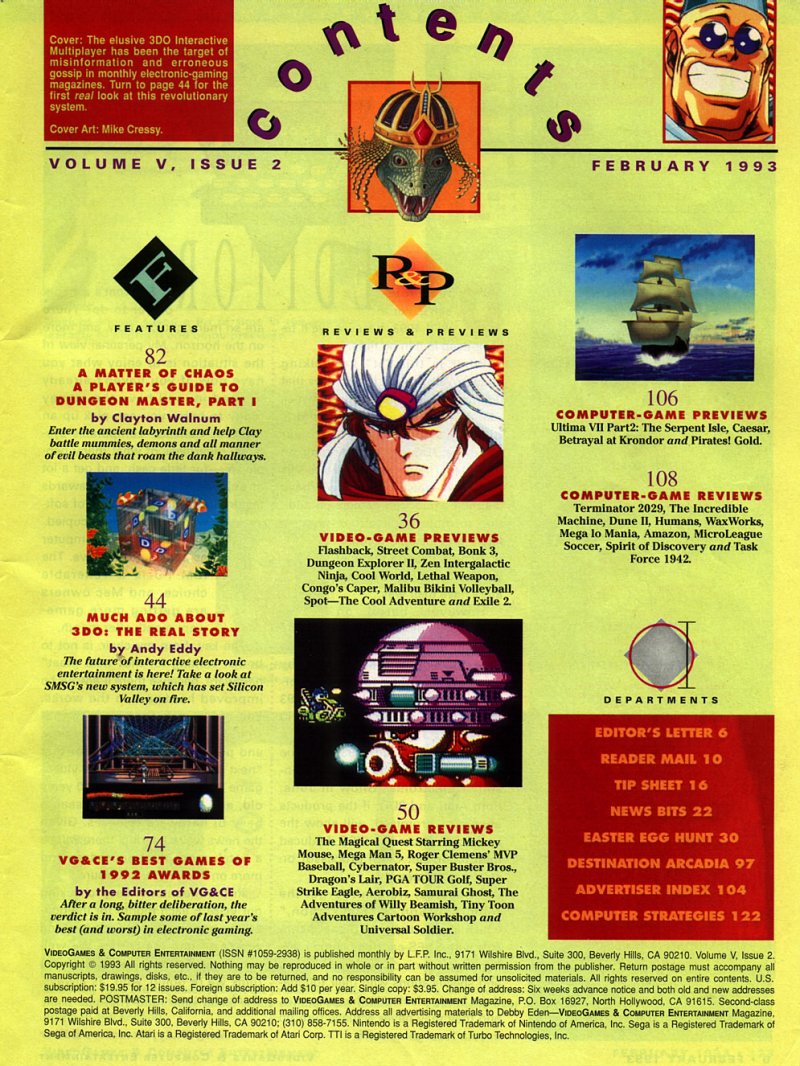
VideoGames & Computer Entertainment was my favorite magazine in the years that it was published (late 1980s to early 1990s). It was really sort of the successor to the original Electronic Games magazine, at least until Electronic Games was actually rebooted. The February 1993 issue includes:

Features

  • A Matter of Chaos: Player's Guide to Dungeon Master, Part I - VG&CE had some pretty great game guides. However, you had to be disciplined about looking at them because they could ruin the game for you. This one covers the first part of Dungeon Master for the Super NES.

  • Much Ado About 3DO: The Real Story - It's a shame the 3DO didn't have more success. This article is a first look at the machine with some technical details and a look at its capabilities.

Table of Contents from the February 1993 issue of VideoGames & Computer Entertainment

Previews & Reviews

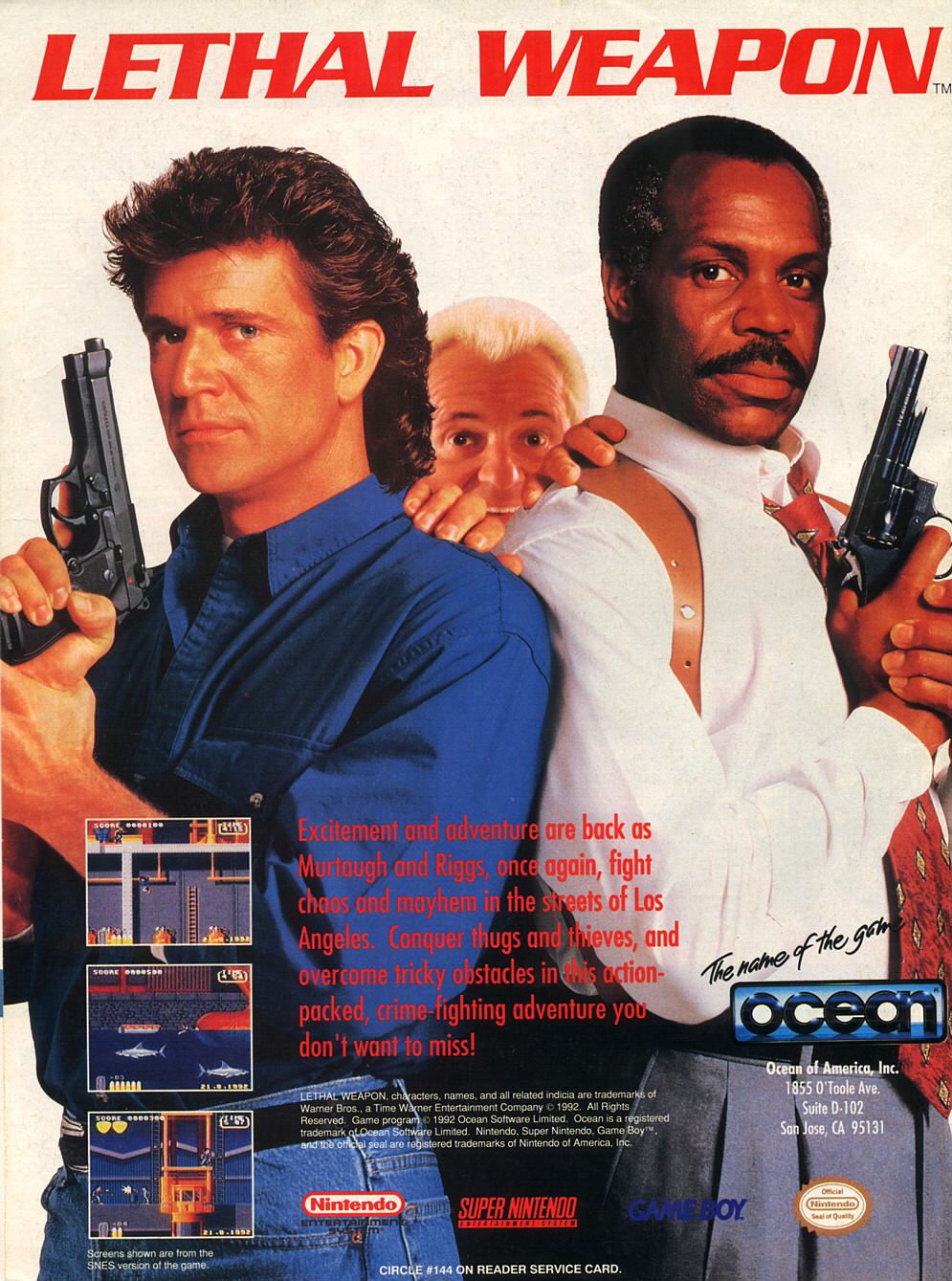
  • Video-Game Previews - Brief previews of Flashback (Genesis), Bonk 3 (TurboGrafx-16), Street Combat (Super NES), Dungeon Explorer II (TurboGrafx-16), Zen Intergalactic Ninja (NES and Game Boy), Lethal Weapon (NES and Game Boy), Cool World (Super NES and Game Boy), Congo's Caper (Super NES), Malibu Bikini Volleyball (Atari Lynx), Spot - The Cool Adventure (Game Boy), and Exile 2 (TurboGrafx-16).

  • Video-Game Reviews - Reviews of The Magical Quest Starring Mickey Mouse (Super NES) - Capcom made some great Disney licensed games and this was one of them, Mega Man 5 (NES) - and there would still be one more Mega Man game on the NES, Roger Clemens' MVP Baseball (Genesis), Cybernator (Super NES), Buster Bros. (TurboGrafx-16 CD), Dragon's Lair (Super NES) - a platform game not really like the arcade version, PGA Tour Golf II (Genesis), Super Strike Eagle (Super NES), Aerobiz (Super NES), Samurai Ghost (TurboGrafx-16), The Adventures of Willy Beamish (Sega CD), Tiny Toon Adventures Cartoon Workshop (NES), and Universal Soldier (Super NES) - another bad licensed game.

  • Computer-Game Previews - Short previews of Ultima VII Part 2: The Serpent Isle, Caesar - I think I actually have this one somewhere though I've never played it, Betrayal at Krondor - my roommate in college spent many hours on this game, and Pirates! Gold.

Departments

  • Editor's Letter - A look at what's ahead in 1993 including the 3DO, Atari Jaguar, the PlayStation (which at the time was essentially an SNES console with CD-ROM), and more.

  • Reader Mail - Letters from readers about RPGs, Nintendo's 32-bit CD-ROM system, portable systems, and more.

  • Tip Sheet - Hints and tips for Night Trap (Sega CD), The Guardian Legend (NES), and Cosmic Fantasy 2 (TurboGrafx-CD).

  • News Bits - Radio Shack debuts a new interactive CD player called the Memorex MD-2500 VIS, Nintendo cleared of antitrust charges, classic games re-released for the NES (Zelda, Zelda II, Punch-out, Metroid) for $29.99 each, Sunsoft licenses The Pirates of Dark Water, Atari drops price of Lynx to $79.99, and more.


Back cover of the February 1993 issue of VideoGames & Computer Entertainment

Read more: https://www.megalextoria.com/wordpress/index.php/2024/08/19/videogames-computer-entertainment-february-1993/

Tuesday, May 28, 2024

Compute! (March 1981)

Compute! (March 1981)

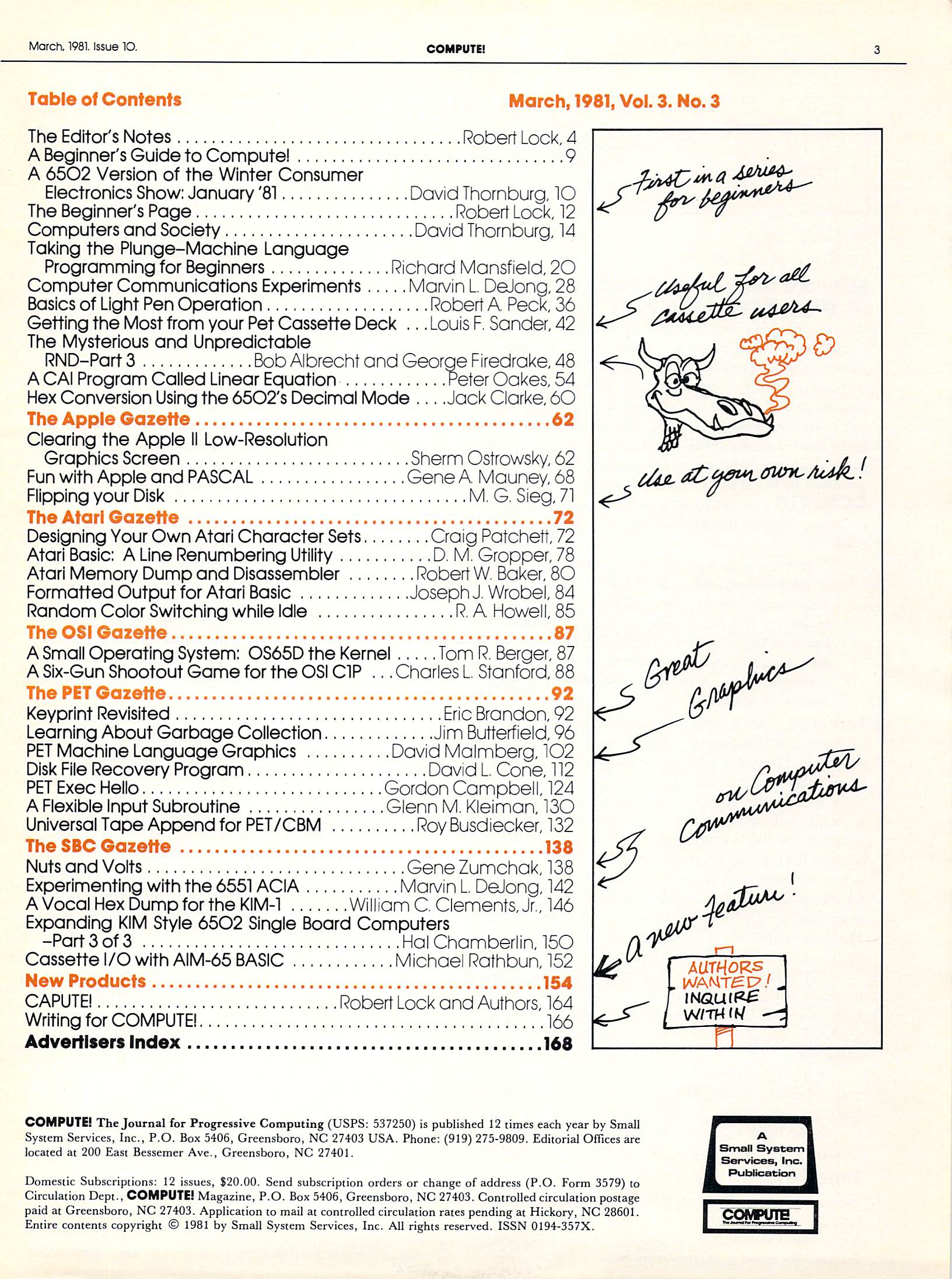
Compute! was a popular multi-format magazine that covered various computers throughout its long life which started in 1979 and lasted until the 1990s. Throughout its early life, it strictly covered computers based on the 6502 processor. The March 1981 issue includes:

Table of Contents

  • The Editor's Notes - The editor opines on software piracy vs. the right to back-up software that you buy.

  • A 6502 Version of the Winter Consumer Electronics Show: January '81 - News related to 6502 based computers at the Winter CES. The biggest product introduced that year was the Commodore VIC-20.

  • The Beginner's Page - Some beginner information about BASIC, operating systems, ROM, RAM and storage media.

  • Computers and Society - A look at communications between user and computer via programming languages. LOGO and PILOT are emphasized while BASIC and PASCAL are also mentioned.

  • Taking the Plunge - Machine Language Programming for Beginners - An introductory guide to machine language on the PET though it is applicable to other machines of the time as well. The differences between BASIC, machine language and assembly code are discussed.

  • Computer Communications Experiments - An article on building an RS-232C interface which can be used for modems and other things.

The Apple Gazette

  • Clearing the Apple II Low-Resolution Graphics Screen - Several BASIC methods for clearing the screen.

  • Fun with Apple and PASCAL - A type-in PASCAL arcade style shooter game for the Apple II (basically shoot at the falling shapes).


Table of Contents from the March 1981 issue of Compute!

The Atari Gazette

  • Designing Your Own Atari Character Sets - Creating custom character sets on the Atari 8-bit.

  • Atari Basic: A Line Renumbering Utility - A type-in utility for renumbering the lines of a BASIC program. This was important sometimes because you could run out of line numbers. Every line of code in basic started with a line number. If you needed to add code in between two lines then there would have to be available numbers to do so. If you were unwise enough to make every line number consecutive, that could be problematic. It was common practice to number lines by 10s (first line is 10 second is 20, etc.). However, you never know when you might need more extra line numbers in between.

  • Atari Memory Dump and Dissassembler - A type-in program that will both dump the contents of memory locations to disk or disassemble lines of code.

The OSI Gazette

  • A Small Operating System: OS65D the Kernel - The final part in a series on the OS65D operating system.

  • A Six-Gun Shootout Game for the OSI C1P - A type-in BASIC game that sounds a bit like Outlaw on the Atari 2600.

The PET Gazette

  • Learning About Garbage Collection - Garbage collection (memory reclamation) was necessary on PET machines with certain ROM revision in order to reclaim memory used by strings. Here are a couple of short routines to do that.

  • PET Machine Language Graphics - A machine language graphics subroutine for the PET that provides a variety of graphics functions.

  • Disk File Recovery Program - A type-in program for the PET that can recover accidentally deleted files.

  • PET Exec Hello - A type-in program for automatically executing commands when booting from disk.

The SBC Gazette

  • Experimenting with the 6551 ACIA - Information for interfacing, operating and controlling a 6441 ACIA with a 6502. The 6551 is used primarily for communications.

  • A Vocal Hex Dump for the KIM-1 - A program designed to work with a speech synthesizer to speak the data in a given memory location.

  • Expanding KIM Style 6502 Single Board Computers - Part 3 of 3 - The final part in a series on expanding the KIM (and KIM-style) single board computers. Basically a series on how to use the bus expansion connector of these machines.

New Products

  • New Products - Commodore releases disaster relief software used during the fire at the MGM Grand Hotel on November 22, 1980, Personal Software Inc. releases MicroChess and Checker King for the Atari 400/800, Cimarron Corp. announces Legal Time Accounting (accounts receivable and matter tracking for the legal profession) for the Commodore 8032, Microcomputer Software Inc. releases The Landlord apartment management software for the Apple II, Microware releases Scientific Plotter graph producing software for the Apple II, Axlon announces 32K RAM expansion for the Atari 400/800, and much more.


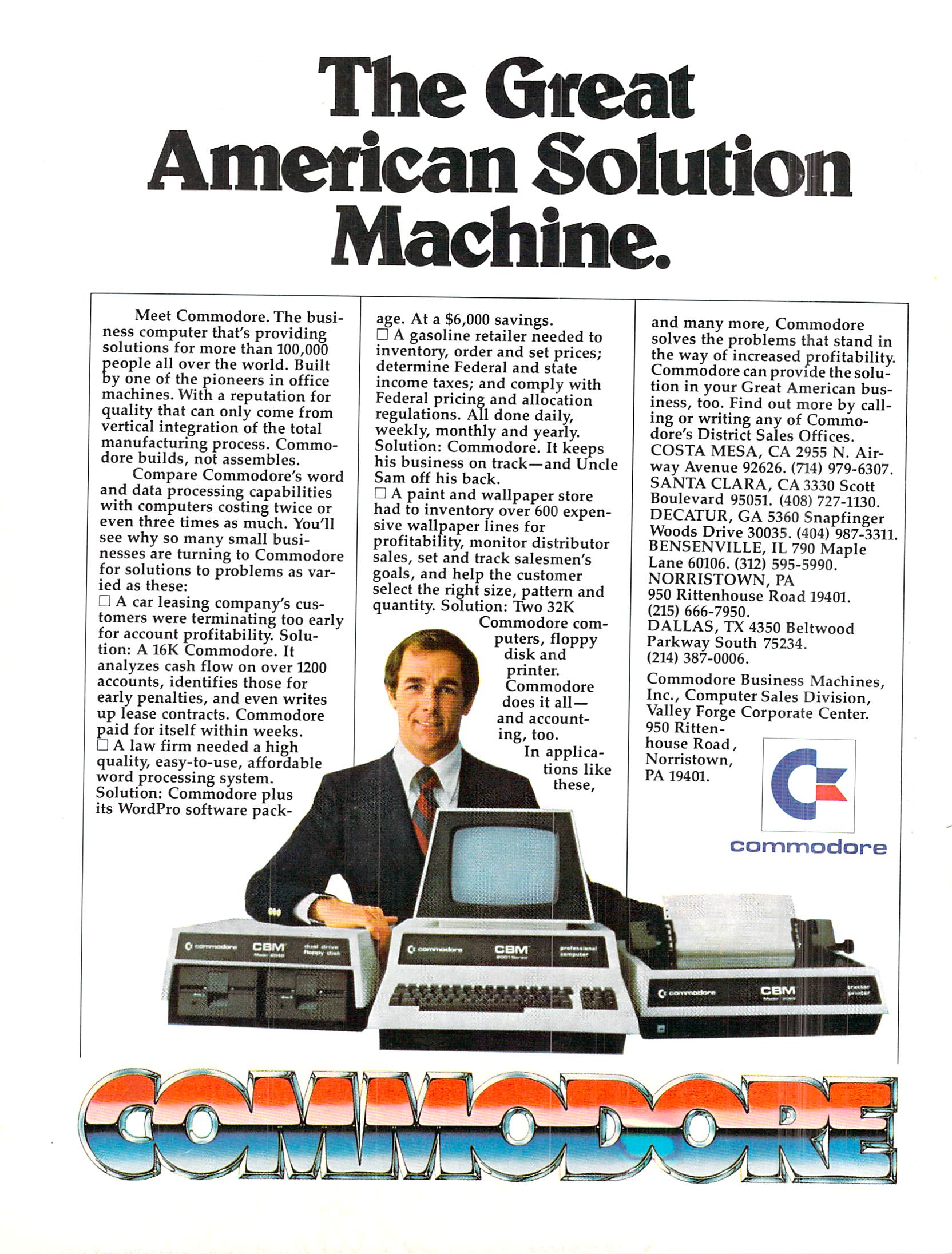
Back cover of the March 1981 issue of Compute!

Read more: http://www.megalextoria.com/wordpress/index.php/2024/05/28/compute-march-1981/

Sunday, May 5, 2024

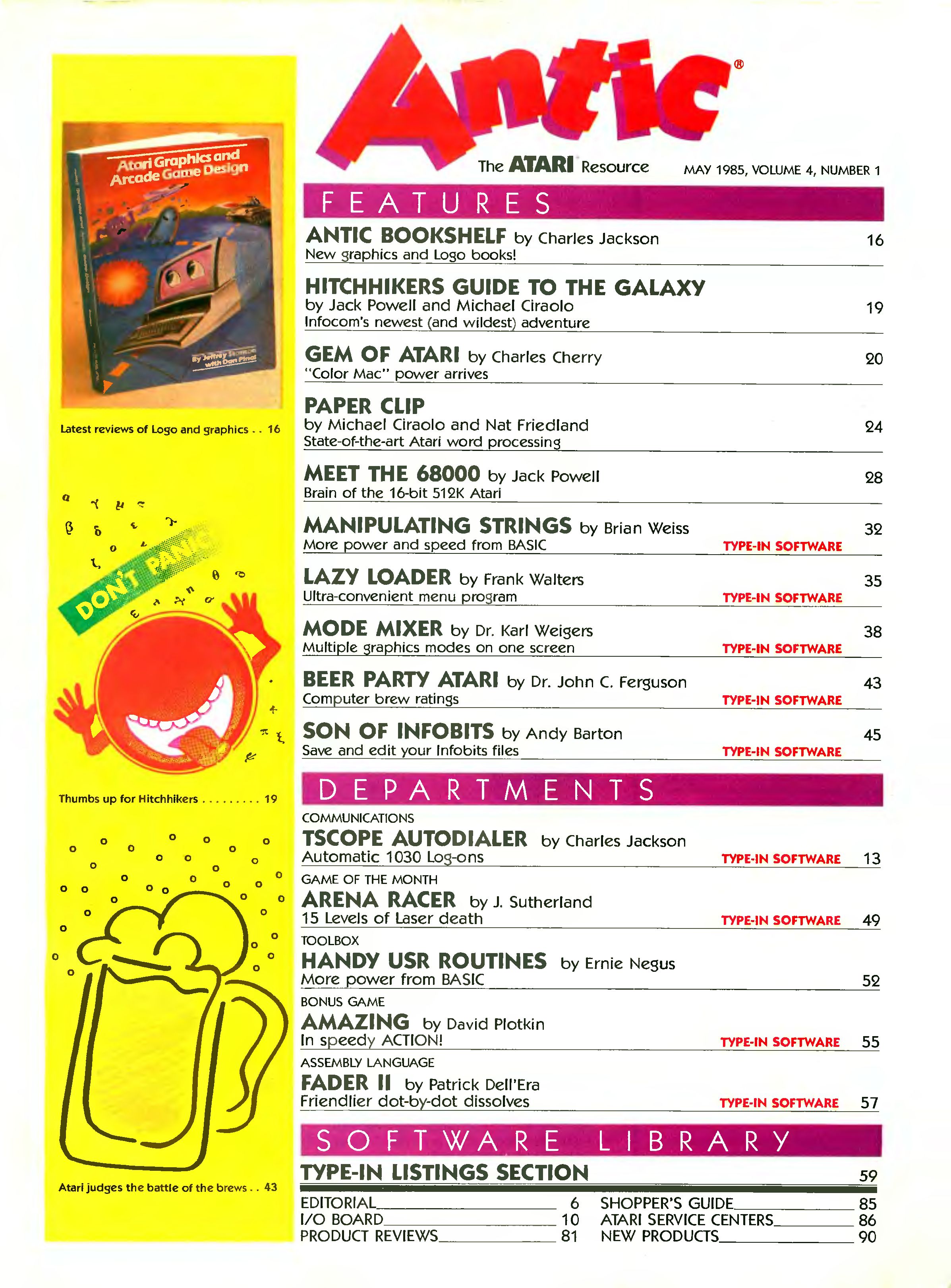
Antic (May 1985)


Antic (May 1985)

Antic was one of the major 8-bit Atari magazines published in the U.S. It also covered the Atari ST though it is better known for its 8-bit coverage. The May 1985 issue includes:

Features

  • Antic Bookshelf - Revews of Atari related books including Book of Adventure Games, Atari Graphics & Arcade Game Design, Atari Color Graphics, and 1 2 3 My Computer & Me! A Logo Funbook for Kids, Logo Fun.

  • Hitchhiker's Guide to the Galaxy - A review of this classic interactive fiction game from Infocom based on the Douglas Adams book of the same name.

  • Gem of Atari - A look at the OS of the new 16-bit Atari ST.

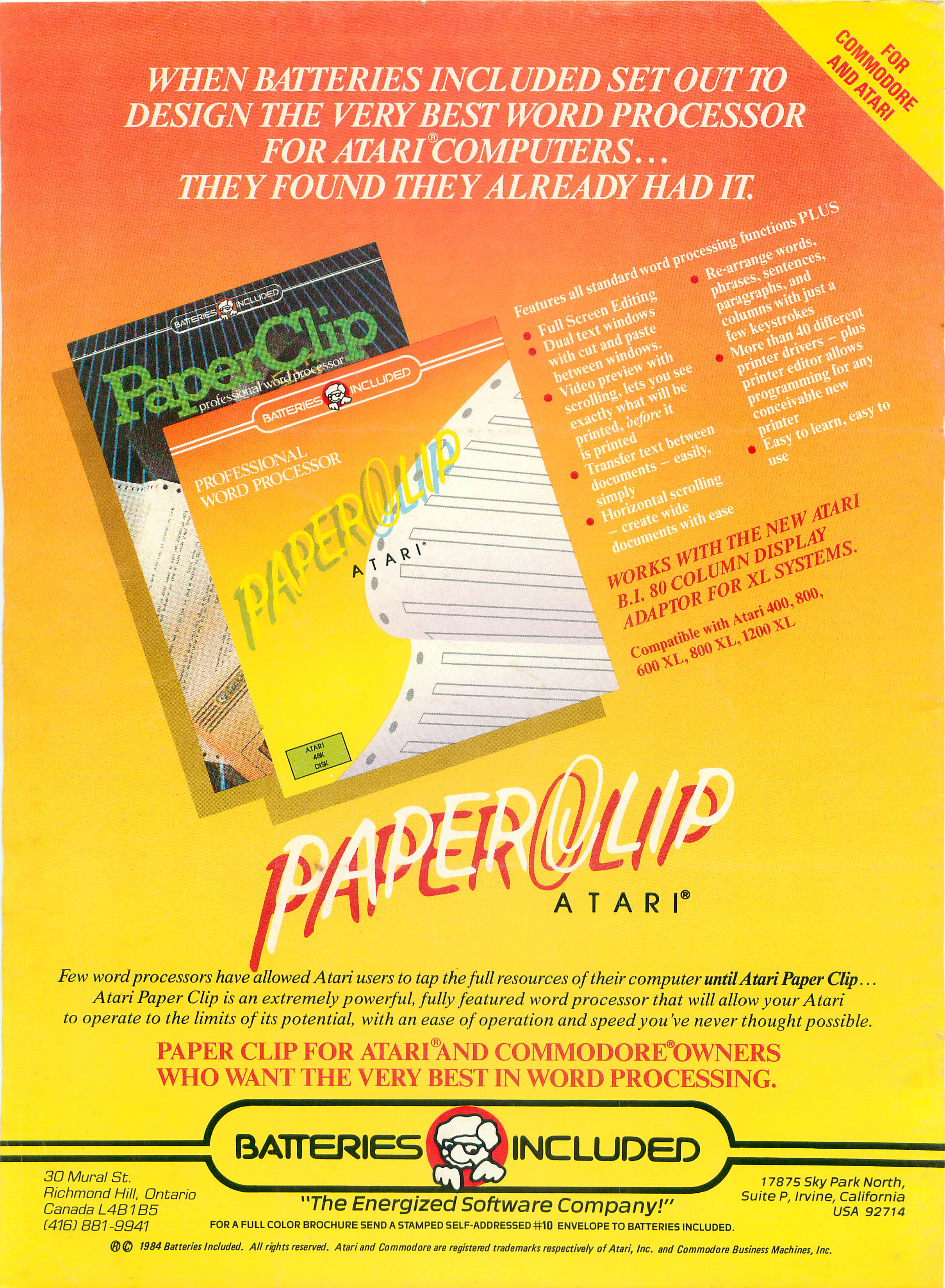
  • Paper Clip - A detailed look at what turned out to be one of the best word processors for the Atari 8-bit.

  • Meet the 68000 - A look at the 68000 CPU which was at the heart of the Atari ST and its effect on assembler and BASIC programming.

  • Manipulating Strings - A tutorial on manipulating strings in Atari BASIC.


Table of contents from the May 1985 issue of Antic

Departments

  • Communications: TScope Autodialer - A type-in add-on for the public domain communications program TScope that allow automatically dialing and logging in to a BBS.

  • Game of the Month: Area Racer - A type-in game in which you race your "Huntercraft" through caverns while avoiding laser fire.

  • Toolbox: Handy USR Routines - A collection of short machine language routines that you can use in your own programs. Functions range from evaluating boolean expressions to playing music and much more.

  • Bonus Game: Amazing - This type-in maze chase game requires the Action! cartridge.

  • Assembly Language: Fader II - A type-in program that implements a dot-by-dot picture dissolve effect.


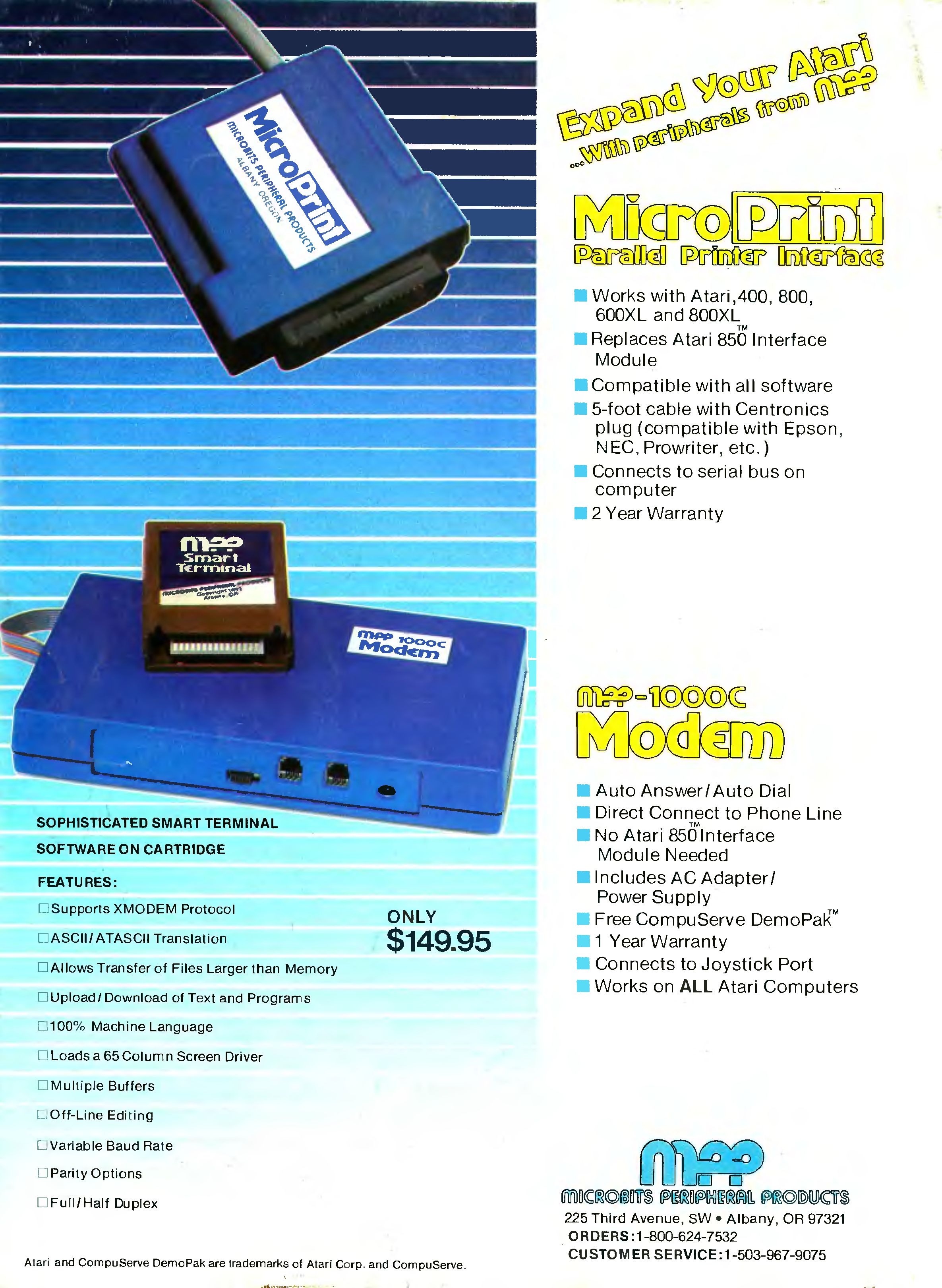
Back cover of the May 1985 issue of Antic

Read more: https://www.megalextoria.com/wordpress/index.php/2024/05/05/antic-may-1985/

Sunday, April 21, 2024

ANALOG Computing (May 1985)

ANALOG Computing (May 1985)

There were a couple of good Atari 8-bit magazines published in the U.S. Overall, I think ANALOG was probably the best. The May 1985 issue includes:

Features

  • BASIC AUTORUN.SYS File - A type-in BASIC AUTORUN.SYS designed for autobooting BASIC programs.

  • Basic Burger - A type-in game that, from the description, sounds like a clone of Burger Time.

  • Z-Plotter - A type-in program for plotting graphs of formulas that you enter.

  • Boulder Bombers - A type-in game in which you must drop bombs to clear away a landslide that is blocking flood waters from receding.


Table of Contents from the May 1985 issue of ANALOG Computing

Reviews

  • US Doubler - The US Doubler is a hardware upgrade for the Atari 1050 disk drives that adds the capability to read and write double-density disks. With the included Sparta DOS, it also speeds it up significantly.

  • Tax Command - Tax preparation software for your Atari 8-bit.

  • Panak Strikes! - Reviews of various games including Realm of Impossibility (Electronic Arts), The Scrolls of Abadon (Access Software), Beach-Head (Access Software) - one of my personal favorites but on the Commodore 64, Spy vs. Spy (First Star Software), and The Serpent's Star (Broderbund).

Columns

  • Editorial - An overview of recent changes to the magazine including changes to the format, increase in telecommunications coverage, and more.

  • Reader Comment - Letters from readers about back issues on disk, coverage in the U.K, a modification to Planetary Defense that allows you to use the Atari Touch Tablet, uses of a VCR with Atari 8-bit computers, and more.

  • New Products - A brief look at new products including a new online game service called Games Computer Play, The Atari Computer Workout (book), Castle Cobbler and Subtraction Fair from Mindscape (kids educational software), The Print Shop from Broderbund, Bounty Bob Strikes Back, and more.

  • Griffin's Lair - A look at recent educational software titles including Tink's Adventure (Mindscape) and Tuk Goes to Town (Mindscape).


Back cover of the May 1985 issue of ANALOG Computing

Read more: https://www.megalextoria.com/wordpress/index.php/2024/04/21/analog-computing-may-1985/

Wednesday, April 10, 2024

ANALOG Computing (November 1984)

ANALOG Computing (November 1984)

ANALOG Computing was probably the most popular Atari 8-bit computer magazine published in the U.S. It covered all of Atari's 8-bit computers through its life including the Atari 400, Atari 800, Atari 600XL, Atari 800XL, Atari 1200XL, Atari 65XE, Atari 130XE and more. It also occasionally had Atari ST coverage though it was always primarily an 8-bit magazine. The November 1984 issue includes:

Features

  • AtariCon Report - A report on the first international Atari users convention which was held August 24th and August 25th 1984 in Southfield, Michigan.

  • Bopotron! - A type-in platform game in which you must control a robot running around a spaceship trying to keep all of the power packs charged.

  • Circuit Database - A type-in program designed to store and organize circuit diagrams.

  • XL-DOS - A type-in modification of Atari's DOS 2.0S for XL computers to make it faster and more efficient.

  • Cassette Compressor - A type-in program for compressing programs on cassette and making them load faster.


Table of Contents from the November 1984 issue of ANALOG Computing

Reviews

  • A Software Cornucopia - Reviews of Pengo (Atari), Infidel (Infocom), Mr. Robot and his Robot Factory (Datamost), Flak (Funsoft), and Questron (Strategic Simulations, Inc.).

  • Archon II: Adept - An in-depth review of Archon II: Adept, from Electronic Arts.

Columns

  • Rader Comment - Letters from readers about the Ape-Face printer interface, Micro-Puzzler, plotting 3D images, and more.

  • Griffin's Lair - Reviews of educational programs including Seastalker from Infocom, Dragon's Keep: Troll's Tale from Sierra On-Line, and Tonk in the Land of Buddy-Bots from Mindscape.

  • New Products - A brief look at new Atari related products including the Hush 80S printer, Gumball from Broderbund, Getting Started with the Atari 600XL (book), the Anchor Signalman Mark XII 1200bps modem ($399), Pitfall II and H.E.R.O. from Activision, Quest of the Space Beagle from Avalon Hill, and more.


Back cover of the November 1984 issue of ANALOG Computing

Read more: https://www.megalextoria.com/wordpress/index.php/2024/04/10/analog-computing-november-1984/

Sunday, March 31, 2024

ANALOG Computing (July 1986)

ANALOG Computing (July 1986)

ANALOG computing was probably the best Atari 8-bit computer magazine published in the U.S. (though I suppose some might make an argument for Antic). They dabbled in Atari ST coverage when it came along but for the most part they stuck with 8-bit coverage. The July 1986 issue includes:

Features

  • The 810 Flip Switch - It was common practice to punch a hole (really a notch) in the side of a floppy disk in order to make it useable as a double-sided disk. The instructions here are to build a switch for the Atari 810 disk drive that accomplishes the same thing without having to clip your disk.

  • RAMcopy! - A type-in program that will automatically copy specified files to a RAMdisk upon startup.
  • An interview with Russell Smith and Wayne Smith - An interview with the people behind the ATR-8000, an Atari 8-bit expansion that adds CP/M capability.

  • Personal Robots - Robots that can be used with Atari computers.

  • Arm your Atari - Using the Armatron robotic arm with an Atari 8-bit computer.

  • Blast! - A type-in sci-fi themed shoot-em-up game.


Table of Contents from the July 1986 issue of ANALOG Computing

Reviews

  • Panak Strikes! - Reviews of various games including Spy vs. Spy Volume II: The Island Caper (First Star Software), The Mask of the Sun (Broderbund), and Ankh (Datamost).

  • Critical Connection - A software/hardware combo designed to allow you to use CP/M devices wth your Atari.

Columns

  • Editorial - Recent updates to the magazine.

  • Reader Comment - Letters from readers about the Gemini SG-10 printer, Atari ST monitors, sound capabilities of the Atari ST, and more.

  • 8-Bit News - Super BoulderDash released along with a re-release of the original, Microflyte ATC joystick released made especially for Flight Simulator, Star Fleet I released, new Atari 8-bit hardware announced, and more.

  • BASIC Editor - A new type-in program designed to help you accurately type-in BASIC listings from ANALOG.


Back cover of the July 1986 issue of ANALOG Computing

Read more: https://www.megalextoria.com/wordpress/index.php/2024/03/31/analog-computing-july-1986/

Wednesday, January 3, 2024

Compute! (October 1981)

Compute! (October 1981)

Compute! is a home computer magazine that got its start all the way back in 1979. Later on, it tended to be less technical than something like Byte but by today's standards, all computer magazines were somewhat technical when this issue was published in October 1981. At the time, Compute! covered computers based on the 6502 processors such as the Commodore PET, Apple II, Atari 400/800, VIC-20 and others. This issue includes:

Columns

  • The Editor's Notes - Atari reduces prices in the wake of the introduction of the VIC-20 (they would ultimately lose the price war later on vs. the Commodore 64), IBM enters the personal computer market, Atari wins school contract in Minnesota, and more.

  • Computers and Society - Appropriate applications for home computers.

  • Readers Feedback - A commentary on the maturing of the computer industry and Computer Aided Instruction.

  • Ask the Readers - A question answered about the Apple II and TV interference and questions asked about video terminal options for an OSI computer, the 3040 Floppy Disk Unit for the PET, and more.

  • Basically Useful BASIC: Automatic DATA Statements For CBM and Atari - A type-in program that converts machine language code into BASIC DATA statements.

  • The Beginner's Page - Organizing and processing data with computers.

  • VIC-20 News - The latest released for the new VIC-20 including the VIC Graphics Printer from Axiom, a new disk drive (this would become the 1540), various memory expansion cartridges, an RS-232 adapter for connecting a modem, plus lots of software including Blackjack, Slither/Superslither, Biorhythm Compatibility, Space Math, Car Chase, Blue Meanies from outer Space, Programmer's Aid (adds new BASIC commands), and more.

The Apple Gazette

  • Budgeting On the Apple - A type in program for the Apple II that helps with budgeting tasks.

  • Named GOSUBs - A machine language routine that allows you to use named GOSUBs (instead of just line numbers) in BASIC programs.

  • A Tape "EXEC" For Applesoft: Loading Machine Language Programs Part II - A program that allows you to load both a BASIC program and ML routines it uses from tape.


Table of Contents from the October 1981 issue of Compute!

The Atari Gazette

  • Cassette Boot-Tape Generation From DOS 2.0S Binary Load File - A technique for creating a bootable tape on the Atari 400/800.

  • Beware The RAMTOP Dragon - A technique for creating protected memory areas...especially from Atari's memory management.

  • Documented Atari Bugs - A detailed description of bugs in Atari OS and BASIC software.

  • Graph It On The Atari - A type in program for creating plots and graphs.

  • Extending Player Missile Graphics - A machine language program for enhancing the capabilities of Atari's Player Missile Graphics (sprites).

  • Atari 400/800 Variable Name Utility - A type in program that will display the contents of the variable name table which lets you know which variable names are already in use.

The Pet Gazette

  • Practical Pet Printing Primer for Perplexed Programmers - A type-in program that helps you to print out program listings in a reasonable format.

  • Odds And Ends: A Fat Forty Bug - Illustration of a bug that sometimes occurs when running BASIC 4.0 programs on a PET with 12-inch screens that was originally written for 4-inch screens.

  • Machine Language: What's Your Sign? - Using signed vs. unsigned numbers.

  • Train Your Pet To Run VIC Programs - A technique for getting VIC BASIC programs to run on the PET.

  • Converting To Fat-40 - A tutorial for converting programs written for 9/10-inch PET 4032 to the 12-inch 40-column PET 4032.

  • High Resolution Bar Graphs For The Pet - A type-in program for creating bar graphs on the PET

The SBC Gazette

  • AIM 65 BASIC Floating Point Arithmetic From Machine Language - How to use floating point numbers on the SBC.

  • A General Purpose BCD-To-Binary Routine - A type-in program that will convert a BCD number with any number of digits to a binary number.


Back cover of the October 1981 issue of Compute!

Read more: https://www.megalextoria.com/wordpress/index.php/2024/01/03/compute-october-1981/

Sunday, August 27, 2023

ANALOG Computing (September 1983)

ANALOG Computing (September 1983)

ANALOG Computing was probably the most popular and longest running magazine for Atari 8-bit computers in the U.S. The September 1983 issue includes:

Features/Articles

  • The New ATARI Peripherals - The 1983 Summer CES was a pretty big event for Atari. New products announced or show there include the 600XL, 800XL, 1400XL, and 1450XLD computers. In addition, there were numerous new peripherals including three different printers, the 1050 Disk Drive, 1030 Direct Connect Modem (300 baud), CX77 Touch Tablet, CX80 Trackball, Atari CP/M Module, and lots more.

  • ATARI Graph - A cryptographic puzzle.

  • Fine Scrolling - Part one of a tutorial on scrolling on the Atari 8-bit including programming examples and a discussion of what various games do, including Defender, Caverns of Mars and Eastern Front.

Reviews/Profiles

  • Family Cash Flow - Software for keeping track of your money.

  • Electronic Arts/Games Review - Reviews of several Electronic Arts games including Archon, M.U.L.E., Pinball Construction Set, and Worms?

  • Donkey Kong - A conversion of the arcade classic on cartridge.

  • Pole Position - Another arcade conversion on cartridge. I got really good at this game on the Commodore 64.

  • Dark Crystal - A graphics adventure game based on the movie of the same name.


Table of Contents from the September 1983 issue of ANALOG Computing

Program Listings

  • Observational Astronomy - A type-in program that allows you to enter your latitude and longitude as well as the date and it will tell you what objects are in the night sky.

  • Livewire Paddle Default - A modification to a previous type-in game that sets the paddle controllers as the default instead of the joystick.

  • Roundup - A type-in game in which you must herd and lasso cattle.

Columns

  • Editorial - Alan Alda's endorsement deal with Atari and crediting programmers for their work.

  • Reader Comment - Letters from readers regarding hardware add-ons, the San Diego Computer Society Computer Fair, software piracy, and more.

  • New Products - A look at new products including Blue Max, Zaxxon, Dimension X, Drelbs, Shadow World, Rainbow Walker, Wavy Navy, The Dark Crystal, Mr. Cool, Moon Shuttle, Pooyan, Satan's Hollow, Lord of the Rings, Operation Whirlwind, Silicon Warrior, Gateway to Apshai, Jumpman Jr., River Raid, and lots more.

  • Our Game - A column on game design in which reader ideas are explored.


Back cover of the September 1983 issue of ANALOG Computing

Read more: https://www.megalextoria.com/wordpress/index.php/2023/08/27/analog-computing-september-1983/