steem

Showing posts with label 1983. Show all posts

Tuesday, May 12, 2026

Mountain King (Commodore 64)

Mountain King is a game that was released by CBS Electronics in 1983. The basic goal is to descend into a diamond mine, retrieve a crown and bring it back out again. Obviously, it isn't quite so simple and there are certain challenges that must be overcome. First, you have to collect 1,000 points worth of diamonds. You then must find the flame spirit. The flame spirit is necessary to gain entry to the temple the crown is in which also must be found. Assuming you accomplish all of this, you must make it back out of the mine before time runs out. Be careful as there is a spider guarding the depths of the mine and bats bats will try to steal the crown from you. Once you complete your task, you begin again but with less time.

This game got pretty good reviews when it was released. However, I don't think it has held up as well as some other classic games. The graphics are pretty weak for this type of game regardless of what version you are playing. Sound and music are put to pretty good use though you may found the music repetitive as it consists of two musical pieces by Edvard Grieg, including 'Hall of the Mountain King' from which the name of the game is derived.

This game was released for a variety of systems, including the VIC-20, Commodore 64, Atari 2600, Atari 5200, Atari 8-bit computers, and ColecoVision. Graphically, the 8-bit computer versions are not as much of an upgrade as you would expect over the Atari 2600 version. This game has not been re-released as far as I know so you will have to track down an original or use emulation to play it. It isn't the best game but it is a fairly unique little platform game that's probably worth adding to your collection for whichever of the above systems is your favorite if you can find it cheap (which you probably can).

Screen shots above are from the Commodore 64 version of the game.

Thursday, April 4, 2024

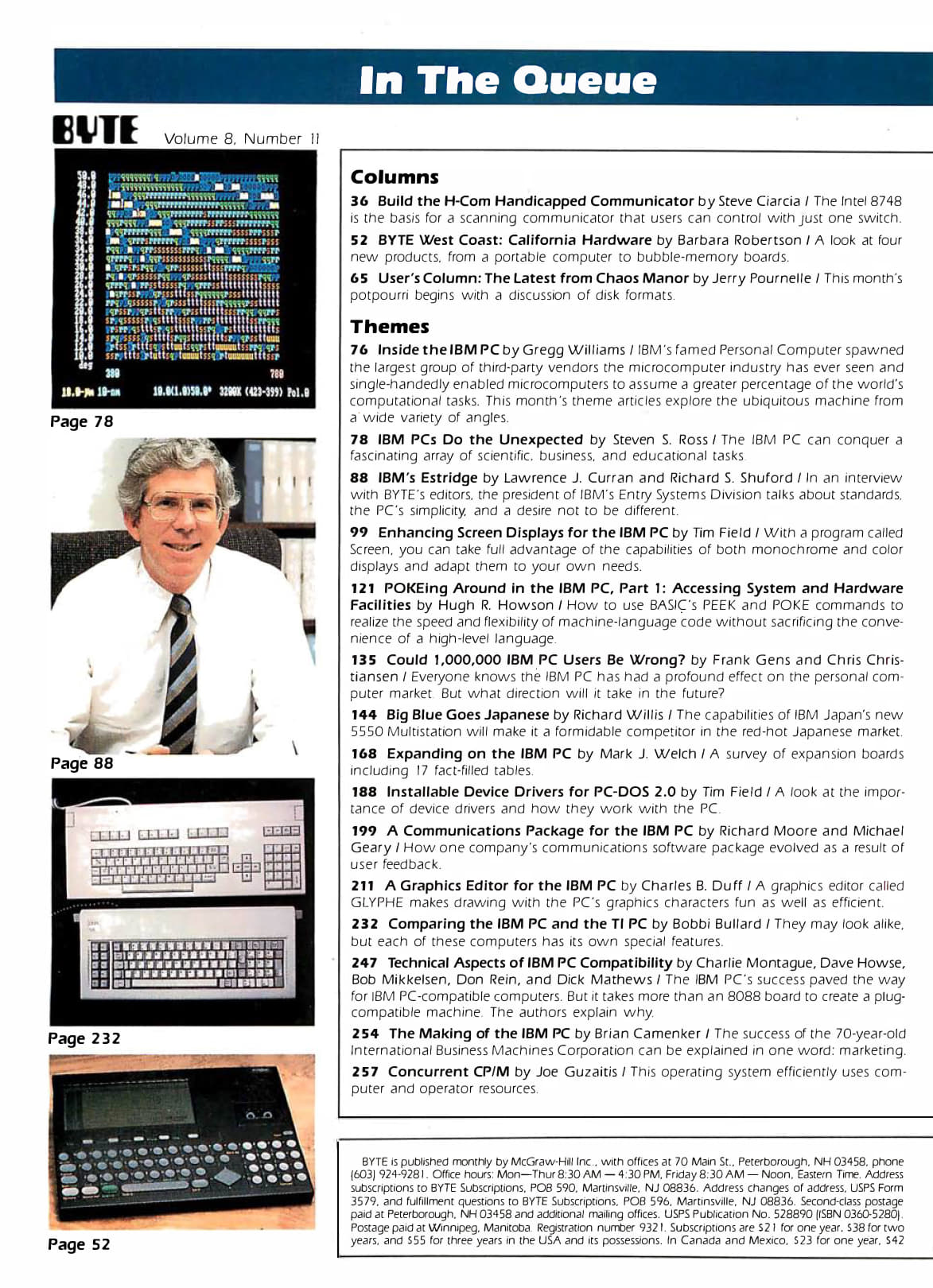
Byte (November 1983)

Byte (November 1983)

Byte was subtitled "The Small Systems Journal" and it generally covered computers that were used at home or in a business environment. In the early 1980s, there was a wide variety. In November 1983, it wasn't yet quite clear that the standard set by IBM for the PC would be the one to dominate though it was definitely starting to take hold. In fact, this issue focuses on the PC and includes:

Columns

  • Build the H-Com Handicapped Communicator - Details on how to build a scanning communicator designed for those unable to talk. Includes both code and hardware design.

  • BYTE West Coast: California Hardware - A look at new hardware including a portable computer called the Workslate which features a built-in 300bps modem and 16-line x 46 character display, a 128KB bubble memory expansion card for the PC from Intel, another 128KB bubble memory board from Helix, and the Cygnet Communications Cosystem which works with an IBM PC to automatically send and retrieve e-mail, provide automated database access and more.

Themes

  • IBM PCs Do the Unexpected - A look at some of the unique applications for the IBM PC including emulating a Cray-1 to help study how energy is transferred from the sea to the atmosphere, custom medical software developed in COBOL, as an electronic therapist, and more.

  • IBM 's Estridge - An interview with the president of IBM's Entry Systems Division. This was a new division headquartered in Boca Raton, Florida that was responsible for, among other things, the IBM PC.

  • Enhancing Screen Displays for the IBM PC - A type-in program that provides a set of enhancements that makes it easier to configure color and monochrome monitors on the PC to your needs.

  • POKEing Around in the IBM PC, Part 1 : Accessing System and Hardware Facilities - The first in a two-part series about directly accessing memory and hardware via POKE and PEEK commands in BASIC.

  • Could 1,000,000 IBM PC Users Be Wrong? - A look of the future of IBM and the PC (including the upcoming PCjr). At the time, Apple was still leading in shipments of "business-oriented desktop systems costing between $1000 and $10,000" (with Tandy/Radio Shack in 3rd) but the PC was expected to take the lead by the end of the year.

  • Big Blue Goes Japanese - IBM introduces the IBM 5550 or Multistation 5550 in Japan. This is basically an IBM PC for Japan (an other parts of Asia) that was capable of processing Kanji and other complex character sets.

  • Expanding on the IBM PC - A look at some of the expansion boards available for the IBM PC. Included here are CP/M boards, networking, RAM disk, clock, memory expansion, drive controllers, multi interface boards (parallel and serial ports), graphics, print-spooler/buffer boards, speech synthesizers, EPROM programmers, and much more.

  • Installable Device Drivers for PC-DOS 2.0 - Supporting device drivers was a new capability in PC-DOS 2.0 which shipped with the XT.

  • A Communications Package for the IBM PC - A look at how the Transend communications software evolved during design.


Table of Contents from the November 1983 issue of Byte

Reviews

  • The IBM PC XT and DOS 2.0 - A review of the brand new IBM PC XT and DOS 2.00 that shipped with it. Differences between the XT and original PC included a 10 MB hard drive in place of one of the two floppy drives, removal of the cassette port, 128K standard RAM (as opposed to 64K) - expandable up to 256K on the motherboard, eight expansion slots (up from five), standard serial port, and more.

  • The Corona PC - A PC compatible that featured an 8088 CPU @ 5MHz, monochrome monitor, 128KB of RAM and a single floppy drive for $2595. It was also available with two floppy drives ($2995) or with one floppy and a 10Mb hard drive ($4495).

  • A Look at the HP Series 200 Model 16 - Also known as the HP 9816, this machine includes 256K or 512K of RAM, 270KB 3.5" floppy drive, and a 68000 CPU, and BASIC which it was designed to work with though a version of Pascal is also available.

Features

  • Japan and the Fifth Generation - A look at Japan's efforts to develop artificial intelligence. While the topic of AI has become especially hot in recent years, it has long been a goal since the earliest days of the PC or computers in general.

  • Speech Images on the IBM PC - A look at an experimental speech input card that plots the "voice print".

  • Lmodem: A Small Remote-Communication Program - A relatively simple type-in smart-terminal program for CP/M based systems written in BDS C.

  • The Software Tools: Unix Capabilities on Non-Unix Systems - A look at a package that provides many Unix-like tools on a variety of non-Unix systems. These include tools such as diff, ls, ar, sort, find, field, sedit, format, and many others.


Table of Contents from the November 1983 issue of Byte (continued)

Nucleus

  • Editorial: Growth vs. Quality - The struggle to maintain quality and the PC market explodes.

  • MICROBYTES - Brief news bits including: tons of new PC compatibles expected to be shown at COMDEX, new integrated software packages from Ovation and Fox & Geller, $40 Modula-2 compiler available for the IBM PC, CAD software unveiled for the PC XT, new proposed ST412HP SCSI interface standard for hard disks, and more.

  • Letters - Letters from readers about prodcut descriptions provided by manufacturers, the Lisa computer, public domain software, the 8086 and backwards compatibility, and more.

  • Programming Quickies - Short programs including a program to pass/merge and scan a command line in CP/M, fast loading files from disk with Apple DOS 3.3, implementing subscripts and superscripts on the Atari 400/800, adding array capabilities to dBASE II, and more.
  • Technical Forums - Type-in programs for creating simple contour plots, performing an address calculation sort, and more.


Back cover of the November 1983 issue of Byte

Read more: https://www.megalextoria.com/wordpress/index.php/2024/04/04/byte-november-1983/

Saturday, December 30, 2023

Byte (October 1983)

Byte (October 1983)

Byte was probably the best general computer magazine of its time. It had a long publishing run starting in the 1970s and continuing into the 1990s. This issue is from October 1983 and includes:

Cover Story

  • Product Preview: The HP 150 - The HP-150 somewhat unique machine. It ran MS-DOS but was not PC compatible. It was also one of the first computers with a touch screen (though it was optional). It was fairly powerful for its time. It used an 8088 CPU but it ran at 8 MHz instead of the 4.77 MHz of the IBM PC.

  • An Interview: The HP 150's Design-team Leaders - An interview with Jim Sutton and John Lee, the leaders of the design team for the HP 150.

Columns

  • Build the Micro D-Cam Solid-State Video Camera, Part 2 - The second part of a series on building a digital camera. This part covers serial interfaces for the Apple II and IBM PC and software for the Apple II.

  • BYTE West Coast: Shaping Consumer Software - Trip Hawkins of Electronic Arts talks about how he judges software and the programmer as an artist.
  • User's Column: New Computers, Boards, Languages and Other Tidbits - Items covered include Modula-2/86, Problem Knowledge Coupler (medical software), Kaypro 4, Osborne Executive, and more.


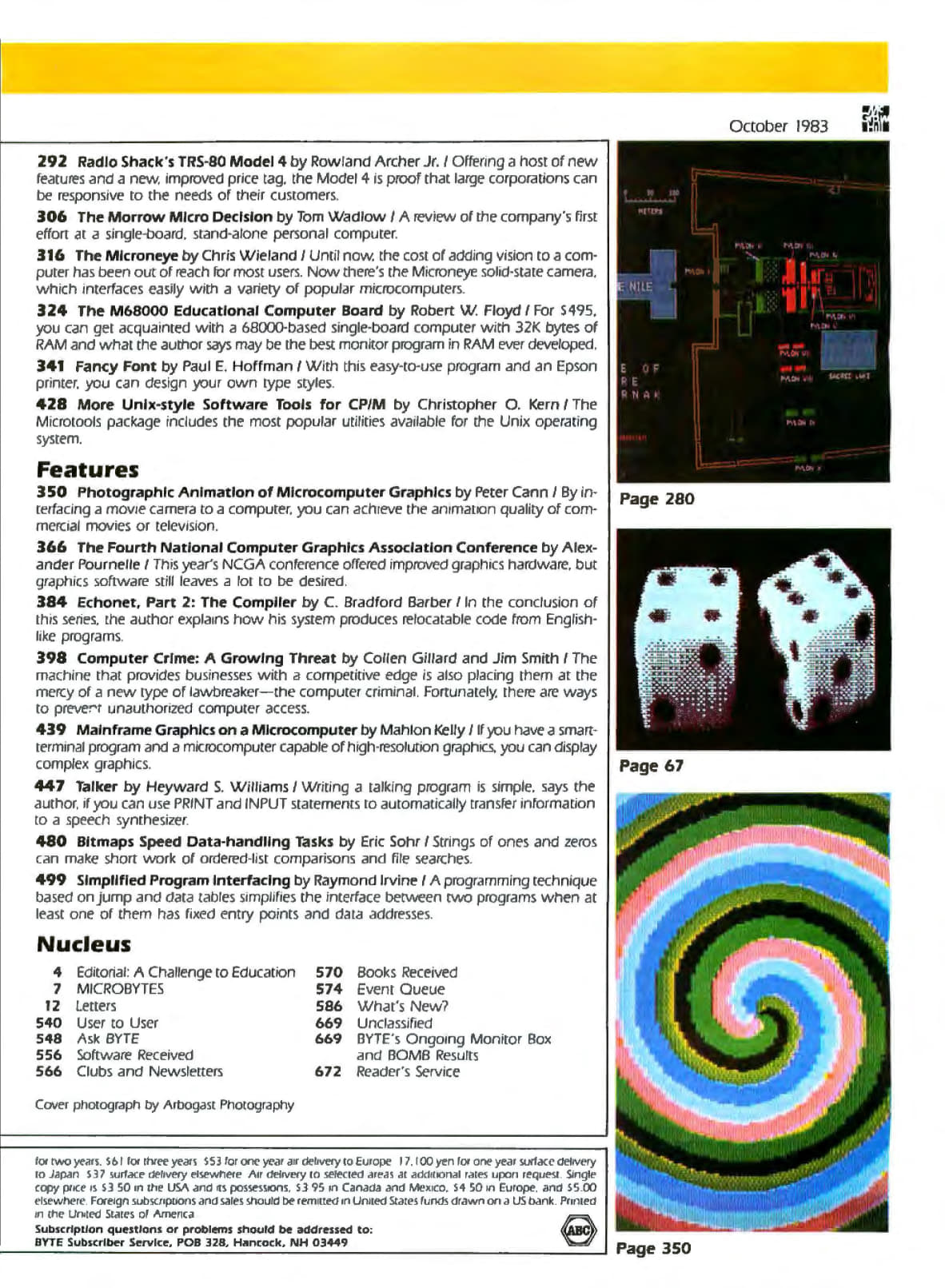
Table of Contents from the October 1983 issue of Byte

Themes

  • The Unix Operating System - An overview of the Unix operating system.

  • The Unix Tutorial, Part 3: Unix in the Microcomputer Marketplace - A look at licensed Unix OS versions as well as look-alikes and work-alikes (Linux would fall under this category though that wouldn't exist for nearly another decade).

  • Unix and the Standardization of Small Computer Systems - A look at the history of Unix and how it helped to standardize software and hardware of "small systems" (i.e. workstation and mini-computers).

  • A Tour Through the Unix File System - A tutorial on the Unix file system.

  • The Unix Shell - A look at both the command interpreter and programming capabilities of the Unix shell.

  • Unix as an Application Environment - A look at how Unix compares to other operating systems in terms of development tools and end user applications.

Reviews

  • The NEC Advanced Personal Computer - This machine was designed to run CPM/86 so essentially this is a 16-bit CP/M machine with 128K RAM and two 8-inch floppy drives. I don't know if it was clear at the time but CP/M would shortly disappear from the market in favor if PC compatibles. The 8-inch disk format wouldn't really be around much longer either.


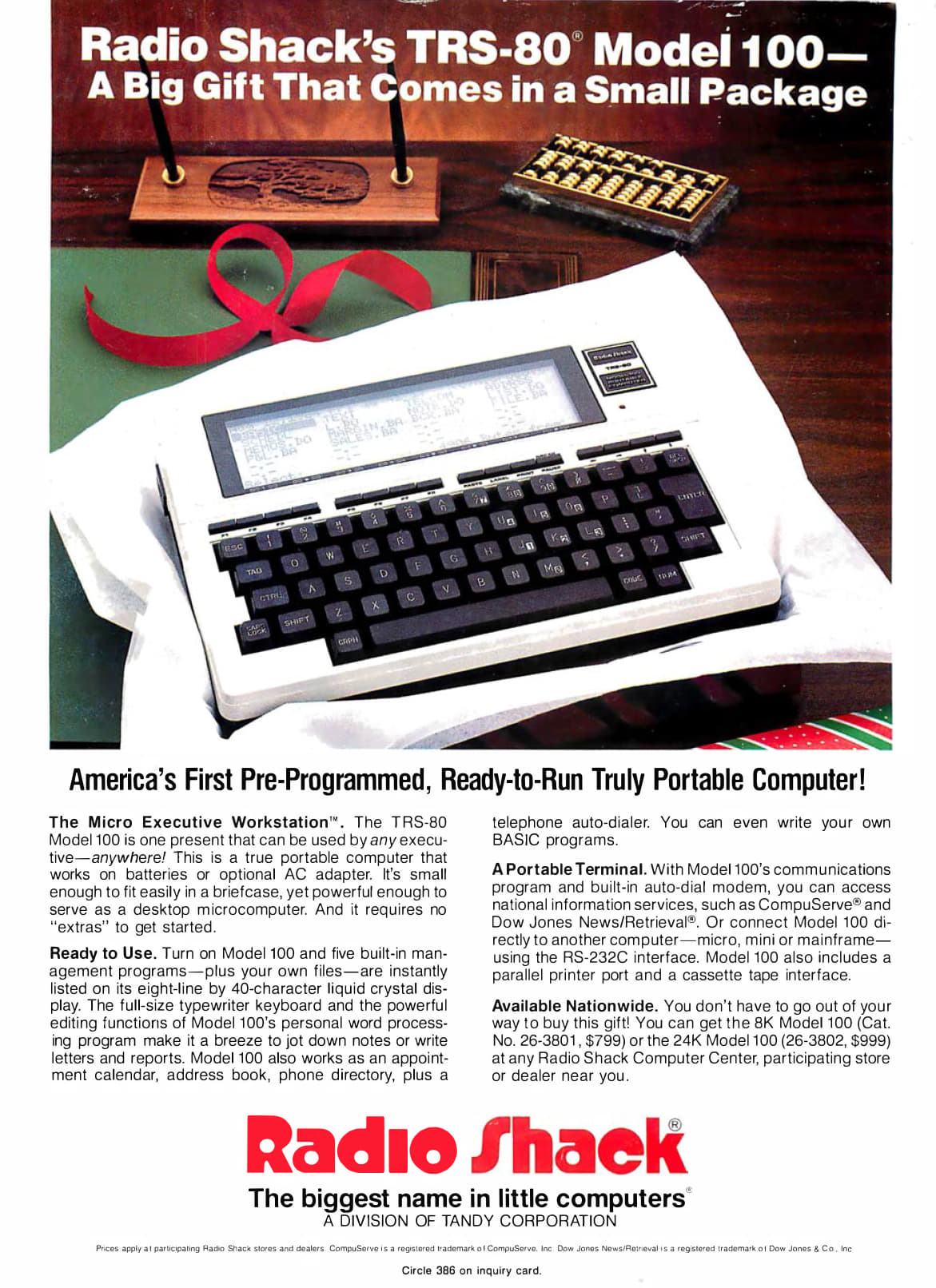
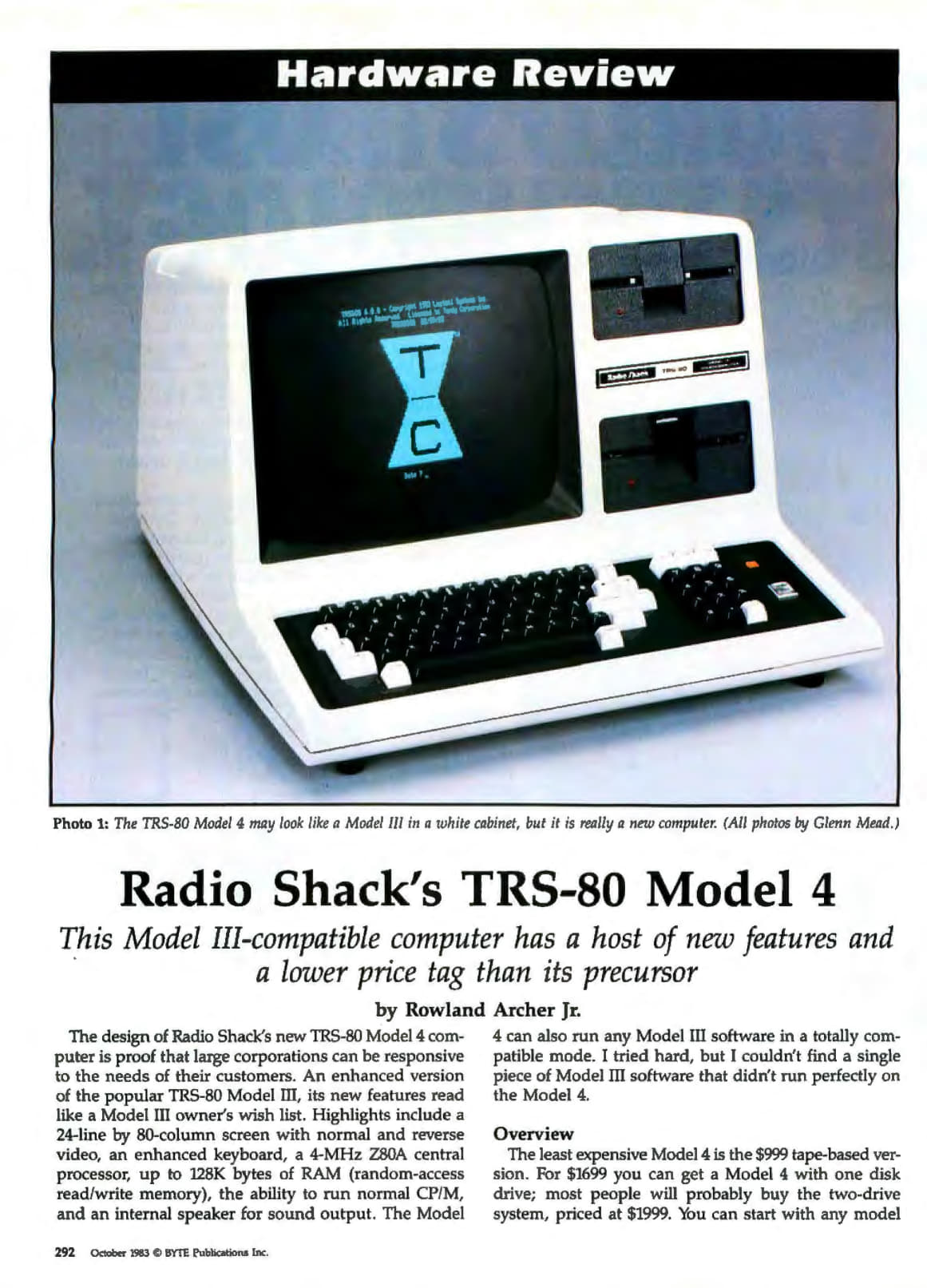
  • Review of the TRS-80 Model 4
  • Radio Shack's TRS-80 Model 4 - My high school was still using TRS-80 Model IIIs and 4s to teach BASIC programming at least through the early 1990s. These machines were Z80 based and had their own DOS. The Model 4 could also run CP/M software. With two 5.25" floppy disk drives and 128K of RAM a Model 4 cost about $3000.

  • The Morrow Micro Decision - The Osbourne 1 and Kaypro II were considered to be the main competition for the Morrow Micro Decision. It is a Z80 based CP/M computer with 64K of RAM and 5.25" floppy drive that starts at $1200.

  • The Microneye - A digital camera with a 256x128 sensor that could interface with various computers via an RS-232 Interface. It worked at least with the Apple II, IBM PC, Commodore 64, and Color Computer.

  • The M68000 Educational Computer Board - A single board computer with a 4 MHz 68000 CPU, 32K RAM, and various ports and interfaces for $495. This board fits in a Heathkit H-19 terminal.

Features

  • Photographics Animation of Microcomputer Graphics - A technique for generating stop motion animation using a computer to generate the images and a video camera.

  • The Fourth National Computer Graphics Association Conference - A look at the latest graphics hardware and software.

  • Echonet, Part 2: The Compiler - Part two of a multipart series on Echonet, a programming language/system. This part covers the compiler.

  • Computer Crime: A Growing Threat - This article looks at real-life computer crimes and some of the requirements for a secure system. Most crimes at this point involved unauthorized access. A comparison is drawn between the fictional War Games (great movie) and a real-life incident several months before that movie was released in which several teenagers gaines access to the Los Alamos nuclear weapons laboratory.

  • Mainframe Graphics on a Microcomputer - Techniques for saving mainframe graphical output via a terminal program and converting them for display on your home computer...assuming you have high resolution graphics capabilities.


Table of Contents from the October 1983 issue of Byte (continued)

Nucleus

  • Editorial: A Challenge to Education - Radio Shack's "America's Educational Challenge" initiative.

  • MICROBYTES - The latest news including the first 256K DRAM chips, memory and other componenet shortages, Telelearning electronic university, Texas Instruments and Times reduce prices on their computers, Interland announces a $400 per device Ethernet link, and more.

  • Letters - Letters from readers about Word Tools for the IBM PC, double-spacing with Wordstar, searching in Wordstar, and more.

  • User to User - Questions answered about copy protection and privacy, cache RAM, public key encryption, and more.

  • Ask BYTE - Questions answered about joysticks for the PC, Apple disks, sharing a color monitor with multiple systems, developing games for the Atari 2600, and more.


Back cover of the October 1983 issue of Byte

Read more: https://www.megalextoria.com/wordpress/index.php/2023/12/30/byte-october-1983-2/

Wednesday, May 13, 2020

Gangster Alley (Atari 2600)

Gangster Alley (Atari 2600)


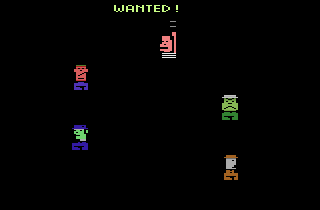
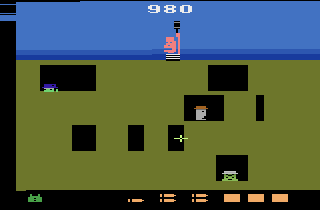
Gangster Alley was released in 1983 by Spectravision for the Atari 2600. As game play goes, like most Atari 2600 games, it is fairly simple. One of six gangsters will raise there head in the window of a building and you must shoot them before they shoot you. To mix things up a little, it won't always be a gangster sticking their head out of the window but innocent people too. You have to be careful not to shoot them as well. Also, one of the gangsters (Nitro Ed) will occasionally lob a grenade from the top of the building.


Scoring is based on how many gangsters you shoot and how many bullets you have left. If you get hit by one of them then you lose one of your bullet proof vests (which amounts to a life). A hit from a grenade and you are done for. The gangsters are worth various amounts from $20 to $100 and extra bullets are worth $10 each. However, hitting an innocent person is particularly costly at $1000. Shooting one of the gangsters only disarms them so you'll have your chance to shoot them again and again.


The game play is simple and reviews were pretty average but it's a fairly unique game for the Atari 2600. This would have possibly been a better game with a light gun but you are stuck with a joystick on the Atari 2600. If you have an Atari 2600, this game can be had for as little as $7 or $8 on eBay if you only want the cartridge. Otherwise, you can play it via an emulator. I am not aware of any official re-releases or other ports. This is an Atari 2600 exclusive.

The ad above is from the October 1982 issue of Video Games magazine.

Friday, February 8, 2013

ColecoVision Advertisement

Media_httpmediacachee_edeue

Advertisement for the ColecoVision from the January 1983 issue of Video Games Magazine

Friday, December 7, 2012

Tuesday, November 13, 2012

Tutankham (Atari 2600)

Media_httpmediacachee_rcrsx

Advertisement for the Atari 2600 / Atari VCS game Tutankham by Parker Brothers from the April 1983 issue of BLiP: The Video Games Magazine

Thursday, October 18, 2012

Millipede Advertisement

Advertisement for the Millipede arcade game by Atari from the January 1983 issue of Video Games

Tuesday, October 9, 2012

Advertisement for Gorf and Wizard of Wor for the Atari 2600 (VCS)

Advertisement for Gorf and Wizard of Wor for the Atari VCS (Atari 2600) from the Spring 1983 issue of Creative Computing's Video & Arcade Games

Wednesday, September 19, 2012

Tuesday, September 18, 2012

Llamasoft Advertisement

Media_httpmediacachee_ycsaa

Llamasoft Advertisement from the December/January 1984 issue of Commodore Horizons

Wednesday, August 8, 2012

Advertisement for Necromancer by Synapse for the Atari 400/800

Advertisement for Necromancer by Synapse for the Atari 400/800 from the August/September issue of Video Game Players.